Kurdish Farmer Pioneers Multi-Graft Tree Producing 20 Fruit Varieties
In Fatawa village on the Harir plain, local farmer, Dler Fatawayi, has transformed his orchard into an innovation hub through advanced grafting techniques. His standout achievement is a single tree producing up to 20 fruit varieties across multiple seasons, alongside other hybrid crops and grapes.
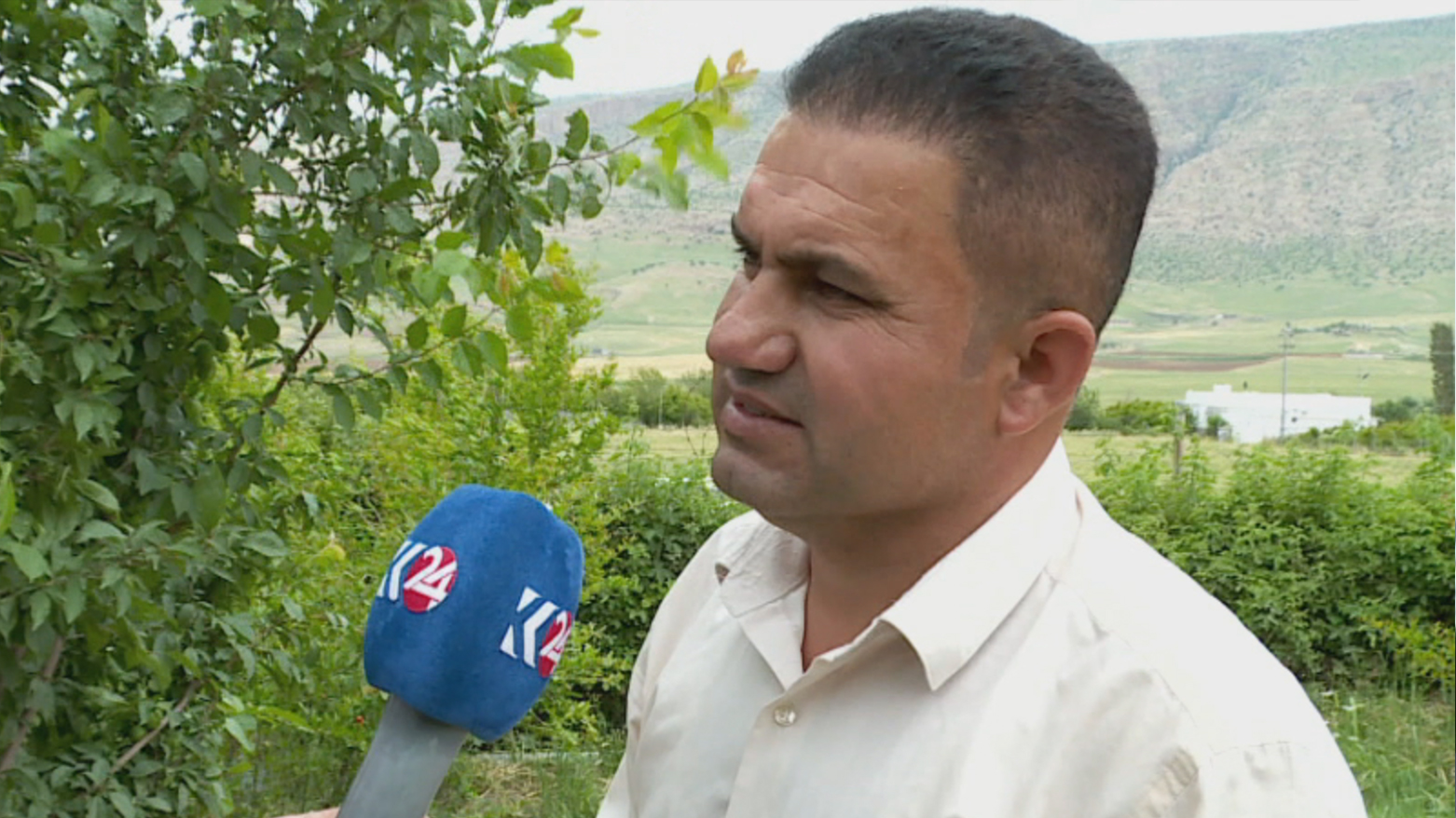
ERBIL (Kurdistan24) - Sweeping across the northern reaches of Erbil, the Harir plain unfolds in a vibrant mosaic of emerald fields and ancient groves. In the quiet village of Fatawa, tucked within this fertile expanse, the air is often perfumed with the sweet scent of ripening stone fruits and the earthy aroma of tilled soil.
Here, agriculture is more than a tradition; it has become an evolving science under the steady hands of Dler Fatawayi, a model farmer whose orchard is challenging the conventional boundaries of Kurdish horticulture.
Fatawayi is not a typical cultivator; he is a specialist with over 15 years of experience in the delicate art of grafting.
By carefully merging different plant tissues, he has managed to transform his entire orchard into what local observers describe as a living laboratory for agricultural innovation.
His work has drawn the attention of scientific and agricultural centers across the Region, eager to study how traditional Kurdish farming can be modernized through individual ingenuity.
A Tree That Bears Twenty Fruits
The centerpiece of Fatawayi's achievement is a horticultural marvel: a single tree rootstock that has been meticulously grafted to produce 20 distinct varieties of fruit.
In an extraordinary display of natural diversity, this individual tree simultaneously yields apricots, cherries, and plums, among other species.
Perhaps more significant than the variety is the temporal range of the harvest. Fatawayi's unique grafting system allows the tree to yield produce across three different seasons.
This ensures a nearly year-round cycle of production from a solitary trunk, a feat that maximizes space and efficiency in a way that traditional single-variety trees cannot match.
The farmer's experimentation extends beyond typical orchard staples.
On another part of his farm, he has successfully integrated Kurdish walnuts with American and Israeli varieties, testing the hardiness and flavor profiles of hybrid crops.
His work with viticulture is equally ambitious, having cultivated a single grapevine capable of producing seven different types of grapes.
These breakthroughs have made his orchard a frequent destination for university students and agricultural researchers who visit Fatawa village to conduct scientific fieldwork and document his successes.
Knowledge, Youth, and Livelihood
Beyond the harvest, the project serves a vital social and educational function on the Harir plain.
Currently, Fatawayi employs 10 local young men, providing them with a steady livelihood while mentoring them in the intricate, high-skill trade of grafting.
By passing down this craft, he is ensuring that the next generation of farmers is equipped with the innovative tools necessary to thrive in a changing economic landscape.
Despite his significant successes, Fatawayi believes he has only scratched the surface of what is possible.
The farmer maintains that with proper institutional backing and technical support, his model could be scaled to benefit the wider agricultural sector in the Kurdistan Region.
"If I receive more support, I can significantly advance my project and achieve even more innovations," Fatawayi said, emphasizing his ambition to push the boundaries of what local land can produce.
As the sun sets over the Fatawa groves, the orchard stands as a testament to rural creativity, proving that with patience and a steady hand, a single tree can sustain an entire garden's worth of diversity.