Iraqi Resistance Group Rejects Calls for Disarmament, Threatens Action Against Israel
Ashab al-Kahf threatens action against Israel while Iraq's ruling coalition authorizes measures to restrict weapons to state authority
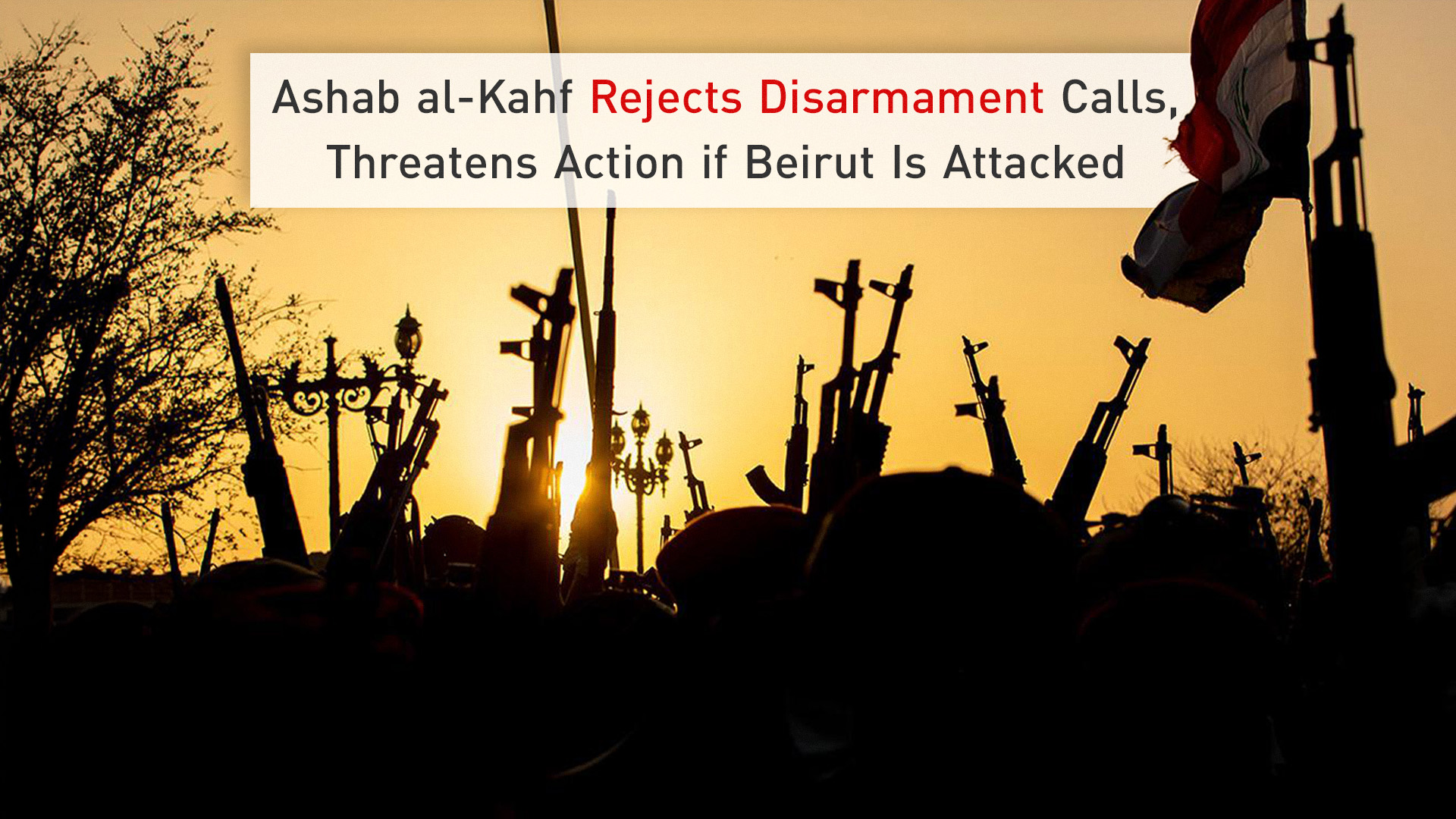
ERBIL (Kurdistan24) — An Iraqi armed faction known as Ashab al-Kahf on late Monday rejected growing calls for the disarmament of non-state armed groups, asserting that Iraq's highest Shiite religious authority has never supported abandoning armed resistance, while threatening military action against Israel if Beirut's southern suburbs come under attack.
In a statement, the group criticized what it described as claims circulating among its opponents that the religious establishment supports handing over weapons to the state.
The faction argued that Iraq's senior clerical authority has historically encouraged resistance against foreign occupation and cited past events, including the 2014 fatwa of "sufficient jihad" that mobilized volunteers against the Islamic State group (ISIS).
Ashab al-Kahf also referenced statements by the religious authority expressing support for the Palestinian cause and praising Lebanese Hezbollah's role in confronting Israel.
Addressing Iraqi political leaders advocating restrictions on armed factions, the group declared that it would not abandon what it called the "resistance" movement, reaffirming its readiness for military action.
The statement warned that the Israeli city and port of Eilat would become a target of operations by Ashab al-Kahf if Beirut and its southern suburbs were subjected to attacks, adding that any response would be coordinated with what it described as the "Axis of Resistance."
The group further insisted that any demand to relinquish weapons would only be considered if accompanied by a direct written instruction from Iraq's highest religious authority.
The statement concluded with the slogan frequently used by armed groups aligned with the resistance axis: "It is jihad—victory or martyrdom."
The declaration came on the same day that Iraq's ruling Coordination Framework, the country's dominant Shiite political coalition, issued a statement supporting efforts to place all weapons under state control.
During its regular meeting held at the office of former Prime Minister Haider al-Abadi and attended by Prime Minister and Commander-in-Chief of the Armed Forces Ali al-Zaidi, the coalition discussed a range of national and security issues.
The Coordination Framework stressed that decisions regarding war and peace are sovereign national matters that belong exclusively to the Iraqi people through their constitutional institutions, namely parliament and the elected government.
It stated that any action undertaken outside that framework constitutes a violation of the law and the principles of the constitutional state.
The coalition also reaffirmed that the Popular Mobilization Forces (PMF) are an official security institution operating under the Iraqi constitution, applicable laws, and the orders of the commander-in-chief.
In a significant policy position, the Framework endorsed the principle of restricting weapons to state control and supported separating the PMF from political, partisan, and social affiliations.
The coalition said the move is based on the Iraqi constitution, directives from the country's highest religious authority, provisions of the PMF Law No. 40 of 2016, and commitments contained in the government's approved ministerial program.
It also linked the policy to Iraq's ongoing cooperation with the international community and efforts to complete the withdrawal process of the international coalition mission in Iraq.
The Coordination Framework announced that it had authorized Prime Minister al-Zaidi, in his capacity as commander-in-chief of the armed forces, to take the necessary decisions and measures to safeguard Iraq's supreme national interests in accordance with those principles.
The contrasting statements underscore growing tensions within Iraq over the future role of armed factions outside the state's formal security apparatus, as the government seeks to consolidate authority over security affairs while resistance groups continue to insist on retaining their weapons amid regional conflicts and ongoing tensions involving Israel, Lebanon, and Iran-aligned forces.
Ashab al-Kahf is an Iraqi armed group that emerged publicly in recent years through online statements and claims of responsibility for attacks, rather than through a clearly defined or officially recognized organizational structure.
It presents itself as part of Iraq’s broader “resistance” axis and regularly uses anti–U.S. and anti–Israel rhetoric in its messaging.
Security analysts often describe the group as opaque in terms of leadership and formal command structure, with no publicly verified hierarchy or institutional status within Iraq’s official security apparatus.
Some assessments suggest it may operate as a cover name or affiliated label within a wider network of Iran-aligned armed factions, although such links are not formally confirmed.