Iran Condemns U.S. Strikes on Tanker and Qeshm Tower, Vows Response to “Aggressive Actions”
Foreign Ministry accuses Washington of violating international law and warns it will “use all capacities” to defend territorial integrity
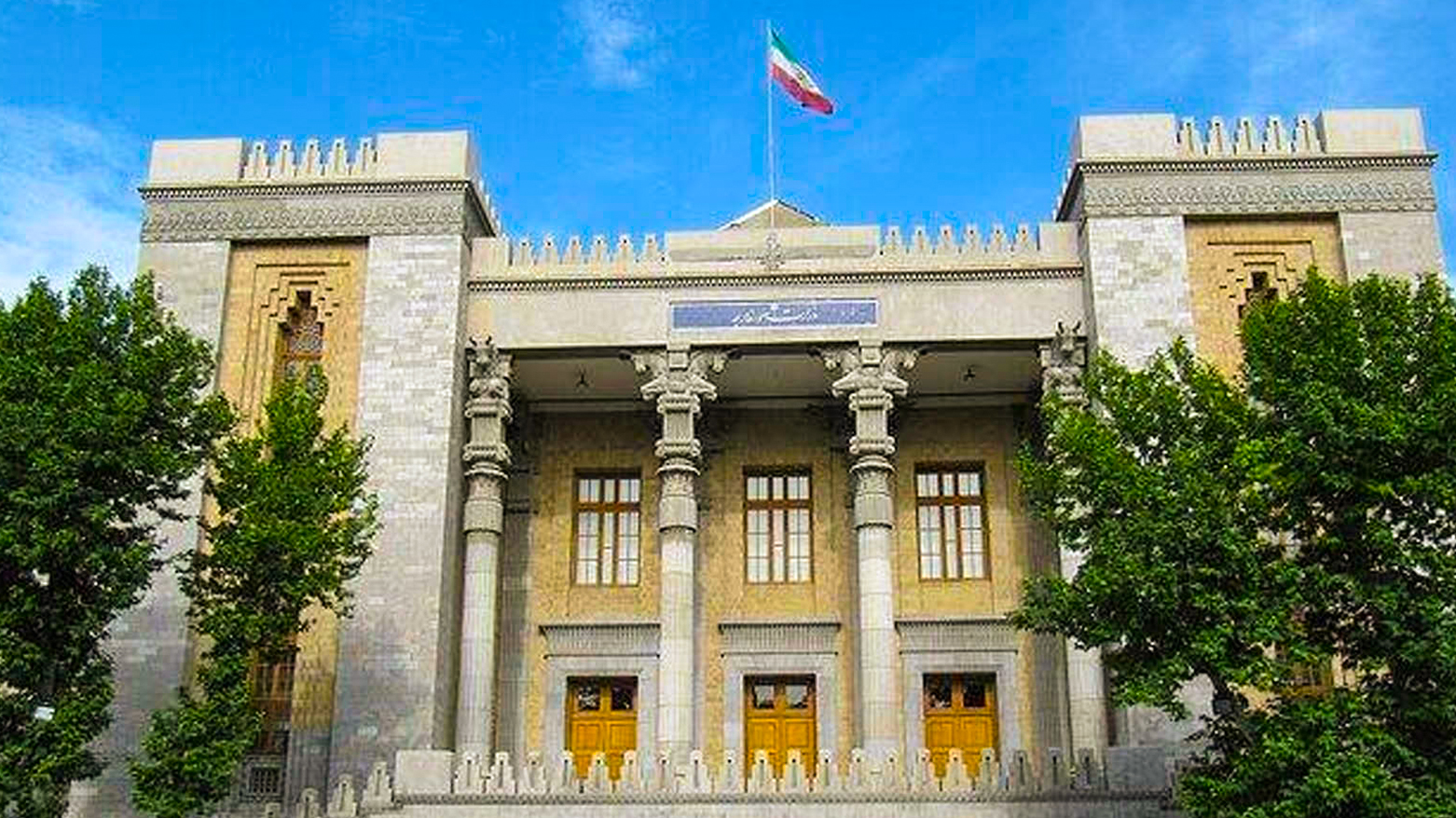
ERBIL (Kurdistan24) — Iran’s Ministry of Foreign Affairs on Wednesday strongly condemned recent U.S. strikes targeting an Iranian oil tanker and a telecommunications tower on Qeshm Island, warning that Tehran will respond to what it described as “aggressive actions” violating international law and the ongoing ceasefire framework.
In a statement released to state media and carried by IRNA’s foreign policy desk, the ministry accused the United States of carrying out hostile operations against Iranian assets in the early hours of Wednesday, including what it described as harassment of an Iranian oil tanker in the Strait of Hormuz and an attack on a telecommunications facility on Qeshm Island.
The statement said the attacks were launched from the territory of two regional countries, without naming them, and described the U.S. military as a “terrorist army” engaged in destabilizing actions against Iran.
“These aggressive actions are not only a violation of the ceasefire understanding dated April 8, but also constitute a flagrant violation of the fundamental principle of the prohibition of the use of force under Article 2, Paragraph 4 of the United Nations Charter and international law,” the ministry said.
Tehran also criticized what it called the “colonial use” of regional territory and infrastructure by the United States to carry out operations against Iran, placing responsibility on governments it said enabled such actions, including Kuwait and Bahrain.
The Foreign Ministry stated that allowing any foreign power to use land, sea, airspace, or military facilities to support attacks against Iran constitutes a violation of international law and the principle of good neighborliness. It further cited UN General Assembly Resolution 3314, arguing that such cooperation may be considered an act of aggression.
Reaffirming Iran’s position, the ministry said the country would respond within its rights under international law to defend its sovereignty and territorial integrity.
“In exercising its inherent right to defend its territorial integrity, Iran will utilize all capacities to counter aggressive actions,” the statement said, adding that responses could include targeting the origin of such attacks.
The ministry further warned that full responsibility for the consequences lies with what it termed the “American-Zionist aggressors” and any parties facilitating military operations against Iran.
The statement comes amid heightened regional tensions and renewed exchanges of accusations between Iran and the United States following a series of maritime and aerial incidents in the Gulf region.
Earlier in the day, Iran's Islamic Revolutionary Guard Corps (IRGC) announced that it had carried out a series of naval and aerial attacks against U.S. forces and a commercial vessel in the Gulf region, describing the operations as retaliation for recent American strikes against Iranian interests near the Strait of Hormuz.
In a statement, the IRGC said the latest escalation began late Tuesday night after what it described as a U.S. attack on an Iranian oil tanker near the Strait of Hormuz.
According to the statement, a U.S. military strike targeted the vessel with an air-launched missile, damaging its engine compartment but not sinking the ship.
The IRGC said its naval forces subsequently launched a missile attack against a commercial vessel identified as “Banaya,” which it described as an Israeli-American ship. Iranian authorities alleged the vessel had violated navigation regulations in the Strait of Hormuz.