Pope Leo XIV Challenges Europe's Polarization During Visit to Spain
Pope Leo XIV warned against rising political polarization and divisive identity narratives during a historic visit to Spain.
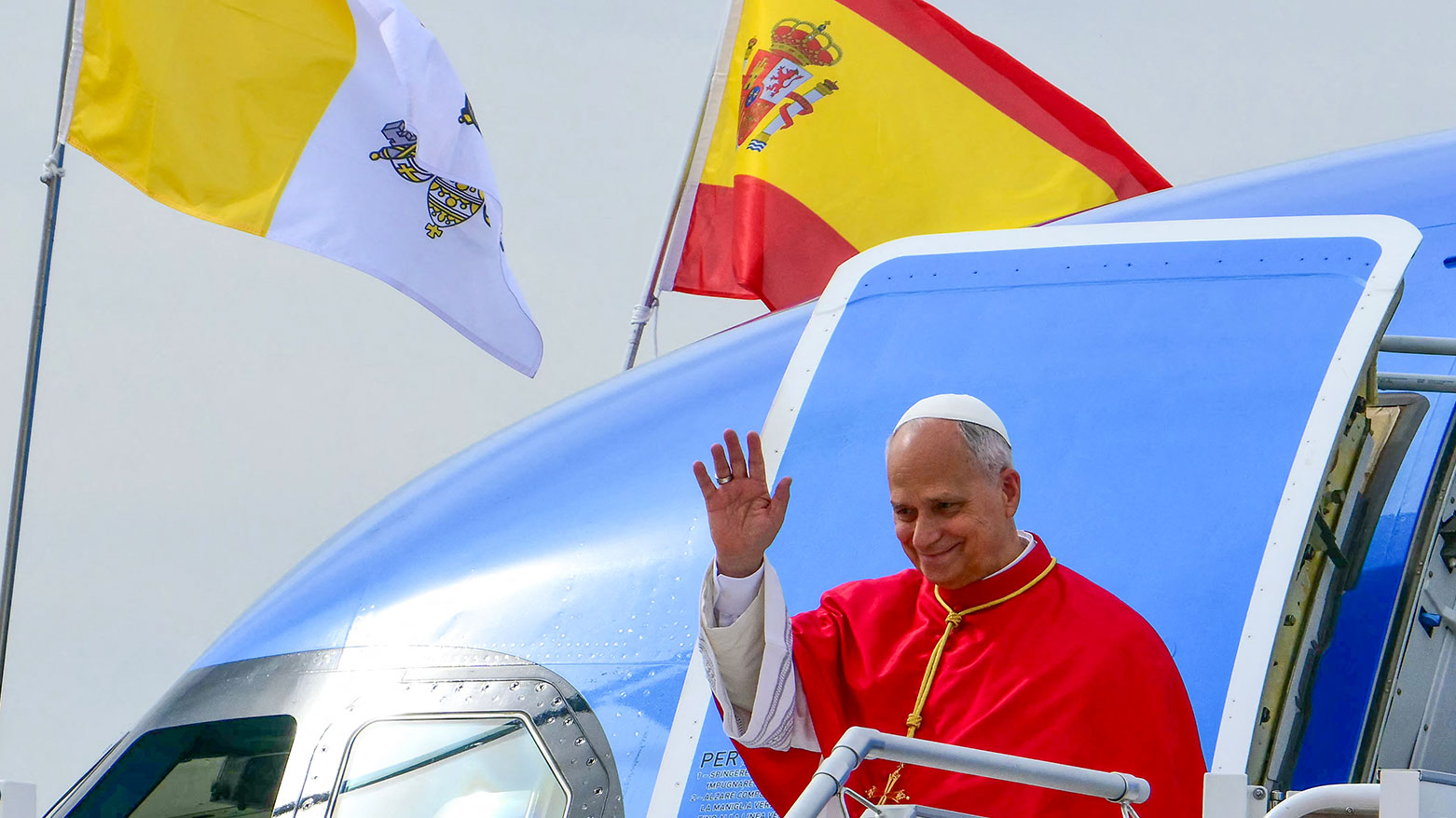
ERBIL (Kurdistan24) - Pope Leo XIV delivered a forceful critique of Europe's deepening political polarization on Saturday, using his first papal visit to Spain to warn against the seductive danger of identity-based politics and the deliberate fanning of social divisions.
Addressing an audience of royals, politicians, and diplomats at the Royal Palace in Madrid, the American pontiff argued that democratic societies are increasingly falling prey to leaders who gain popularity by stoking outrage.
Instead of securing nations through "weapons and walls," Leo argued that true stability requires societies to embrace complexity, dialogue, and mutual understanding.
"Today, the temptation to gain popularity by stoking the fires of polarization seems to be growing rather than diminishing," Leo told the gathered dignitaries, speaking entirely in Spanish.
He urged the audience to "shun those identity-based approaches that seem to clarify everything but instead populate the world with ghosts and enemies."
The visit, the first by a pope to Spain in 15 years, marks a significant intervention by the Vatican into the fraught political landscape of modern Europe.
As the continent grapples with the resurgence of populist movements, anxieties over immigration, and the erosion of civic discourse, Leo is positioning the Church as a mediating force against ideological extremism.
Rejecting 'Sterile Simplifications'
According to reporting by El País journalists Íñigo Domínguez and Miguel González, the Pope's speech was profoundly political in its implications, even as it avoided naming specific factions.
Leo called on citizens and leaders alike to "abandon the divisive and polarizing narratives of your social reality and history, in order to move from sterile simplifications to a fruitful appreciation of complexity."
This appeal to complexity is a hallmark of Leo's papacy, reflecting a broader anxiety within the Vatican regarding the fragmentation of democratic institutions.
According to The Associated Press reporters Nicole Winfield and Suman Naishadham, Leo is utilizing Spain, historically a bastion of Catholicism but now a highly secularized nation deeply divided over issues of immigration and national identity, as a focal point for a wider European message.
To illustrate his vision of coexistence, Leo invoked Spain's own history.
According to El País, the Pope pointed to the historical presence of Islam on the Iberian Peninsula as a period that featured "an attempt to create a space of contact, conversation, and dialogue regarding the meaning of truth among Christians, Muslims, and Jews."
The deliberate reference to a multicultural and multi-religious past stands in stark contrast to the rhetoric of Europe's increasingly vocal far-right movements, which often frame national identity in exclusive terms.
According to reporting by Agence France-Presse (AFP) correspondent Dario Thuburn, the audience at the Royal Palace included Santiago Abascal, the leader of the hard-right Vox party, which has spearheaded fierce criticism of Spain's left-wing government over its relatively liberal immigration policies.
The Digital Threat to Dialogue
Leo's critique extended beyond political rhetoric to the structural forces driving polarization.
Expanding on themes from his recent encyclical, Magnifica humanitas, the Pope warned that modern digital ecosystems are actively degrading public discourse.
He described new technologies as an "artificial environment" where "prejudices are exacerbated, critical thinking is weakened, and overbearing interests sow the impulses of death," according to El País.
To counter this "darkness of reason," Leo argued that societies must radically increase their investment in education, culture, and universities, positioning civil society as a critical "seedbed of participation."
This focus on education and meaning appears to be resonating with younger generations. En route to Madrid, Leo acknowledged to reporters that he was heartened by signs of a spiritual awakening among Spanish youth.
"They realize there's an emptiness, and a lack of a sense of meaning," he said, according to AFP.
With characteristic self-awareness, the Pope acknowledged that his visit to Madrid coincided with a series of concerts by the Puerto Rican superstar Bad Bunny.
"If they are confronted with the question 'Do you want to go see Bad Bunny or do you want to go to see the pope?' I think many will see Bad Bunny," Leo remarked, according to the AP. "But I think there will also be a few here to see the pope. And that says something."
A Broad Agenda of Reconciliation
Leo's weeklong itinerary reflects his broader commitment to reconciliation and human dignity.
According to the AP, the Vatican confirmed that the Pope will hold private meetings with survivors of clerical sexual abuse.
He acknowledged to reporters that the legacy of abuse remains "an open wound" within the Church. King Felipe VI lauded the Pope's "clarity and firmness" on the issue, calling it essential for the healing process.
Furthermore, Leo will carry his message of solidarity directly to the frontlines of Europe's migration crisis.
Later in the week, he will travel to the Canary Islands, accompanied by Prime Minister Pedro Sánchez. The archipelago has become the primary entry point for irregular migrants attempting the perilous Atlantic crossing from West Africa.
According to AFP, the Pope is expected to honor the thousands of migrants who have died along the route, reinforcing his long-standing demand for the dignified treatment of refugees.
The political weight of the visit will culminate on Monday, when Leo becomes the first pontiff to address both chambers of the Spanish Parliament.
He will speak before a deeply fractured legislature, where the ruling Socialist party is facing intense pressure from conservative opposition factions.
Yet, as his opening remarks in Madrid made clear, Leo's objective is not to align with any specific political agenda, but to challenge the confrontational nature of modern politics itself.
By urging societies to reject the politics of fear and embrace the difficult work of encounter, Leo XIV is issuing a profound defense of pluralism, arguing that true stability is forged not through isolation, but through a shared commitment to human dignity.
|
Summary In his first papal visit to the country, the American pontiff warned that identity politics and divisive narratives are fracturing democratic societies, urging a return to complexity and dialogue. Pope Leo XIV warned against rising political polarization and divisive identity narratives during a historic visit to Spain. Speaking in Madrid, the pontiff urged Europe to abandon "sterile simplifications" and embrace complexity, dialogue, and multicultural coexistence as antidotes to extremism. |