Forty Days of Solitude: An Ezidi Devotee Finds Eternity at Lalish
Amer Mahmoud has spent four decades observing the Summer Çile, an ascetic fast that links humanity to the cycles of the sun, and demonstrates the quiet endurance of a persecuted faith.
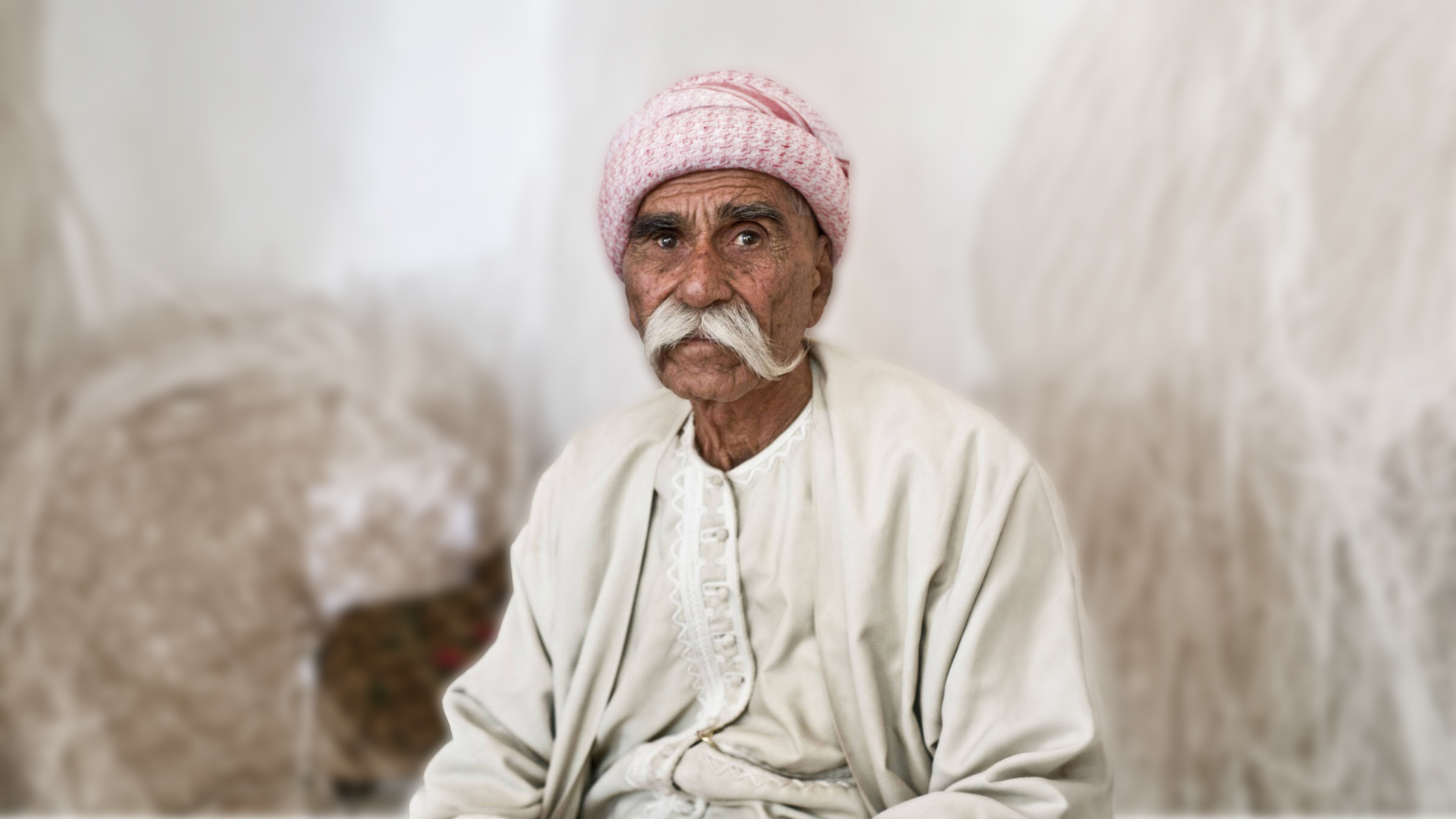
ERBIL (Kurdistan) - Before the sun breaks over the jagged limestone ridges of the Kurdistan mountains, the valley is wrapped in absolute stillness. The only sound is the rhythmic shuffle of bare feet on ancient stone. At Lalish, the holiest sanctuary of the Ezidi (also referred to as Yazidi or Yezidi) faith, footwear is forbidden. To walk here is to press oneself against history, to seek an unmediated connection with the earth. The air, heavy with the scent of wild fig and olive trees, holds the smoke of hundreds of oil lamps lit before dawn.
Here, beneath the iconic, fluted conical spires that rise like ancient obelisks toward the sky, Amer Mahmoud begins another day of silence and hunger. Mahmoud is observing the Çileya Havînê, or what can also be called the Summer Çile. It is a grueling, forty-day fast observed during the most punishing heat of the Mesopotamian summer.
For Mahmoud, however, this year carries an extraordinary weight.
As reported by Kurdistan24 correspondent Darman Baadri, this summer marks Mahmoud's fortieth consecutive season of fasting. It is a quiet, staggering feat of devotion that mirrors the endurance of his faith itself.
"Many Ezidi servants embrace this spiritual path with pure intentions, seeking closeness to the Almighty," Mahmoud told Kurdistan24, his voice softening as he reflected on a lifetime of ritual. "Gratefully, these efforts and intentions have been fulfilled, bringing my heart the inner peace and spiritual proximity I have long yearned for."
The Geography of Faith
To understand the Summer Çile is to understand Ezidism, one of the Middle East's oldest and most misunderstood monotheistic traditions.
Deeply rooted in the ancient landscape of upper Mesopotamia, the faith is transmitted primarily through oral hymns, qewls, sung in the Kurdish Kurmanji dialect. At its core is a profound reverence for the natural world.
For the Ezidis, the divine is not separated from creation; it is manifested in the sun, the soil, and the turning of the seasons.
According to researchers like Hussein Haji, who spoke with Kurdistan24, the forty-day fast is an obligation for high-ranking clergy, including the Baba Sheikh and the spiritual elite.
But for lay practitioners like Mahmoud, it remains a voluntary act of profound devotion.
The ritual is split, forty days in summer and forty in winter, a division that Haji explains as an act of divine mercy, sparing the faithful from continuous exposure to either extreme heat or biting frost.
Beginning annually on June 24 and concluding on August 2, the Summer Çile is inextricably linked to the solar cycle. It is a period of intense asceticism, where the withdrawal from worldly consumption allows for a deeper communion with the Creator and the cosmos.
The Philosophy of Sanctuary
In a region where religious identity has frequently been violently contested, the continued existence of Lalish and the observance of the Çile offer a living lesson in the mechanics of coexistence.
To witness the Summer Çile at Lalish is to observe a community practicing spiritual resilience through ritual memory. It also invites broader reflections on the fragile nature of religious freedom and the mechanisms of pluralism.
In his foundational A Letter Concerning Toleration, the English philosopher John Locke argued that genuine faith cannot be engineered or imposed by the sword; it is a deeply internal conviction that civil authorities are bound to protect rather than dictate.
Decades later, the French Enlightenment thinker Voltaire, in his Treatise on Tolerance, expanded on this premise. He asserted that societies achieve their greatest cultural and intellectual vitality when religious diversity is met with civic accommodation, warning that persecution inevitably breeds societal ruin.
For the Ezidi people, who have endured centuries of targeted persecution, most recently the devastating 2014 genocide perpetrated by the Islamic State, these philosophical ideals are not academic abstractions. They are matters of existential survival.
Lalish stands today as a living, breathing embodiment of the principle that protecting a minority's right to its sacred traditions strengthens the moral and social fabric of the broader society.
This ethos of protection has found vital institutional support within the Kurdistan Region. In the wake of the atrocities committed by ISIS, the Kurdistan Regional Government (KRG) has undertaken concerted efforts to preserve Ezidi heritage and safeguard the physical and spiritual infrastructure of the community.
Beyond providing sanctuary for hundreds of thousands of displaced Ezidis, the regional government has actively supported the reconstruction of destroyed sites and facilitated ongoing efforts to secure UNESCO World Heritage recognition for the Lalish temple complex.
These preservation initiatives underscore the Kurdistan Region's broader commitment to maintaining its historic religious mosaic.
By officially recognizing Ezidi festivals, protecting pilgrimage routes, and fostering a secure environment where the Summer Çile can be observed in peace, the government demonstrates how institutional support can fortify cultural identity.
Such policies reflect a conscious effort to transition religious coexistence from a lofty ideal into a functional, everyday reality, ensuring that ancient traditions can breathe, adapt, and flourish without the looming fear of erasure.
By protecting the right of devotees like Amer Mahmoud to walk barefoot through the valley and observe a forty-day fast in peace, the regional government is enacting the very tolerance that Locke and Voltaire argued was essential for civilized governance.
The preservation of the Summer Çile demonstrates that a society's strength is measured by its capacity to defend its most vulnerable and ancient traditions.
An Inheritance of Light
For the Ezidis, Lalish is the spiritual center of the universe, the place where the divine first rested upon the earth. The tomb of Sheikh Adi ibn Musafir, the faith's 12th-century reformer, lies within the complex, serving as the focal point of pilgrimage.
The persistence of the Çile amid the modern tumult of the Middle East is an act of spiritual defiance. It is devotion stripped of spectacle.
There are no massive crowds or televised sermons; there is only the internal discipline of individuals fasting beneath the summer sun, honoring an oral tradition passed down through millennia of survival.
As the sun arcs over the valley, casting long shadows from the conical shrines, Mahmoud returns to his prayers.
Forty years of fasting have etched the rhythm of Lalish into his bones. His devotion is a quiet reminder that while empires rise and fall across Mesopotamia, the sacred fires of Lalish remain lit, fueled by a faith that refuses to be extinguished.
|
Summary As Amer Mahmoud completes his 40th consecutive Summer Çile fast at the sacred Lalish Temple, his quiet devotion highlights the endurance of the Ezidi faith. Amid regional turbulence, the 40-day ascetic ritual reflects a profound union of nature, spiritual resilience, and cultural survival. |