Coordination Framework Backs Government's Economic Reform Plans, Urges Completion of Cabinet
Iraq's leading Shiite political alliance endorses measures to tackle economic challenges, electricity shortages, and private sector development
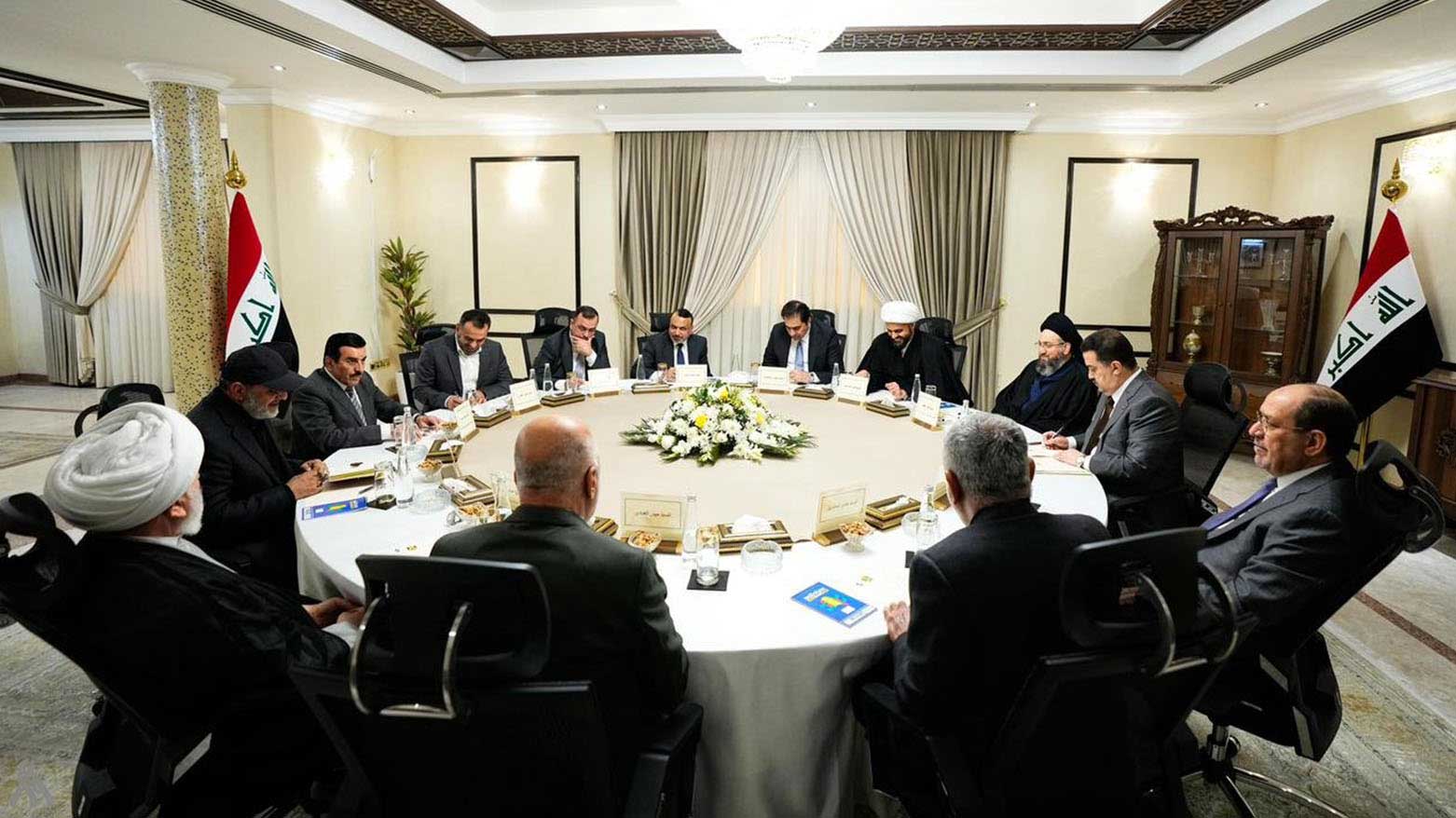
ERBIL (Kurdistan24) — Iraq's influential Coordination Framework reaffirmed its political support for the federal government on Monday, endorsing a series of economic reform proposals presented by Prime Minister Ali Falih al-Zaidi and calling for the swift completion of the ministerial cabinet as Baghdad seeks to address mounting economic and service-sector challenges.
The alliance made the announcement following its regular meeting held at the office of Ammar al-Hakim, the leader of the National Wisdom Movement (Tayar al-Hikma al-Watani), attended by Prime Minister Ali Falih al-Zaidi and senior leaders of the Coordination Framework.
According to a statement issued by the alliance's media office, participants reviewed a range of government and national issues, with discussions focusing primarily on the country's economic situation and the government's plans to address ongoing challenges.
During the meeting, al-Zaidi presented what the statement described as a comprehensive vision for resolving Iraq's economic crisis, alongside several policy proposals that received the backing of the Coordination Framework.
Among the key measures discussed were initiatives aimed at alleviating Iraq's chronic electricity shortages and activating labor and social security laws to strengthen and expand the private sector.
The participants also agreed to prepare a policy paper on behalf of the Coordination Framework outlining key national priorities. The document will be submitted to the ruling State Administration Coalition for discussion and consensus among its constituent political forces.
The alliance further emphasized that all political parties within the Coordination Framework would continue to support the government politically, legislatively, and through media engagement to ensure the success of its reform agenda.
In addition, attendees stressed the importance of accelerating efforts to fill the remaining vacancies in the federal cabinet, describing the issue as a priority for enhancing government performance and advancing reforms.
The meeting comes as Iraq faces persistent economic pressures despite benefiting from substantial oil revenues. Successive governments have struggled to diversify the economy, reduce dependence on the public sector, and create sustainable employment opportunities for a rapidly growing population.
Electricity shortages remain one of the country's most pressing challenges, particularly during the summer months when soaring temperatures place enormous strain on the national grid.
Frequent power outages have long fueled public dissatisfaction and have become a central test for successive administrations.
The government's emphasis on activating labor and social security legislation reflects broader efforts to encourage private-sector growth, a longstanding objective of Iraqi policymakers seeking to reduce reliance on state employment.
International financial institutions and economic experts have repeatedly called on Baghdad to implement structural reforms that would attract investment, stimulate entrepreneurship, and create jobs outside the public sector.
The Coordination Framework, a coalition of predominantly Shiite political parties that emerged as the principal governing force following years of political realignment, has played a decisive role in shaping Iraq's current political landscape.
Its backing remains crucial for the stability of Prime Minister al-Zaidi's administration and for the passage of key legislation in parliament.
Monday's meeting signals continued efforts by Iraq's governing coalition to maintain political cohesion while advancing economic reforms and addressing public demands for improved services, employment opportunities, and more effective governance.