Iran Strikes U.S. Bases in Jordan and Bahrain as Regional Conflict Intensifies
Missile attacks follow U.S. retaliation over downed Apache helicopter, casting doubt on Trump's claims of imminent peace deal
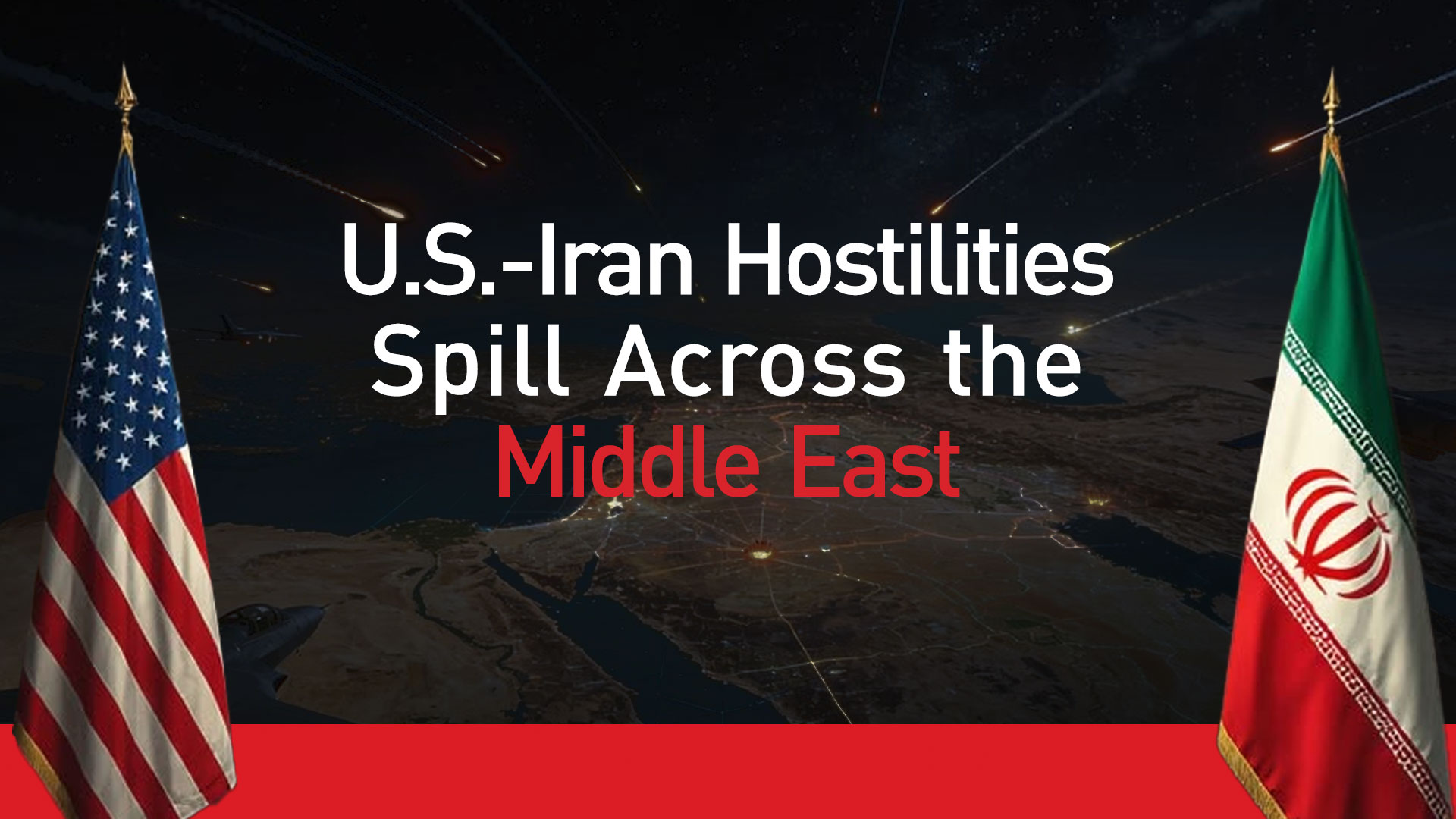
ERBIL (Kurdistan24) — Iran launched missile attacks against U.S. military installations in Jordan and Bahrain on Wednesday, marking a significant escalation in the latest round of hostilities between Tehran and Washington following the downing of an American Apache attack helicopter over the Strait of Hormuz.
The attacks represent the most serious confrontation between the United States and Iran since the ceasefire reached on April 8, raising fresh concerns about the stability of the truce and undermining U.S. President Donald Trump's repeated assertions that negotiations to end the wider Middle East conflict were nearing completion.
According to a statement carried by Iran's state-run IRNA news agency, the Islamic Revolutionary Guard Corps (IRGC) fired long-range missiles at what it described as key American military assets in Jordan.
Iranian officials claimed the strikes targeted four major objectives, including F-35 fighter aircraft shelters at an air base and a U.S. command center in the eastern Jordanian city of Al-Azraq.
Jordanian authorities disputed the effectiveness of the attack, with the country's armed forces announcing that air defense systems successfully intercepted and destroyed five Iranian missiles before they reached their intended targets.
"We intercepted and shot down five missiles launched from Iran towards Azraq. The interception resulted in debris falling, but there were no casualties or material damage," the Jordanian military said in a statement.
The confrontation quickly spread beyond Jordan. Air raid sirens sounded across Bahrain after the IRGC announced it had also targeted a U.S. military base in the Gulf kingdom, which hosts the headquarters of the U.S. Navy's Fifth Fleet.
Meanwhile, neighboring Kuwait reported that its air defense systems were engaging what officials described as "hostile aerial targets," though authorities did not immediately identify the source of the threat. Kuwait has been among the regional states affected by the widening conflict in recent months.
The Iranian strikes came hours after the United States carried out retaliatory military operations against targets inside Iran. U.S. Central Command (CENTCOM) said American Air Force and Navy fighter jets had struck Iranian air defense systems, ground-control facilities, and surveillance radar sites near the strategically vital Strait of Hormuz.
CENTCOM described the operation as a precision response to Iran's downing of a U.S. Apache helicopter earlier this week.
The Apache is the second crewed American aircraft confirmed lost during the conflict. In April, Iran also shot down a U.S. F-15 fighter jet. CENTCOM said both crew members aboard the helicopter were successfully rescued after the aircraft crashed near Oman's coastline.
Iranian Foreign Minister Abbas Araghchi vowed that Tehran would continue responding forcefully to military pressure from Washington.
"The U.S. has opted to test our determination. Our powerful armed forces will leave no attack or threat unanswered," Araghchi wrote on social media ahead of Wednesday's missile strikes.
Explosions were reported along Iran's southern coastline during the U.S. operation, with local media describing multiple blasts near the Strait of Hormuz. U.S. media reports indicated that several Iranian radar and air defense installations in the area were targeted.
The renewed fighting has cast further doubt on diplomatic efforts that Trump had said were approaching a breakthrough. Just hours before the latest escalation, the U.S. president told reporters that negotiations aimed at ending the three-month conflict were in their "final throes" and could conclude within "two or three days."
However, following the helicopter incident, Trump defended the American response, saying Washington would react "in a strong manner."
"I believe the response should be very strong, very powerful, and that's what this one is," Trump said in an interview with ABC News.
The latest confrontation follows a fragile ceasefire that has repeatedly come under strain. Over the weekend, Iran and Israel briefly resumed direct attacks before announcing another halt in hostilities, highlighting the volatility of the broader regional conflict.
Iran has insisted that any comprehensive settlement must also include an end to fighting in Lebanon, where the Iran-backed Hezbollah movement became involved after launching rockets into Israel on March 2. Israel responded with extensive airstrikes and a ground campaign that has killed more than 3,600 people, according to reports from the region.
Lebanese officials said at least 11 people were killed in Israeli strikes on the southern city of Tyre on Tuesday. The Israeli military subsequently ordered the evacuation of the entire city, prompting large-scale civilian displacement. Journalists on the ground reported heavy traffic moving north toward Sidon as residents fled the area.
The escalation has also renewed concerns over the future of the Strait of Hormuz, one of the world's most critical maritime chokepoints through which a significant share of global oil exports passes. Since the outbreak of the conflict, Iran has effectively restricted navigation through the waterway, disrupting international shipping and energy markets.
Oil prices rose by approximately one percent on Wednesday after optimism about a possible diplomatic breakthrough faded. Markets had briefly rallied the previous day on expectations that an agreement to reopen the strait might be imminent.
On Tuesday, Araghchi warned foreign military forces operating near the Strait of Hormuz to leave the area, arguing that their presence increased the risk of becoming involved in the conflict.
"The Strait of Hormuz is not international waters but shared between Iran and Oman," he said. "Foreign forces in proximity to our territory are at constant risk. The best solution is for them to leave."
Iran's Foreign Ministry also issued a warning to Gulf Arab states, emphasizing what it described as their "legal and moral responsibility" to prevent the United States or Israel from using their territory or military facilities to support operations against Iran.
The statement specifically called on countries along the southern shores of the Gulf to ensure their territories were not used to "plan, organize, execute, or support hostile actions" targeting the Islamic Republic.
With missile exchanges expanding across multiple countries and diplomatic efforts increasingly strained, fears are growing that the conflict could evolve into a broader regional war involving several Middle Eastern states and further threaten global energy supplies.