Zelensky Says Russia Preparing to Receive 30,000 More North Korean Troops
Ukraine warns Moscow is expanding military cooperation with Pyongyang as Kyiv strengthens border defenses and broadens long-range strikes inside Russia.
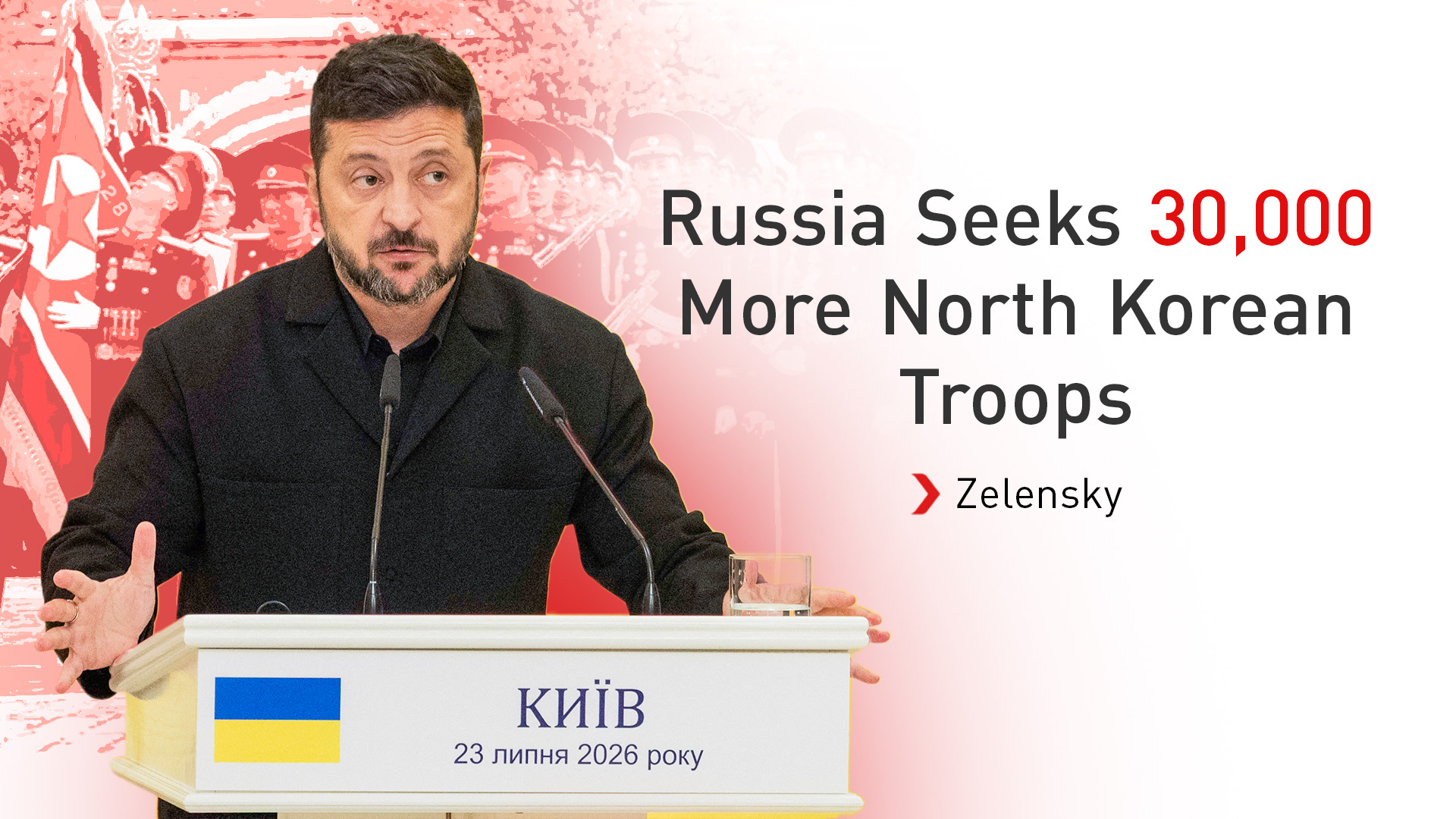
ERBIL (Kurdistan24) - Ukrainian President Volodymyr Zelensky on Sunday warned that Russia is preparing to deepen its military partnership with North Korea by receiving an additional 30,000 troops, describing the reported deployment as evidence that Moscow is planning for a prolonged conflict rather than seeking a negotiated end to the war.
In a video address posted on his official Telegram channel, Zelensky said Ukrainian intelligence indicates preparations have been underway since June in Russia's Voronezh region to accommodate the additional North Korean personnel.
He also asserted that Pyongyang is preparing to provide Russia with more ballistic missile launchers, arguing that the expanding military relationship extends beyond the battlefield in Ukraine and carries wider implications for international security.
According to Zelensky, the growing cooperation between Moscow and Pyongyang should be viewed not only through the lens of the war in Ukraine but also as a broader security challenge.
He contended that Russia's assistance is allowing North Korea to gain valuable battlefield experience while improving the effectiveness of its military equipment, developments he said could have consequences for countries across Asia within range of North Korean missile capabilities.
The Ukrainian leader presented the intelligence assessment as part of a wider picture of Russian military planning that, in Kyiv's view, points toward continued escalation rather than diplomacy.
Zelensky argued that despite sustaining heavy battlefield losses, Russia is preparing to expand its military manpower.
He cited Ukrainian assessments indicating that more than 221,000 personnel have joined the Russian Armed Forces during the first seven months of the year, while Russian casualties over the same period have approached 225,500, including both those killed and wounded.
Those figures represent Ukrainian claims and have not been independently verified.
He maintained that Moscow is laying the groundwork for additional mobilization despite those losses, urging Ukraine's international partners to increase pressure on Russia so that ending the war becomes a more attractive option than continuing military expansion.
The remarks come as Ukraine continues strengthening defenses far beyond the active front lines, reflecting Kyiv's effort to prepare simultaneously for immediate battlefield demands and longer-term security risks.
Along Ukraine's northern frontier, defensive work continues years after Russia launched its full-scale invasion through neighboring Belarus.
The Associated Press reported that extensive fortifications now dominate large stretches of the 1,084-kilometer border, including anti-drone protection over roadways, rows of razor wire, minefields and concrete anti-tank obstacles designed to slow any potential incursion.
Although Ukrainian officials say they currently see no evidence of a significant Russian troop buildup inside Belarus, they have made clear that reinforcing the border remains a strategic priority.
Belarus continues to be Russia's closest military ally, and Ukrainian authorities regard permanent defensive improvements as essential insurance against any future shift in the regional security environment.
The AP reported that Ukrainian border forces maintain continuous patrols using armored vehicles, drones and surveillance systems, while residents living near the frontier say the defenses serve both as reminders of the opening phase of the war and as reassurance that authorities are preparing for multiple contingencies.
Ukraine's emphasis on strengthening its northern border mirrors its broader strategy of combining defensive preparations with increasingly ambitious operations inside Russia.
In recent months, Kyiv has expanded its long-range drone campaign against targets deep inside Russian territory, aiming to disrupt infrastructure that Ukrainian officials say supports Moscow's war effort.
Those operations increasingly extend beyond traditional military installations, reflecting an evolving strategy intended to complicate Russian logistics and weaken the systems that sustain prolonged military operations.
The Associated Press reported that one of the most prominent recent targets was Wildberries, Russia's largest online marketplace. Ukrainian drones struck multiple warehouse facilities used by the company, causing extensive fires and disrupting operations across several regions.
Ukrainian officials have said facilities targeted in the campaign contribute to supplying Russia's military with equipment and technical components. The Kremlin has rejected that characterization, insisting the attacks struck civilian infrastructure.
Regardless of the competing claims, the strikes illustrate how the conflict has increasingly reached into Russia's domestic economy.
AP reported that the attacks have affected thousands of small businesses that rely on the retailer's logistics network while contributing to broader public awareness of a war that for years remained geographically distant from much of everyday life inside Russia.
Analysts cited by the agency said the attacks demonstrate Ukraine's effort to impose economic as well as military costs, complicating commercial activity while increasing pressure on logistical networks that underpin Russia's wartime economy.
Against that backdrop, Zelensky portrayed Russia's reported preparations to receive additional North Korean personnel as another indication that the Kremlin intends to sustain its military campaign despite mounting costs.
His warning also underscores the increasingly international character of the conflict.
What began as Russia's invasion of Ukraine has evolved into a confrontation shaped by expanding military partnerships, cross-border security concerns and growing pressure on economic infrastructure far from the front lines.
Whether the reported deployment of additional North Korean troops materializes remains to be seen.
But Zelensky argued that the intelligence points to a clear strategic direction: Russia is preparing for a longer war, while Ukraine continues strengthening both its defenses and its ability to project pressure beyond the battlefield.
For Kyiv, those parallel efforts reflect a conviction that military preparedness, sustained international support and continued pressure on Moscow remain central to shaping the next phase of the conflict.
|
Summary President Volodymyr Zelensky says Russia plans to receive another 30,000 North Korean troops, warning of deeper military cooperation with Pyongyang. As Ukraine fortifies its Belarus border and expands long-range strikes, Kyiv says Moscow is preparing for a prolonged war rather than peace. |