Israeli Minister Rejects US-Iran Peace Deal, Insists Israel Not Bound by Agreement
Ben Gvir demands continued military pressure on Hezbollah as Lebanon files UN complaint over alleged Israeli herbicide spraying
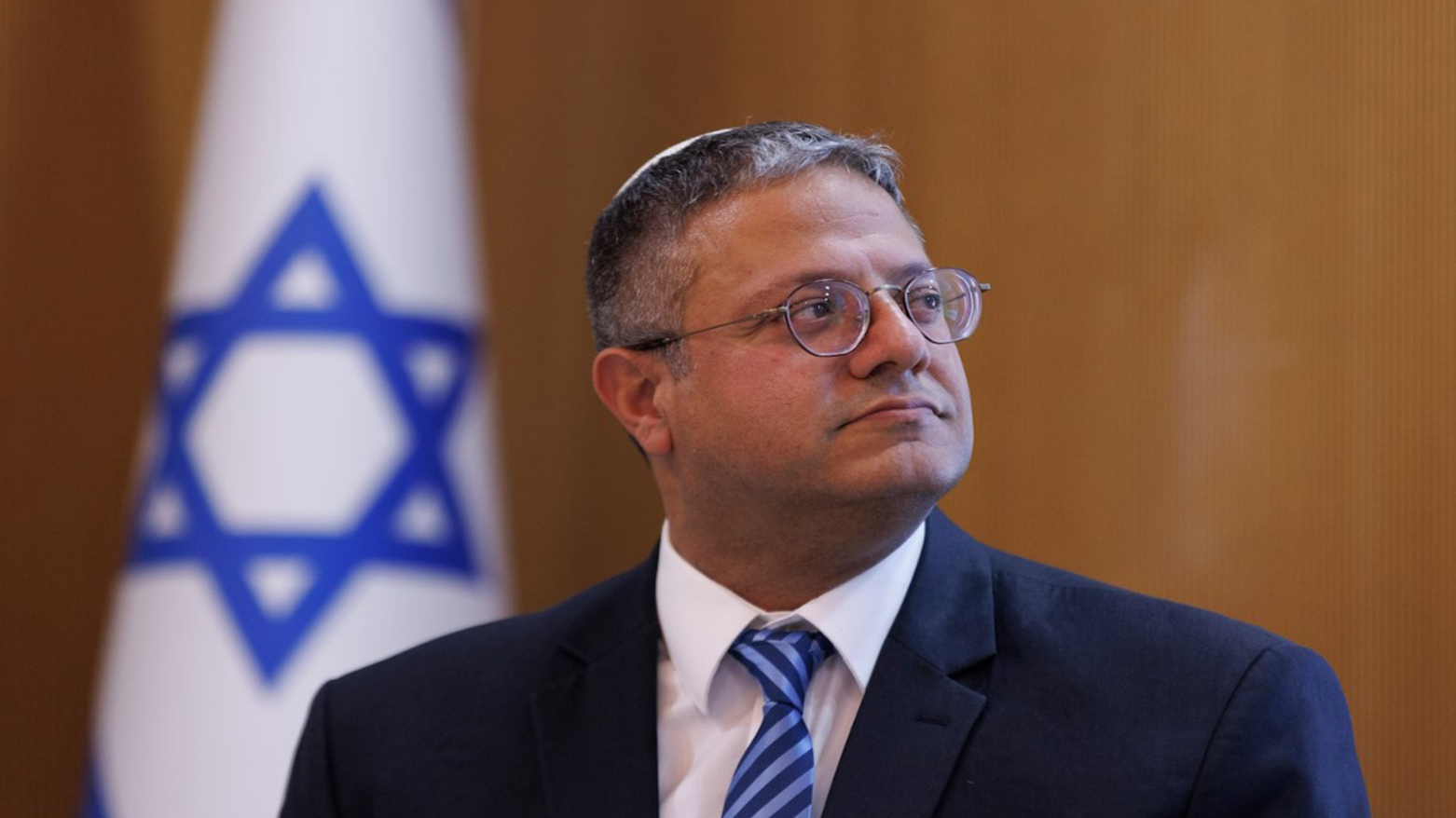
ERBIL (Kurdistan24) — Israel's far-right National Security Minister Itamar Ben Gvir on Monday rejected the recently announced U.S.-Iran agreement aimed at ending hostilities across the Middle East, including in Lebanon, declaring that Israel is not obligated to abide by the deal.
"Trump's agreement does not bind us... we are not party to this agreement. It does not safeguard our security," Ben Gvir said on his Telegram channel, delivering the first official Israeli reaction to the accord announced by Washington and Tehran.
The minister argued that Israel should continue its military campaign against the Iran-backed Hezbollah movement in Lebanon, insisting that any settlement falling short of the group's dismantlement would be unacceptable.
"We must not settle for anything less than the dismantling of Hezbollah. We must not withdraw from a single inch of territory that our soldiers have captured and cleared of terrorist infrastructure," he said.
Ben Gvir's remarks came a day after U.S. President Donald Trump publicly criticized Israel following an airstrike on Beirut's southern suburbs, a Hezbollah stronghold known as Dahiyeh. Trump said the attack had jeopardized progress toward the peace agreement that Washington and Tehran are expected to formally sign in Switzerland later this week.
Speaking to Axios on Sunday, Trump expressed frustration with Israeli Prime Minister Benjamin Netanyahu over the strike, warning that such actions threatened delicate diplomatic efforts aimed at ending months of conflict that have destabilized the region and disrupted global energy markets.
The latest escalation unfolded on Sunday when Israeli forces struck Beirut's southern suburbs, killing three people and wounding six others, according to Lebanon's civil defense agency.
Israel said the operation targeted a Hezbollah command center in response to what it described as Hezbollah drone activity against northern Israel.
Lebanon's state-run National News Agency reported that the strike hit an apartment in the Ghobeiry neighborhood, sending smoke and debris across a busy commercial area and sparking panic among residents. An AFP correspondent at the scene reported extensive damage and rescue efforts amid fears of additional casualties.
Israeli Prime Minister Benjamin Netanyahu's office said the military had targeted Hezbollah infrastructure in Dahiyeh in response to attacks originating from Lebanese territory. The Israeli military said it had conducted a "precise strike" against a Hezbollah command facility.
The attack followed warnings from senior Israeli officials that Beirut's southern suburbs would be targeted if Hezbollah continued attacks against northern Israeli communities. Earlier Sunday, Finance Minister Bezalel Smotrich called for decisive action under Israel's so-called "Dahiyeh Doctrine," while Ben Gvir urged stronger retaliation against Hezbollah.
Hezbollah claimed several attacks against Israeli troops operating in southern Lebanon on Sunday but denied launching attacks against northern Israel.
The Beirut strike further complicated efforts to secure a broader regional settlement. Tehran has repeatedly insisted that any agreement ending the Middle East conflict must include a ceasefire in Lebanon, where Hezbollah has been fighting Israel since March 2.
Iranian officials condemned the attack, with Brigadier General Mohammad Jafar Asadi, deputy commander of Iran's highest military command, warning that Israel's actions would not go unanswered.
"Without a doubt, these crimes will not go unanswered," Asadi told Iran's Defa Press news agency.
The conflict erupted after Hezbollah launched rockets toward Israel following the killing of Iran's supreme leader in U.S.-Israeli strikes earlier this year. Since then, the fighting has expanded into one of the deadliest confrontations between Israel and Hezbollah in decades.
According to Lebanese authorities, Israel's air campaign and ground operations since March have killed more than 3,700 people in Lebanon.
Meanwhile, Lebanon's Foreign Ministry announced Sunday that it had filed a formal complaint with the United Nations, accusing Israel of spraying high concentrations of the herbicide glyphosate inside Lebanese territory near the border earlier this year.
In a statement circulated on Sunday, the ministry said laboratory tests conducted on soil samples from the southern border villages of Aita al-Shaab, Ras Naqura, and Dhayra confirmed the presence of glyphosate at levels significantly exceeding those normally associated with agricultural use.
The complaint, submitted to both the UN Security Council and Secretary-General Antonio Guterres, is based on findings by Lebanon's government-linked National Council for Scientific Research.
Lebanese President Joseph Aoun previously condemned the alleged spraying operation, describing it as "a flagrant violation of Lebanese sovereignty and a crime against the environment and health."
The ministry also accused Israel of continuing attacks despite ongoing diplomatic efforts, citing the recent targeting of a Lebanese army vehicle that killed three military personnel.
According to the statement, such incidents undermine direct negotiations currently underway between Israel and Lebanon aimed at ending hostilities between the neighboring states.
In April, Israel and Lebanon launched unprecedented direct talks in Washington to seek a lasting ceasefire despite having no formal diplomatic relations. A new round of negotiations is expected later this month, following security discussions between military delegations from both countries at the Pentagon in May.
However, Hezbollah has rejected the direct negotiations and criticized a recently proposed conditional ceasefire, arguing that it requires the group to halt attacks while placing no equivalent obligations on Israel regarding military operations or troop withdrawals from Lebanese territory.
The future of those diplomatic efforts now appears increasingly uncertain as fighting continues on the ground and divisions emerge over the U.S.-Iran agreement intended to bring an end to the wider regional conflict.