Israel Strikes Beirut’s Southern Suburbs as Fighting with Hezbollah Continues
The attack on Dahiyeh comes amid escalating cross-border clashes and uncertainty over whether a proposed Iran-U.S. peace deal could help end the conflict in Lebanon
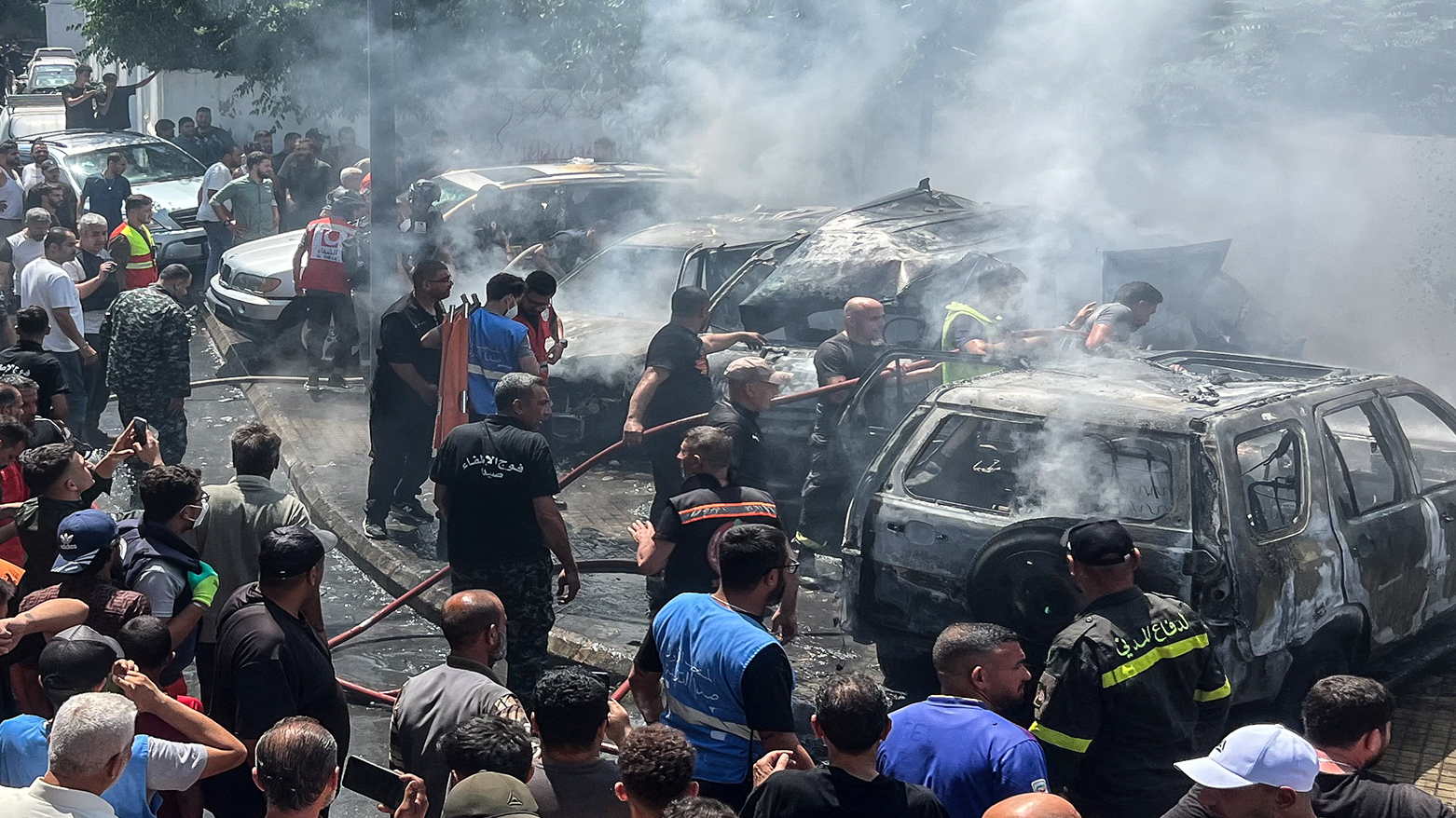
ERBIL (Kurdistan24) — Israel carried out airstrikes on Beirut’s southern suburbs on Sunday, targeting what it said were Hezbollah sites in the Dahiyeh district, as hostilities between Israel and the Iran-backed group continued despite ongoing diplomatic efforts to secure a broader regional ceasefire.
The office of Israeli Prime Minister Benjamin Netanyahu said Sunday the strikes were conducted in response to Hezbollah rocket fire toward Israeli territory.
“The Israeli military has just carried out strikes in the Dahiyeh district of Beirut against terrorist targets belonging to the Hezbollah terrorist organization, in response to Hezbollah's firing toward Israeli territory,” Netanyahu’s office said in a statement.
The Israeli military said it had “precisely struck” a Hezbollah infrastructure site in Dahiyeh, a southern suburb of Beirut that serves as a stronghold for the group.
Lebanon’s state-run National News Agency reported that the strike hit the Ghobeiry neighborhood, while an AFP correspondent said explosions were heard across Beirut’s southern suburbs.
The attack marked the latest escalation in a conflict that has intensified in recent months, drawing Lebanon deeper into a wider regional confrontation linked to the war involving Iran, Israel, and the United States.
Reacting to the strike, Mohammad Jafar Asadi, a senior Iranian military official, warned that Israel's actions in Beirut would not go unanswered. In remarks carried by Iranian media, Asadi described the attack on Dahiyeh as a crime and said Israel's latest military actions would face retaliation.
Iranian-linked media also reported unconfirmed claims that senior Hezbollah figures may have been targeted in the strike, although no official information had been released. Reports further suggested that Israel may have been attempting to target Hezbollah's secretary-general, claims that could not be independently verified.
The strike followed a series of Israeli attacks in southern Lebanon on Saturday. Lebanese authorities reported airstrikes across several areas, particularly around the southern city of Nabatieh, after the Israeli military issued evacuation warnings covering more than 20 locations.
Residents were instructed to leave their homes and move north of the Zahrani River, approximately 45 kilometers from the Israeli border. Israel last month designated all territory south of the river as a combat zone and has since expanded military operations in the area.
Lebanese state media reported strikes near Nabatieh, including around Kfar Remman and Kfar Tebnit, while artillery shelling continued overnight and into Saturday. The Lebanese army said one of its soldiers was seriously wounded in a drone strike near Nabatieh.
Another strike reportedly killed a local official in the Jezzine region of southern Lebanon.
Hezbollah said its fighters launched drone attacks against Israeli military vehicles and claimed to have repelled an attempted Israeli infiltration near Kfar Tebnit. The group also reported clashes with Israeli troops near Majdal Zoun, closer to the border.
Israel's military, meanwhile, said it had intercepted an aerial target crossing from Lebanon and announced that more than 70 Hezbollah infrastructure sites had been struck over the previous 24 hours.
The renewed violence comes as diplomatic efforts gather pace to end the broader Middle East conflict. Officials from both Iran and the United States have recently indicated that negotiations are advancing toward a possible agreement that could formally end months of fighting.
A senior U.S. official said Friday that a draft peace framework under discussion includes provisions related to Lebanon, reflecting Iran’s insistence that any regional settlement address the conflict between Israel and Hezbollah.
However, previous ceasefire arrangements have failed to halt the fighting. Neither Israel nor Hezbollah fully adhered to a truce intended to take effect in April, while a conditional agreement announced earlier this month after Lebanese-Israeli talks in Washington also collapsed.
Hezbollah rejected that proposal, arguing it required the group to stop attacks without obligating Israel to withdraw troops from Lebanese territory or cease military operations.
The prospect of a broader diplomatic settlement has fueled debate within Lebanon over the country’s future security arrangements and Hezbollah’s role.
Lebanese President Joseph Aoun warned Saturday that the country faced “a fateful test,” calling for unity around a sovereign state that holds exclusive authority over weapons and security matters.
“Either it's people unite around a sovereign state that monopolizes weapons, upholds the law and protects citizens irrespective of their affiliation or position, or it remains hostage to the logic of militias,” Aoun said.
Hezbollah lawmaker Ali Fayyad said Lebanon should accept any U.S.-Iran agreement that includes provisions addressing the country’s security concerns, while insisting that Beirut must retain responsibility for negotiating its own interests.
Further talks between Israeli and Lebanese officials are expected later this month, but Sunday's strike on Beirut underscores the fragility of diplomatic efforts and the risk that continued fighting could derail broader attempts to secure peace across the region.