Exclusive: Qatar Prepares Joint Investment Drive in Kurdistan Region Across Energy, Tourism, and Infrastructure
Qatari officials signal a shift from diplomatic engagement to concrete investment across energy, healthcare, and infrastructure sectors, citing Erbil’s social stability as a key driver for bilateral cooperation.
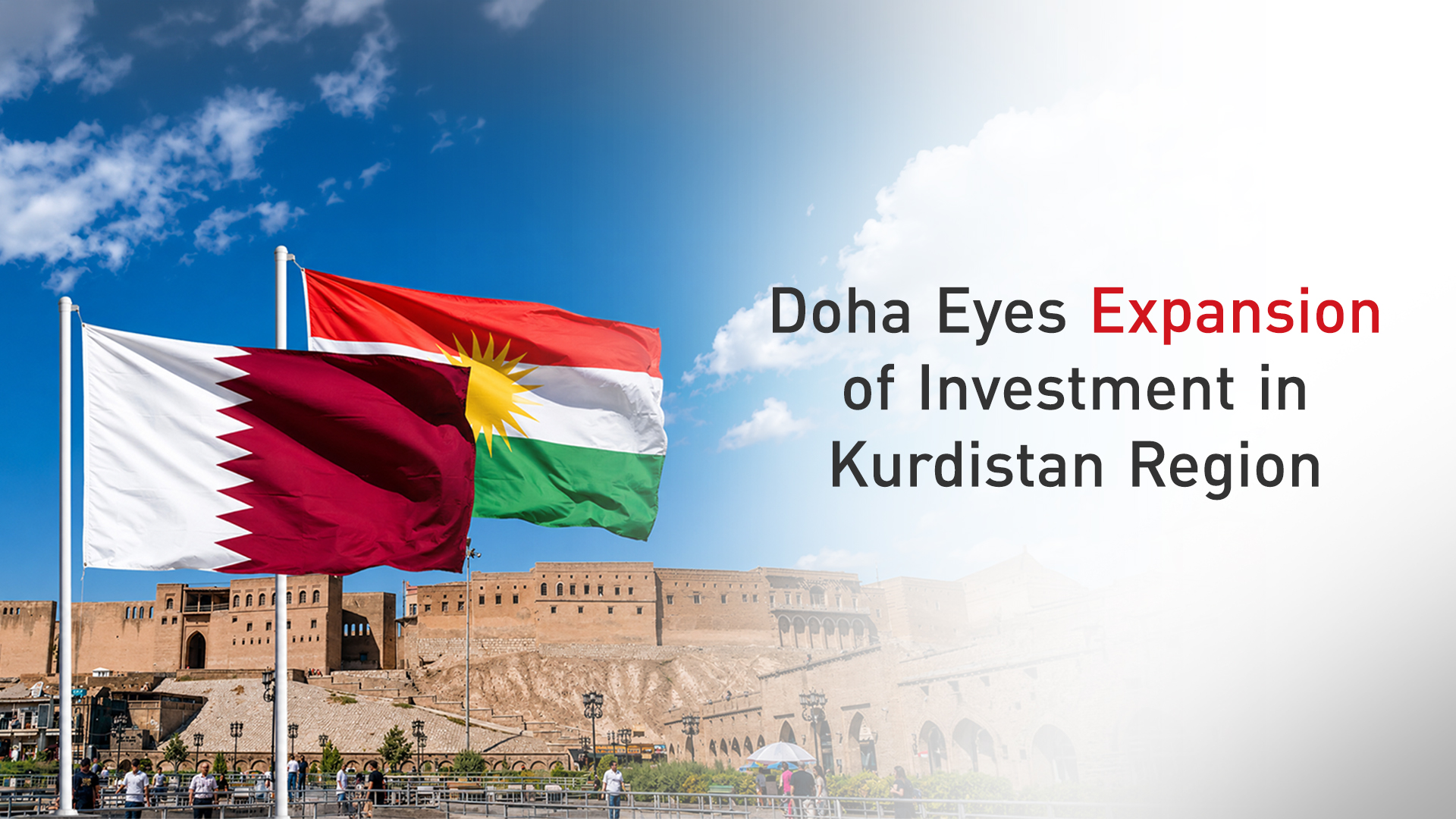
ERBIL (Kurdistan24) - The State of Qatar is preparing to launch a series of high-priority joint commercial projects in the Kurdistan Region, marking a decisive shift in Doha's regional strategy from high-level diplomacy to deep-rooted economic partnership. In a comprehensive assessment of the bilateral landscape, the Qatari Consulate General in Erbil confirmed that the mission is now actively working to translate years of constructive dialogue into tangible industrial and service-based ventures.
Responding to inquiries from Kurdistan24 regarding the future of the relationship, the Qatari diplomatic mission outlined a vision for a multi-sector economic expansion.
This initiative is designed to leverage the Kurdistan Region's relative stability and its strategic position as a commercial gateway.
By moving toward joint commercial projects, Doha is signaling that it views Erbil not merely as a diplomatic outpost, but as a primary destination for the deployment of Qatari capital and expertise.
A Foundation of Social Stability
The pivot toward concrete commercial ventures is underpinned by a favorable assessment of the region's internal security and social fabric.
Since the formal establishment of the Consulate General in Erbil in 2023, Qatari diplomats have conducted an extensive review of the local environment.
The mission described the community in the Kurdistan Region, and specifically within the capital of Erbil, as a "diverse, open, and tranquil society" that is uniquely defined by a pervasive spirit of tolerance and peaceful coexistence.
For international investors, particularly those from the Gulf, these social metrics are as critical as financial projections.
The consulate noted that this favorable social environment has had a direct, positive impact on their daily diplomatic operations and has significantly eased the process of coordinating with various official KRG institutions.
The mission highlighted the exceptional hospitality and warm reception provided by the people of Kurdistan, characterizing these cultural traits as foundational elements that have solidified the bonds of friendship and fraternity between the two nations.
In the eyes of Doha, a society that internalizes the values of coexistence presents a significantly lower risk profile for long-term, large-scale commercial investment.
Advancing the Bilateral Economic Agenda
Relations between Doha and Erbil have historically been rooted in mutual respect, but the recent surge in official delegation visits and increased engagement between the public and private sectors has accelerated the timeline for economic integration.
The consulate identifies a wide array of "fertile opportunities" and is now actively encouraging Qatari entrepreneurs and institutional investors to capitalize on the region's current developmental trajectory.
The strategic focus of these planned joint projects is broad, encompassing energy, tourism, agriculture, and infrastructure development. However, the consulate emphasized that the cooperation will extend beyond traditional industrial sectors.
Human capital development, facilitated through expanded cooperation in education, culture, and academic exchange programs, is viewed by the mission as a "vital pillar" for deepening ties.
By investing in the region's educational and cultural infrastructure, Qatar aims to foster a more sophisticated workforce capable of supporting the high-tech and specialized service sectors that joint Qatari-Kurdish ventures intend to introduce.
From Potential to Implementation
The current phase of the mission's work is characterized by intensive research and ongoing negotiations. The consulate revealed that it is focused on "building robust bridges" between private-sector companies and government institutions on both sides.
This matchmaking process is intended to create an ecosystem conducive to sustainable economic growth.
Specific investment opportunities in healthcare and education are under review, alongside large-scale agricultural initiatives designed to bolster regional food security. The mission expressed a high degree of optimism that these preliminary discussions will soon manifest as concrete, sustainable joint projects.
Both Doha and Erbil harbor a genuine desire to transform theoretical potential into strategic partnerships, with the upcoming administrative phase expected to witness the rollout of initiatives that will significantly bolster the Kurdistan Region's broader economic development.
Strategic Alignment with Baghdad
While the consulate's primary focus remains the expansion of ties within the Kurdistan Region, it framed its activities within the context of a broader commitment to the stability of the entire Iraqi state.
The Qatari mission utilized the dialogue with Kurdistan24 to formally welcome the formation of the new Iraqi federal government, led by Prime Minister Ali al-Zaidi.
Doha extended its best wishes for the al-Zaidi administration's success, emphasizing its support for the government's efforts to serve the Iraqi people and advance the nation’s monumental reconstruction requirements. This diplomatic endorsement is significant, as it situates Qatar’s activities in Erbil as part of a unified vision for a stable and sovereign Iraq.
The mission reaffirmed Qatar's commitment to continuously developing cooperation with the Republic of Iraq based on mutual interests and shared developmental goals.
Doha's vision includes full support for the preservation of Iraq's stability, unity, and territorial sovereignty, suggesting that economic success in the Kurdistan Region is viewed as a catalyst for national prosperity.
The 2023 Milestone and the Road Ahead
The official opening of the Consulate General of Qatar in Erbil in 2023 was a watershed moment that marked a pivotal turn in the strengthening of political and economic ties.
This move served as a powerful signal of Qatar's confidence in the region's stability and its recognition of the Kurdistan Region's elevated diplomatic standing within the broader Middle East.
As the consulate moves forward with its plans for joint commercial projects, the relationship is entering a more mature, results-oriented phase. The transition from providing diplomatic support to facilitating direct commercial partnership reflects a growing trust in the region's regulatory and legal frameworks.
By encouraging Qatari investors to look toward Erbil for strategic opportunities in energy and infrastructure, Doha is helping to integrate the Kurdistan Region into the wider economic architecture of the Gulf.
The planned joint ventures represent more than just a capital influx; they represent a long-term commitment to shared prosperity.
As the mission continues to bridge the gap between the public and private sectors, the Kurdistan Region is poised to become a central hub for Qatari-led development in Iraq.
For the people of Kurdistan and the broader Iraqi state, this burgeoning partnership promises to deliver modernized services, improved infrastructure, and a more resilient, diversified economy.
Ultimately, the Qatari mission's message is one of sustained engagement.
By focusing on projects that combine the strengths of both Kurdish local knowledge and Qatari financial power, the two sides are building a partnership designed to withstand regional volatility.
The "joint commercial projects" now on the horizon are the first fruits of a diplomatic strategy that has successfully prioritized stability, coexistence, and common economic interest.
As these initiatives take shape, they will likely serve as a blueprint for how Gulf nations and the Kurdistan Region can work together to secure a stable and prosperous future for the entire region.
Full Text of the Interview:
Kurdistan24: Since the Qatari Consulate was established only a few years ago, how do you assess the security situation, the social environment, and the reception you've received from the people of the Kurdistan Region, particularly in the capital, Erbil?
Qatari Consulate: Since the opening of the consulate, we have observed significant progress across various aspects of our diplomatic mission. This has facilitated our work and strengthened our relationships with both official and social institutions. We have encountered a diverse and open society characterized by a spirit of coexistence and tolerance, which has positively influenced our daily interactions with the people. Regarding the warm reception, we have experienced immense respect and hospitality from day one. This has played a major role in strengthening friendship and understanding, helping to anchor the fraternal relations between the State of Qatar and the Kurdistan Region within the framework of our special relationship with our brothers in the Republic of Iraq. We express our gratitude for the cooperation of official authorities and look forward to further strengthening cultural, economic, and human ties.
Kurdistan24: How do you evaluate the current level of bilateral relations between the Kurdistan Region and the State of Qatar? In which sectors do you see the greatest opportunities for further strengthening these ties?
Qatari Consulate: Relations are positive and continuously growing, built on mutual respect and a genuine desire to develop cooperation. Recent years have seen tangible progress through reciprocal visits and collaboration between government entities and the private sector. We see excellent opportunities for further strengthening these ties, especially in economy and investment. The Kurdistan Region possesses great potential in energy, tourism, agriculture, and infrastructure, sectors that have captured the interest of Qatari investors. We also believe that cooperation in education, culture, and human resource development through the exchange of expertise and academic programs will be a vital pillar for deepening our relationship.
Kurdistan24: Are there currently any joint projects between you and the Kurdistan Regional Government? Are there any plans or expectations for launching new joint initiatives in the near future?
Qatari Consulate: The current situation encompasses various areas of cooperation. Constant communication with KRG institutions helps identify new opportunities. The recent period has shown mutual interest in strengthening economic ties. Regarding joint projects, we are currently focused on building bridges between the public and private sectors of both sides. We are studying several promising opportunities in investment, tourism, agriculture, education, healthcare, and infrastructure. We are optimistic about launching joint projects in the coming period, given the genuine desire on both sides to transform potential into practical, sustainable partnerships.
Kurdistan24: What are Qatar's expectations and vision for cooperation with the new Iraqi government led by Ali al-Zaidi?
Qatari Consulate: The State of Qatar views Iraq as a brotherly nation and welcomes the formation of the new government, wishing it success in serving the people and enhancing development and stability. Qatar's vision is centered on the continuous development of cooperation with the Republic of Iraq based on mutual respect and shared interests. We look forward to strengthening cooperation in economic, developmental, and investment fields while encouraging partnerships that achieve prosperity. Furthermore, Qatar reaffirms its support for any step that strengthens the stability, unity, and sovereignty of Iraq, in line with the fraternal ties that bind our two nations.
|
Summary The Qatari Consulate in Erbil announced plans for major joint commercial projects in the Kurdistan Region, targeting energy, tourism, and healthcare. Citing the region's stability, Doha aims to expand bilateral ties and support the new Iraqi government under Prime Minister Ali al-Zaidi. |