Hezbollah Official Tells Kurdistan24 Israel Plans Attacks Beyond Lebanon
In an exclusive statement to Kurdistan24, senior Hezbollah official Ghalib Abu Zeinab accused Washington of weaponizing Lebanon's economic crisis and warned that Israel's ambitions extend far beyond the Levant.
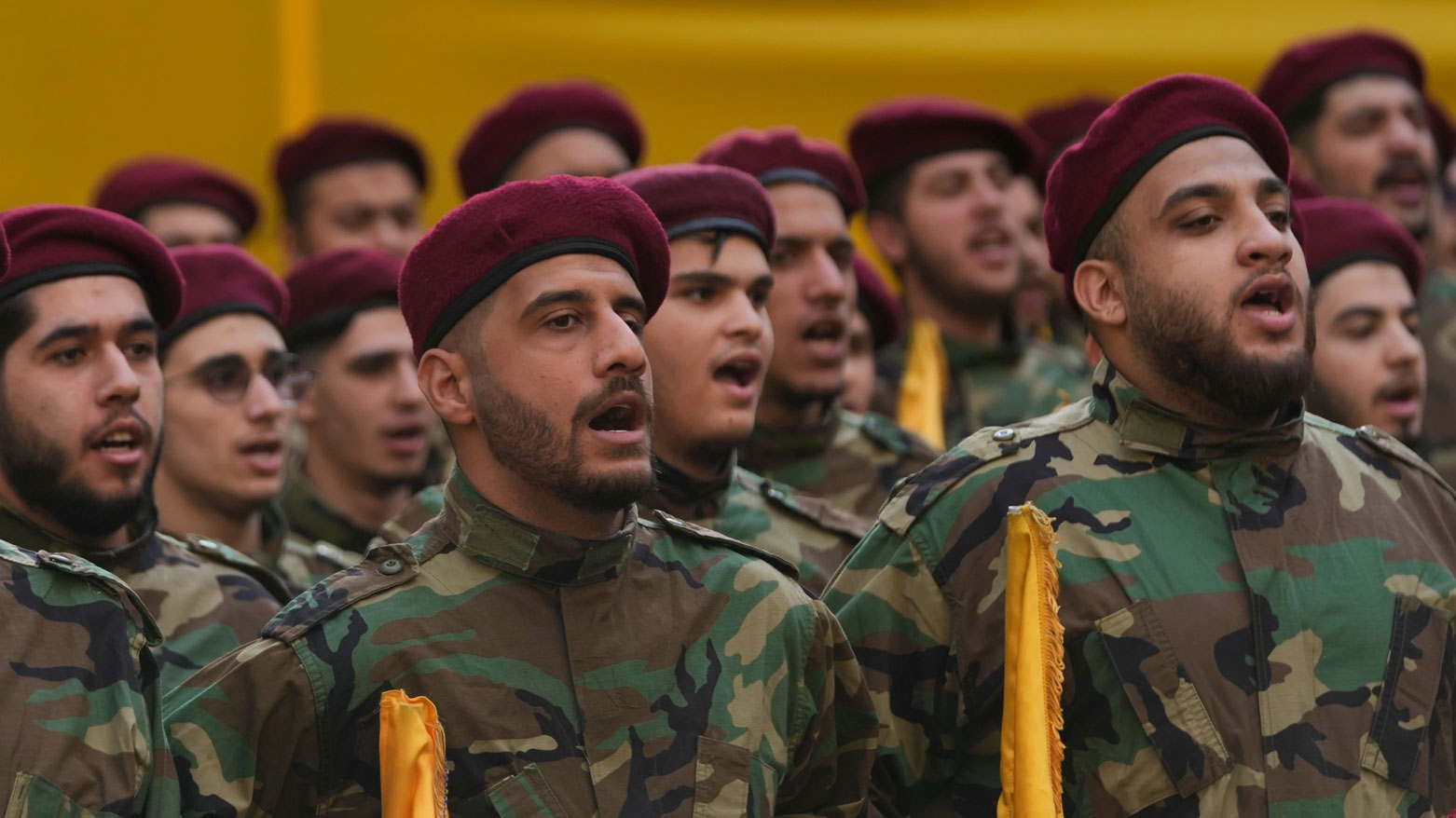
ERBIL (Kurdistan24) - A senior Hezbollah official has delivered a stark and expansive warning regarding the future of the Middle East, asserting that Israel intends to launch military offensives against at least three other nations following its current operations in Lebanon.
In a wide-ranging exclusive statement to Kurdistan24, Ghalib Abu Zeinab, a member of Hezbollah's leadership, outlined the militant group's perspective on the rapidly deteriorating security landscape.
Abu Zeinab addressed the repeated collapse of ceasefire agreements, the dynamics of indirect negotiations, Lebanon's dire economic crisis, and the broader geopolitical implications of the U.S.-Iran diplomatic process.
Framing the conflict through a starkly ideological and strategic lens, the Hezbollah official suggested that the current hostilities in the Levant represent merely the first phase of a broader regional campaign.
The assertions reflect the deepening polarization across the Middle East, where competing narratives surrounding military intentions continue to destabilize efforts to secure a durable peace.
The Vision of "Greater Israel" and the Collapse of Ceasefires
According to Abu Zeinab's remarks to Kurdistan24, the failure of successive truces in Lebanon stems directly from what he characterized as Israel's long-term strategic objective: the establishment of a "Greater Israel."
The Hezbollah official claimed that while his group adhered strictly to the cessation of hostilities established in 2024 for a period of 15 months, Israel consistently violated the agreement under the pretext of maintaining "freedom of movement."
Abu Zeinab alleged that during this timeframe, the Israeli military killed 500 Lebanese citizens and Hezbollah personnel, and demolished hundreds of buildings under the guise of targeting weapons caches, often bypassing inspections by the Lebanese Armed Forces.
He argued that Israel's fundamental goal is to secure total air superiority across Lebanon, Syria, and Gaza.
In response to this perceived objective, Abu Zeinab stated that Hezbollah was compelled to abandon the fragile truce and shift toward an "open military confrontation" with Israel.
Interpreting the U.S.-Iran Negotiations
The Hezbollah official's remarks also provided insight into how Iran's regional allies interpret the recent, high-stakes diplomatic engagement between Washington and Tehran.
Abu Zeinab characterized the recent talks held in Switzerland, which produced a 60-day roadmap toward a final agreement, as evidence of a U.S. retreat.
He claimed that the United States had failed to topple the Iranian government through military force, even following the assassination of former Supreme Leader Ayatollah Ali Khamenei.
According to his assessment, Washington was forced back to the negotiating table because its military power had reached its limits against a "resistance state."
In his remarks to Kurdistan24, Abu Zeinab pointed to Iran's capacity to disrupt global commerce by closing the Strait of Hormuz and its ability to strike U.S. bases as critical factors that demonstrated to American policymakers that a military resolution was no longer viable.
The Washington Talks and "Dangerous Conditions"
Turning to the domestic political situation in Lebanon, Abu Zeinab delivered harsh criticism of the country's political leadership, specifically targeting the presidency for its role in ongoing, U.S.-brokered talks.
Hezbollah refuses to engage in direct negotiations with Israel, fearing it would amount to "free recognition." Consequently, Parliament Speaker Nabih Berri represents the interests of the Amal Movement and Hezbollah in the indirect discussions.
Abu Zeinab revealed that Lebanon initially proposed a comprehensive framework involving a permanent ceasefire, Israeli withdrawal, reconstruction efforts, and prisoner releases. However, he claimed that Israel rejected the proposal.
Subsequently, according to Abu Zeinab, U.S. Secretary of State Marco Rubio pressured the Lebanese President into accepting an Israeli-dictated framework containing two "critically dangerous" conditions.
The first condition, according to the Hezbollah official, would grant Israel total freedom of movement within Lebanon, allowing it to strike targets at will without facing retaliation. The second condition would require Hezbollah to withdraw completely south of the Litani River, while the Israeli military would not be compelled to withdraw from occupied areas.
Economic Pressure and Domestic Crises
The remarks also highlighted Hezbollah's narrative regarding Lebanon's devastating economic collapse. Abu Zeinab characterized the financial crisis not as a failure of domestic governance, but as a "premeditated siege" initiated in 2016 by the United States and Europe.
He alleged that Western powers intentionally bankrupted Lebanese banks and restricted financial transfers to cripple Hezbollah's support base in the south.
Furthermore, he accused Lebanon's political leadership of hoarding international aid to ensure the population remains destitute, with the ultimate goal of turning public sentiment against the resistance.
However, he asserted that the Lebanese people would "rather face hunger and martyrdom than surrender their dignity."
The Hezbollah official also raised concerns regarding national sovereignty, claiming that the U.S. administration effectively seized control of Beirut International Airport following the 2024 war.
He alleged that security agencies at the facility are staffed with foreign-aligned personnel who regularly obstruct Iranian flights, criticizing Lebanese officials for working under U.S. orders to hinder Iranian diplomats.
A Warning of Regional Expansion
In perhaps his most expansive geopolitical claim from the remarks given to Kurdistan24, Abu Zeinab warned that Israel's ambitions extend far beyond the borders of Lebanon.
He asserted that Israeli expansionism poses an existential threat to numerous regional states, specifically naming Egypt, Syria, Saudi Arabia, Turkey, and Pakistan.
He called upon these regional powers to unite and form a "preventative wall" against Israeli actions, expressing hope that these nations would take a more active role in countering U.S. influence over Lebanon. Washington, he claimed, seeks only to advance Israeli interests at the expense of the region's populations.
While the claims of a wider regional war represent the perspective of a militant organization actively engaged in hostilities, the Hezbollah officials remarks highlight the profound polarization gripping the Middle East.
As diplomatic efforts in Switzerland and Washington attempt to impose a fragile order, the rhetoric emanating from Hezbollah underscores the deep-seated mistrust that threatens to unravel the region's delicate security architecture.
|
Summary In an exclusive statement to Kurdistan24, a senior Hezbollah official claimed Israel intends to attack three other countries after Lebanon, alleging U.S. complicity and warning of a broader regional war while criticizing Lebanese leadership and proposed ceasefire terms. |