Third Convoy Tests Continuing Return to Sere Kaniye
A third convoy carrying 516 displaced Sere Kaniye families has begun returning from Washukani camp as authorities continue a phased resettlement process.
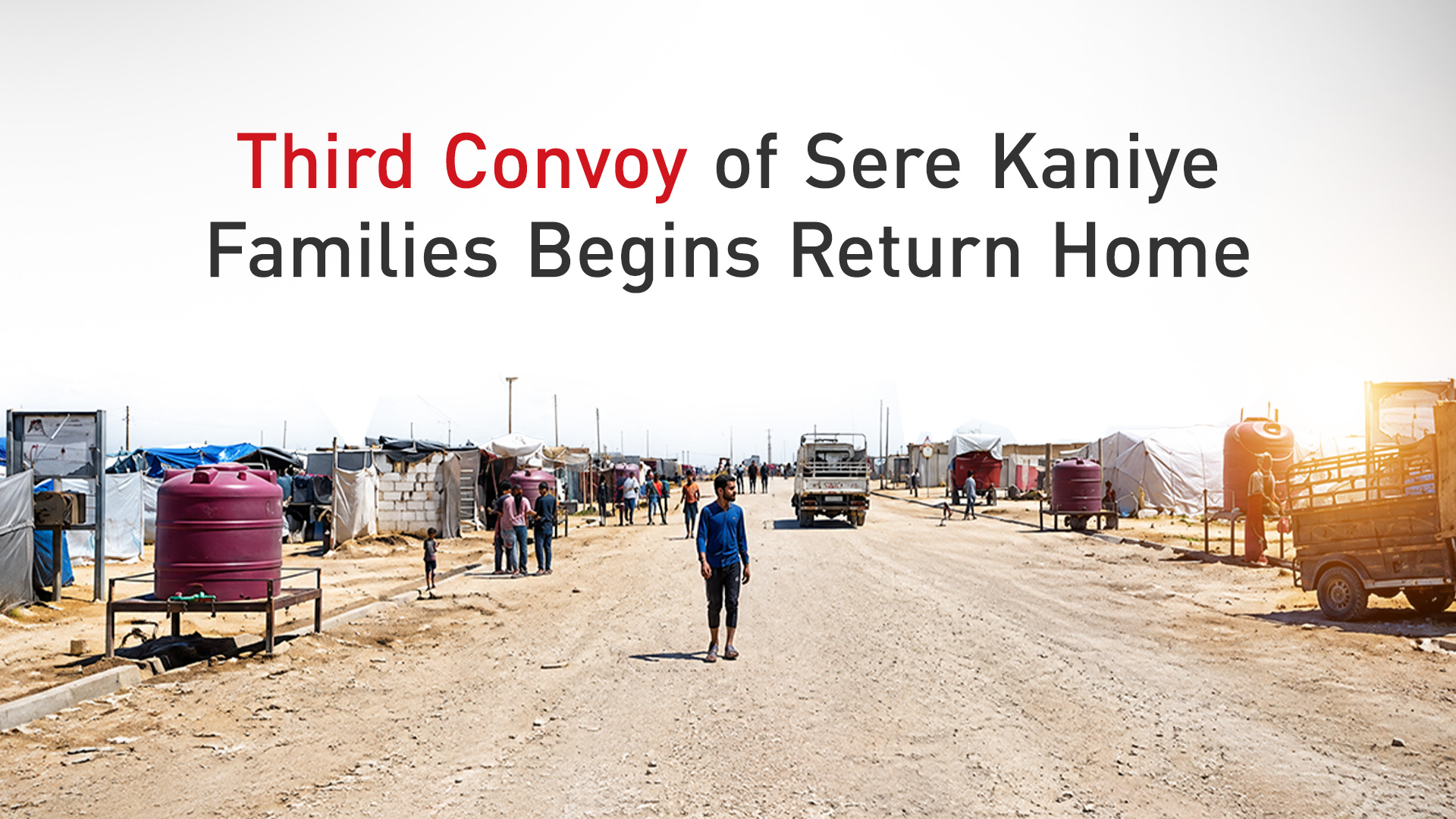
ERBIL (Kurdistan24) - A third organized convoy carrying 516 displaced families from Sere Kaniye, Western Kurdistan, began returning from Washukani camp on Monday, as authorities continue a phased effort to resettle residents who have spent years away from their homes.
Siyamend Afrini, deputy commander of the General Security Forces and a member of the Migration Committee in Hasakah province, told Kurdistan24 that the families were returning to villages in the Sere Kaniye area as part of an operation expected to continue until the displaced population has been able to go home.
He said around 75 villages had been completely emptied and that nearly 2,000 families are expected to resettle in those communities.
The return is being organized in four phases, with roughly 500 families moving during each stage.
Once that part of the process is completed, authorities plan to turn to homes inside Sere Kaniye city itself.
Afrini said displaced residents from Hasakah are currently living in some homes belonging to Sere Kaniye families. Those properties are expected to be vacated so that their original residents can eventually return.
Security remains one of the main concerns surrounding the process.
Afrini said authorities had asked security forces in Sere Kaniye to cooperate in protecting the families during their journey and after they reach their villages.
He said there were currently no major obstacles to the latest convoy, although some displaced residents remain unwilling to return because of fears over security.
One of the most serious dangers is the presence of mines and unexploded devices.
Afrini described the Sere Kaniye displacement issue as fundamentally connected to security and said the area differs from many other cities because large numbers of mines were planted there.
He said government bodies, organizations and military security forces had begun working on the problem and called for demining to be accelerated to prevent civilian casualties.
Hundreds of mines and explosive devices remain scattered across some villages, preventing many families from safely reaching their homes.
Another group of displaced families is expected to return on Saturday as the authorities continue working through the remaining cases.
The latest convoy follows a difficult and uneven return process that began earlier this year.
On Aug. 10, the first organized convoy carrying around 650 families left Hasakah for Sere Kaniye after years of displacement.
That return was initially greeted with optimism by families who had waited years to see their homes again.
Read More: First Convoy of 650 Sere Kaniye Families Begins Return After Seven Years
But several returnees were attacked after arriving in the city, according to the Sere Kaniye Displaced Persons Committee.
The committee blamed resettled Arab residents for the assaults and called on Syrian authorities and local security bodies to protect returnees.
The following day, official convoys were temporarily suspended.
Read More: Resettled Arabs Attack Kurdish IDPs in Serê Kaniyê
Siyamend Afrini said at the time that returns would resume only after security improved and sufficient guarantees were in place.
Several suspects were arrested following the violence, according to security officials.
Read More: Return to Sere Kaniye Suspended After Attacks on Displaced Families
The process restarted in September, when around 700 displaced families were prepared to return with humanitarian assistance from the Barzani Charity Foundation.
Food, essential supplies and medical support were provided to help families resettle after years in camps and temporary accommodation.
Read More: 700 Displaced Serê Kaniyê Families Set to Return Home
The return effort addresses one of the lasting consequences of the 2019 fighting around Sere Kaniye, also known as Ras al-Ayn.
More than 14,000 families, or an estimated 85,000 people, were displaced from the area following Türkiye's military operation and the advance of allied Syrian armed groups, according to figures previously cited by local representatives.
Many ended up in camps and communities across Hasakah province.
Their return has been complicated by more than security alone.
Questions surrounding destroyed homes, occupied properties, basic services and land ownership have remained central to whether families can return permanently.
Some of those issues are now being addressed in stages.
Authorities are first concentrating on villages that were emptied, before moving toward the more complicated situation inside the city, where homes belonging to displaced residents may currently be occupied by others.
For the 516 families in Monday's convoy, the immediate concern is simpler: reaching their villages safely and determining whether conditions allow them to rebuild their lives there.
The wider process remains unfinished.
The Migration Committee says returns will continue until the displacement file is completed, but officials also acknowledge that not every family is yet ready to go back.
For some, the road home is now open.
For others, mines, security fears and unresolved housing questions still stand between displacement and return.