Water Crisis Leaves More Than 1,000 Baghdad Homes Without Supply
Residents of Baghdad's Al-Fallahat neighborhood say months-long water shortages have forced them to buy tanker water and rely on salty well water
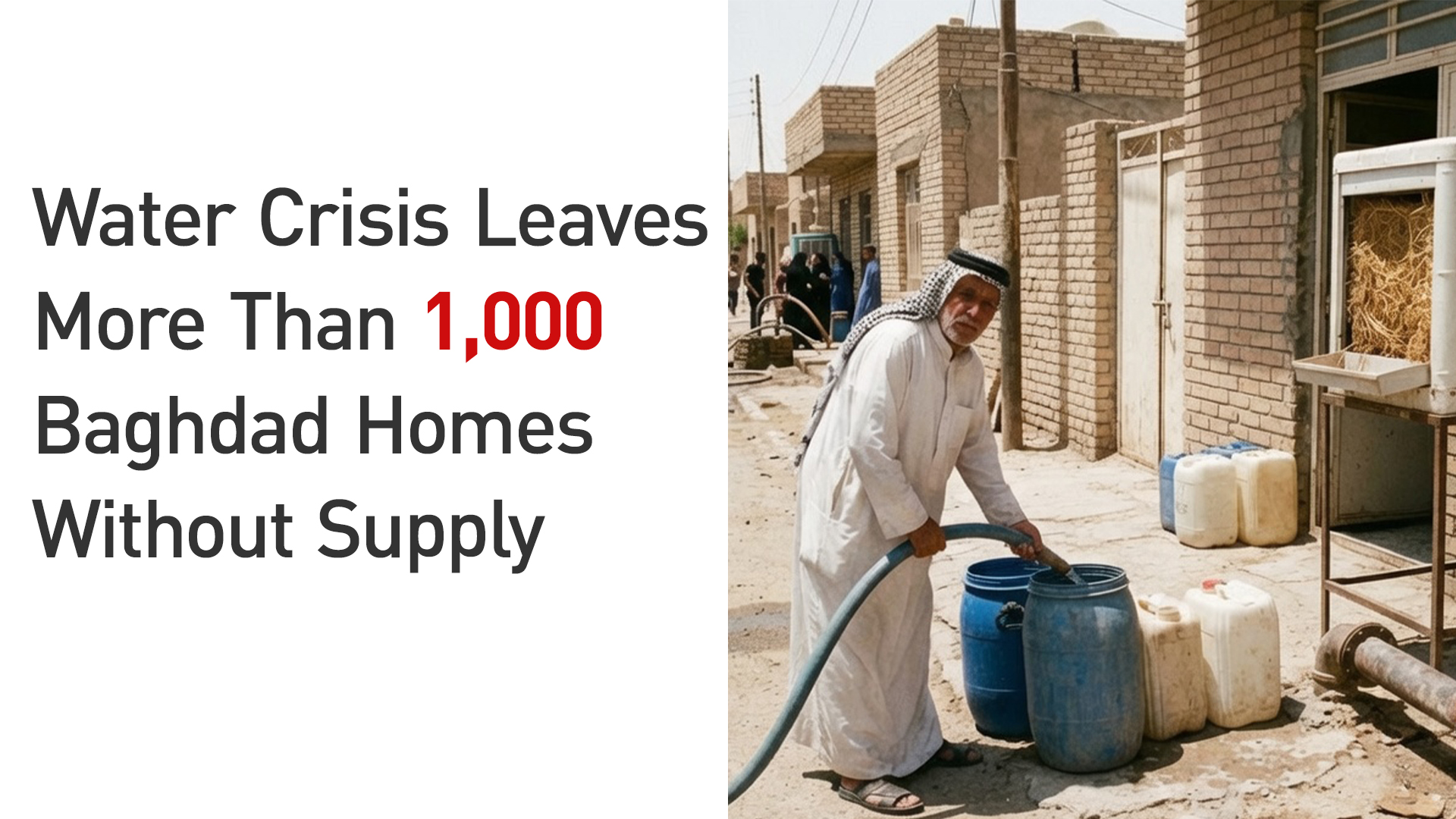
ERBIL (Kurdistan24) - As summer temperatures continue to climb across Iraq, a severe water shortage has left more than 1,000 homes in Baghdad's Al-Fallahat neighborhood without a reliable water supply, forcing residents to purchase water from tankers and search for alternative sources to meet their daily needs.
The crisis has emerged alongside the start of the summer season, with water pipes in the area running completely dry and many families struggling to secure enough water for basic household use.
In a field report documenting the challenges faced by local residents, Kurdistan24 correspondent Saif Ali visited Al-Fallahat and spoke with families affected by the ongoing shortage.
Residents said the lack of water has also disabled their cooling systems, making daily life even more difficult amid rising temperatures. They added that many household wells are not a viable solution because the water is too salty for practical use.
Salam Fallahi, a tribal leader in the area, told Kurdistan24 that the crisis returns every summer and has worsened in recent months.
"The water crisis begins with the arrival of summer. Water has been completely cut off from our area for several months, and more than 1,000 homes here have no water supply," he said.
"Some families have drilled wells, but the water is salty, while others are forced to buy water from tankers."
The need to purchase water has placed a significant financial strain on residents, many of whom say the water they buy is not always clean enough for use.
Ali Marwan, a resident of the neighborhood, told Kurdistan24 that families are paying 10,000 Iraqi dinars for every 1,000 liters of water.
"We buy 1,000 liters of water for 10,000 dinars. It becomes a major expense over the course of a month," he said. "Even then, the water is not clean and is not suitable."
Residents have also voiced strong criticism of government officials and lawmakers, accusing them of neglecting the area except during election periods.
Sirwan Mohammed, another local resident, said the neighborhood only receives water during the winter months.
"Water is only available in winter. From now until the next three months, there will be no water," he said.
"Officials only appear during election campaigns, and afterward none of them can be seen."
The water shortage comes as many Iraqis continue to struggle with broader public service challenges. For residents of Al-Fallahat, the combination of extreme summer heat and the lack of reliable water supplies has made daily life increasingly difficult.
As the crisis persists, residents say they are still waiting for a lasting solution and continue to ask when the recurring shortages will finally come to an end.