Netherlands Eases Iraq and Kurdistan Region Travel Advisory as Airspace Reopens Despite Regional Uncertainty
“The Dutch travel advice for Iraq has been updated. Large parts of Federal Iraq, as well as the Kurdistan Region, have shifted from red to orange, returning to the situation before the recent regional unrest. This means that essential travel is now possible,” the embassy said.
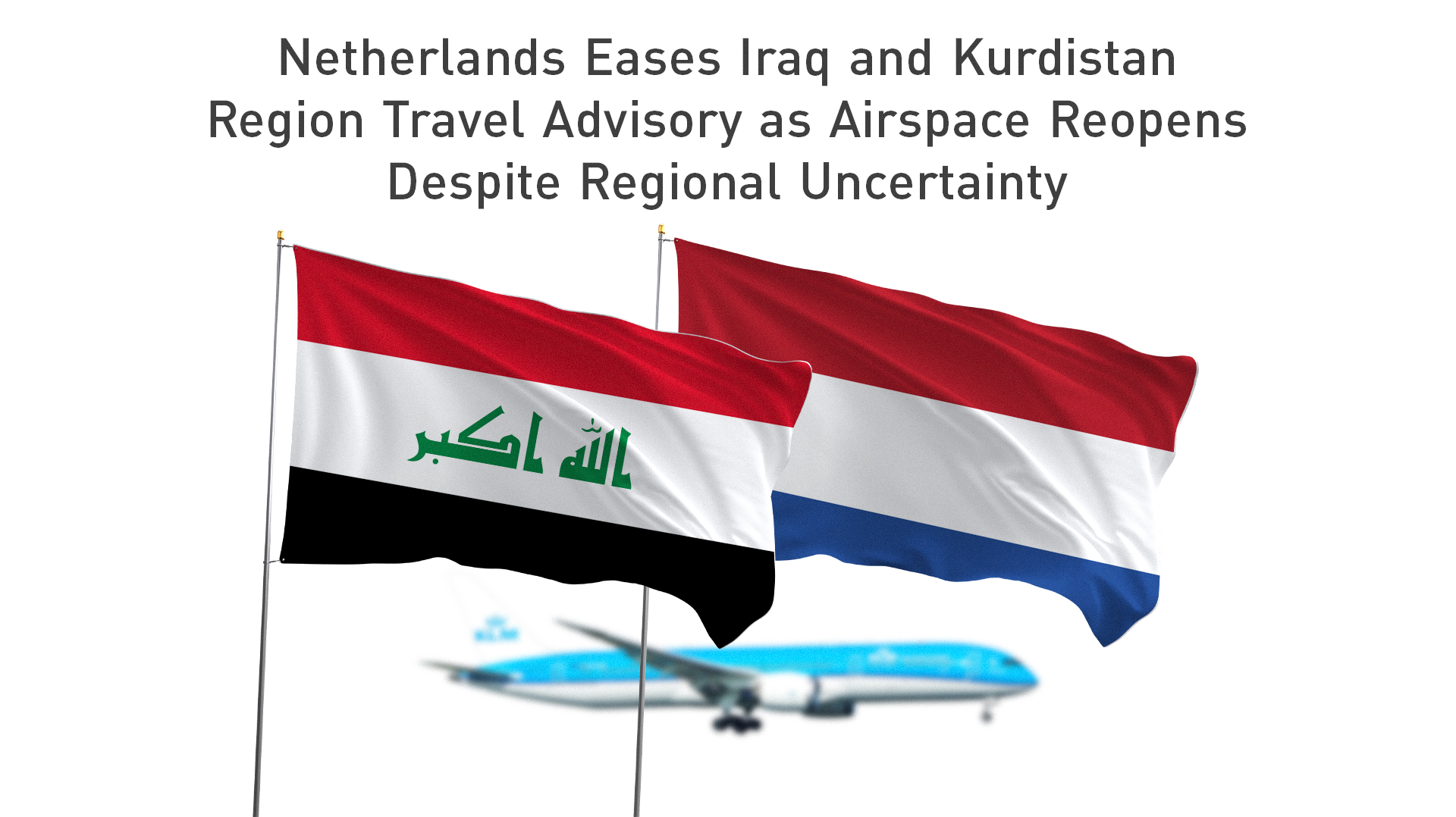
ERBIL (Kurdistan24) – The Netherlands has updated its travel advisory for Iraq and the Kurdistan Region, from red to orange and allowing essential travel once again.
In a statement posted on X on Thursday, the Netherlands Embassy in Iraq said the revised advisory restores the situation that existed before the recent regional unrest.
“The Dutch travel advice for Iraq has been updated. Large parts of Federal Iraq, as well as the Kurdistan Region, have shifted from red to orange, returning to the situation before the recent regional unrest. This means that essential travel is now possible,” the embassy said.
The embassy added that the change creates opportunities for Dutch businesses to conduct necessary visits and explore investment prospects in sectors including water management, agriculture, infrastructure, maritime services, waste management, and renewable energy, while emphasizing that safety and caution remain the highest priorities.
The announcement comes as regional air travel continues to face disruptions linked to security concerns. A Dutch airline had suspended all flights to the Middle East on April 21 because of the war and instability in the region, initially canceling services through June 28. The carrier has since extended the suspension indefinitely, citing ongoing security concerns and awaiting improved conditions and updated guidance.
Iraqi aviation authorities have repeatedly closed the country's airspace in recent months, including flights through Erbil International Airport, amid heightened security risks stemming from regional military escalations and joint U.S.-Israeli strikes on Iran on June 28.
Such closures are generally implemented as temporary precautionary measures to safeguard civilian aircraft during periods of cross-border military activity.
Despite the recent disruptions, Iraq's airspace is currently open for arrivals, departures, and overflights. However, authorities continue to advise travelers to monitor developments closely and check directly with their airlines for any flight delays or cancellations before traveling to the airport, as the regional security situation remains fluid.