In Karbala, Mourning Becomes a Language of Accountability
Black banners sway above synchronized chest-beating as one procession weaves demands for reform into the commemoration of Imam Hussein's stand against tyranny.
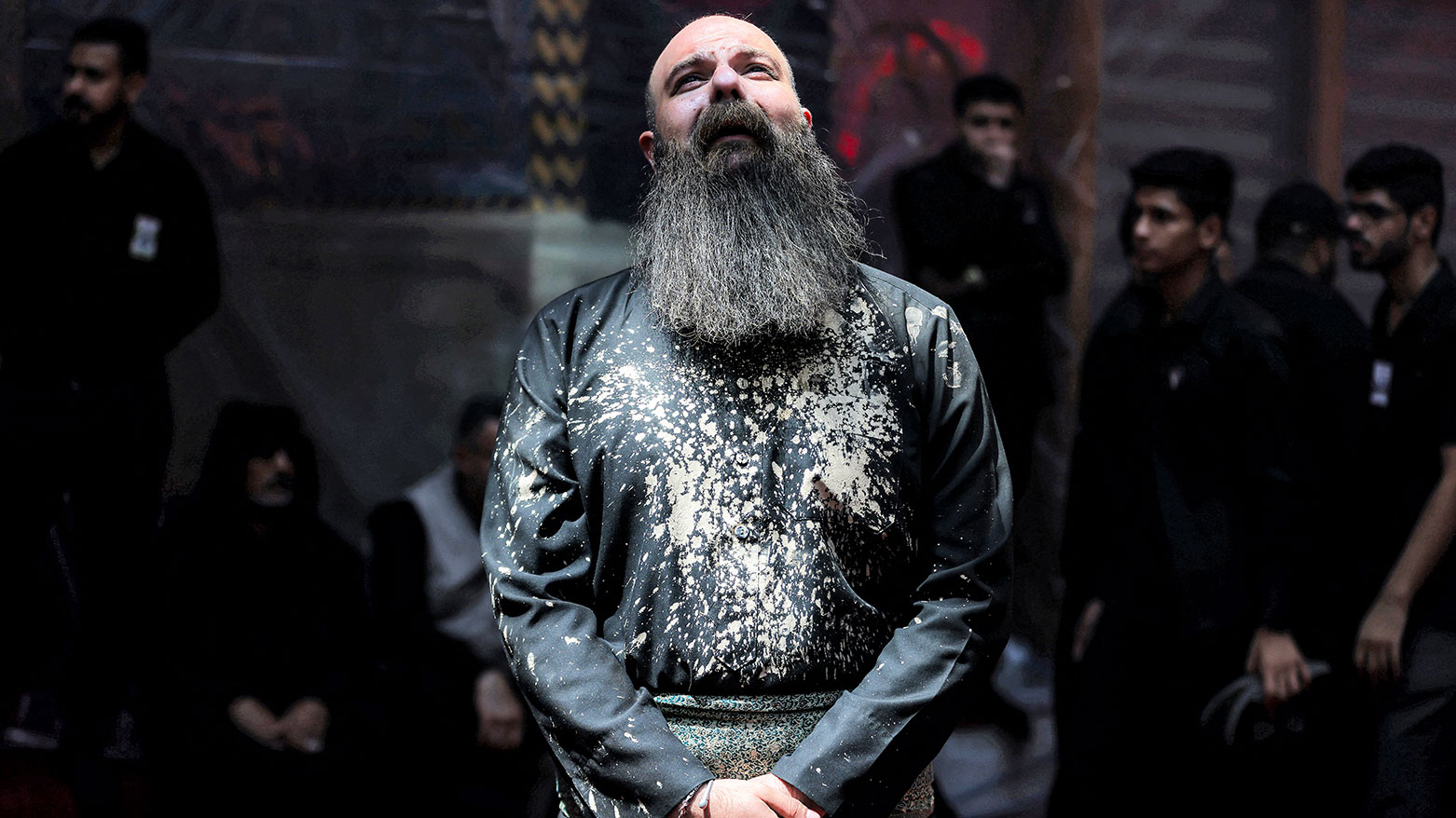
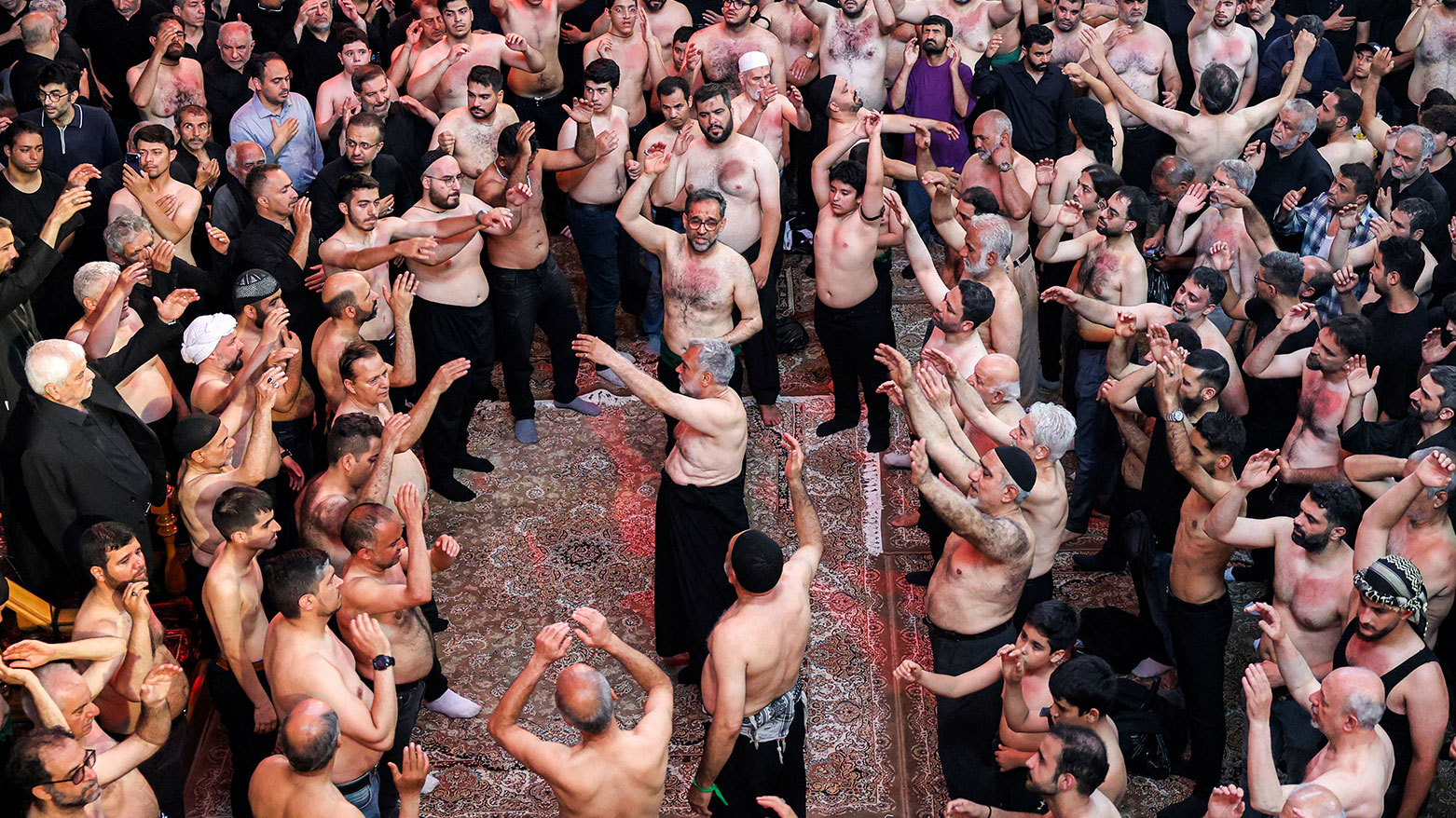
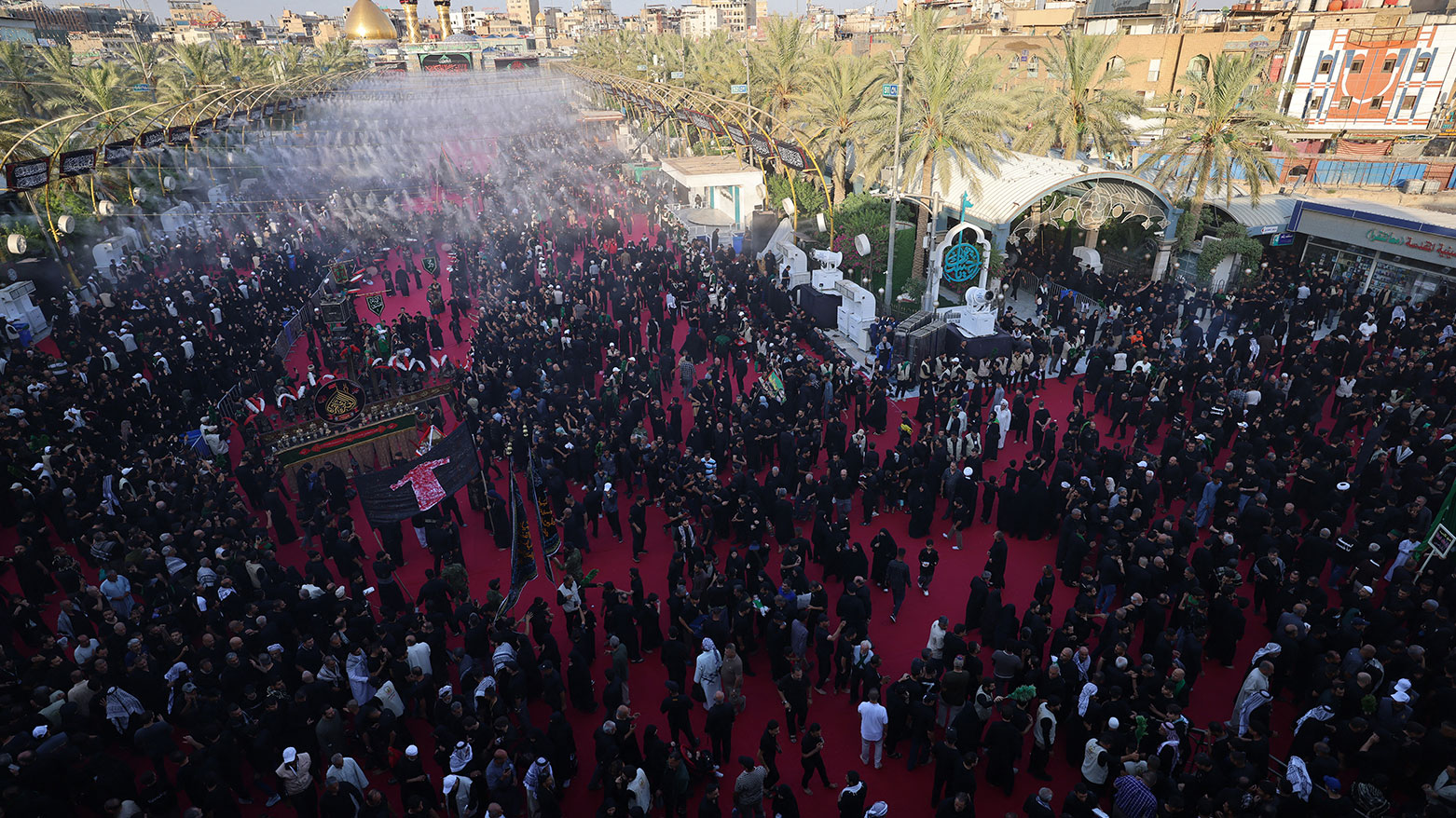
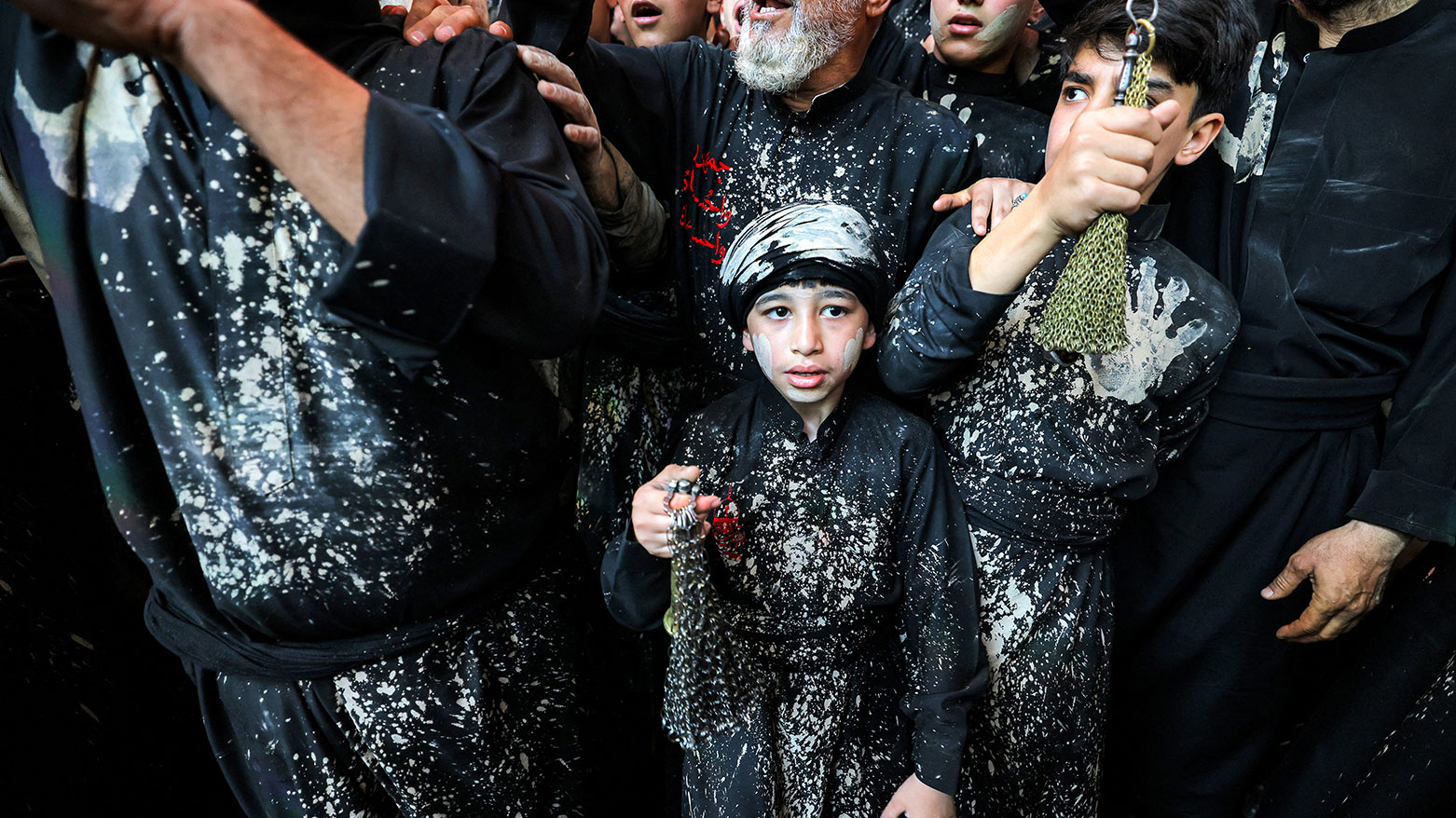
ERBIL (Kurdistan24) - The streets near Karbala's holy shrines filled with the steady, resonant sound of palms striking bare chests. Men in black shirts moved in loose formation, their bodies swaying in rhythm as voices rose in elegiac chants recounting thirst, betrayal, and arrows piercing flesh on a distant plain. Black banners, some fringed and bearing the names of Imam Hussein and his companions, rippled above the crowd.
Dust lifted from the ground under the June sun as the Al-Abbasiya procession advanced, one current among the many streams of mourners marking the tenth day of Muharram.
Yet the verses carried by the reciters did not remain fixed in the seventh century.
Interwoven with traditional laments were lines that spoke of present-day suffering: the weight of financial and administrative corruption, the failure of successive governments to deliver basic services, and the frustration of citizens in a country rich in oil yet short on accountability.
The procession did not abandon the rituals of Ashura; it extended them. What began as remembrance of Imam Hussein's refusal to pledge allegiance to a ruler he deemed illegitimate became, in the mouths of participants, a contemporary insistence on justice and dignity.
An organizer told Kurdistan24 correspondent Mutaz Al-Aboudi that the shift was deliberate.
"Our poems and mourning rituals are not limited to the purely religious aspect," he said. "They carry a political and social message that reflects reality. People await our reciter and our poetry because, through them, we directly convey the suffering of the streets and the people to the officials."
A prominent Karbala participant was more direct.
"We want to see a real impact of reform from successive governments," he said. "Financial and administrative corruption is clearly rampant, and many officials hold dual citizenship and work for other interests, while the ordinary citizen lacks the most basic necessities of life on the streets. We demand that the new Iraqi government undertake genuine reforms and end financial and administrative corruption. Iraq is a rich country with oil and wealth, and its people should not suffer like this."
These statements were not framed as a break with tradition.
Organizers described them as a continuation of the Hussaini cause itself, rooted in Imam Hussein's rejection of injustice and his insistence on reform. The ritual space of the procession, they argued, offered a legitimate, peaceful channel for expressing legitimate demands.
Ashura commemorates the events of 680 CE, when Imam Hussein ibn Ali, grandson of the Prophet Muhammad, and a small group of companions and family members were killed at Karbala after refusing to submit to the Umayyad caliph Yazid I.
For Shiite Muslims, the episode crystallized a moral stance: resistance to tyranny, even at the cost of life, when allegiance would mean compromising core principles. That stance has long supplied a vocabulary through which later generations interpret their own circumstances.
This year's observances followed the familiar pattern.
According to Shafaq News, ceremonies at the Imam Hussein and Al-Abbas shrines opened with the public recitation of the Maqtal, the narrative of the martyrdom, before vast crowds of pilgrims from Iraq and beyond.
Chest-beating and elegiac recitations followed, as they do each year. The scale remains immense: millions converge on Karbala during Muharram, turning the city into a living archive of collective memory.
Anthropologists have long observed that such rituals operate as embodied memory.
The rhythmic striking of the chest does not merely symbolize grief; it physically reenacts a connection to the wounds described in the historical account. Processions through city streets function as pilgrimage, creating temporary spaces of communitas in which everyday social distinctions recede and participants experience a shared moral intensity.
In Karbala, that intensity is channeled through poetry and movement that have been transmitted across generations.
When contemporary grievances enter the chants, they do so within an established framework of moral instruction: the same symbols that recall sacrifice also authorize critique of present failures to uphold justice and dignity.
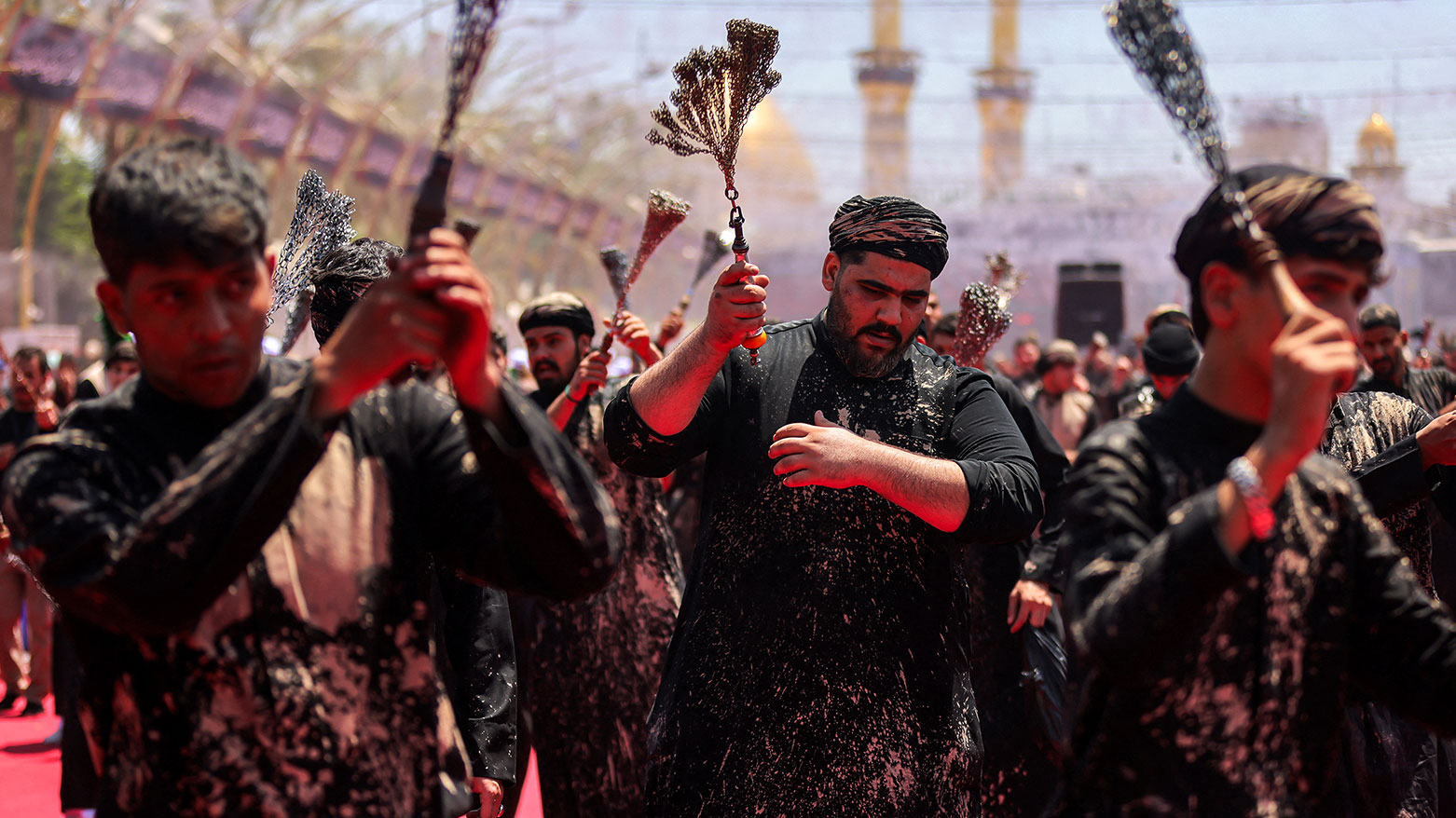
Sociologist Émile Durkheim described religious rituals as mechanisms that periodically renew a group's collective conscience, the shared beliefs and moral sentiments that bind members together.
Large assemblies engaged in synchronized action generate what he termed collective effervescence: an amplified emotional state in which individual feelings merge into something larger.
In the Al-Abbasiya procession, the rhythm of latmiyah and the repetition of verses create precisely this heightened atmosphere.
Personal frustrations with corruption become part of a collective affirmation that injustice, whether ancient or modern, must be named and opposed.
The ritual does not dissolve into politics; rather, the political aspirations gain force by being spoken within the ritual's moral grammar.
The very objects carried in these processions reflect ongoing adaptation.
Reporting by 964media in Najaf documented how the production of Ashura banners, known as rayat or alam, has changed under economic and technological pressure.
Calligrapher Thaer Sabti described a sharp decline in demand for handmade work after the arrival of cheaper imported banners from China, Iran, and Pakistan, alongside AI-generated and digitally printed designs.
Many artisans have shifted to engraving gravestones. Merchant Mohammad al-Hamdani noted that ready-made Chinese banners can sell for as little as 2,000 to 3,000 Iraqi dinars, while handmade pieces command higher prices for the time and skill involved.
Calligrapher Abdul Amir Hussein observed that large, custom banners for major processions and hussainiyas still require local craftsmen because off-the-shelf options cannot match specific sizes or requirements.
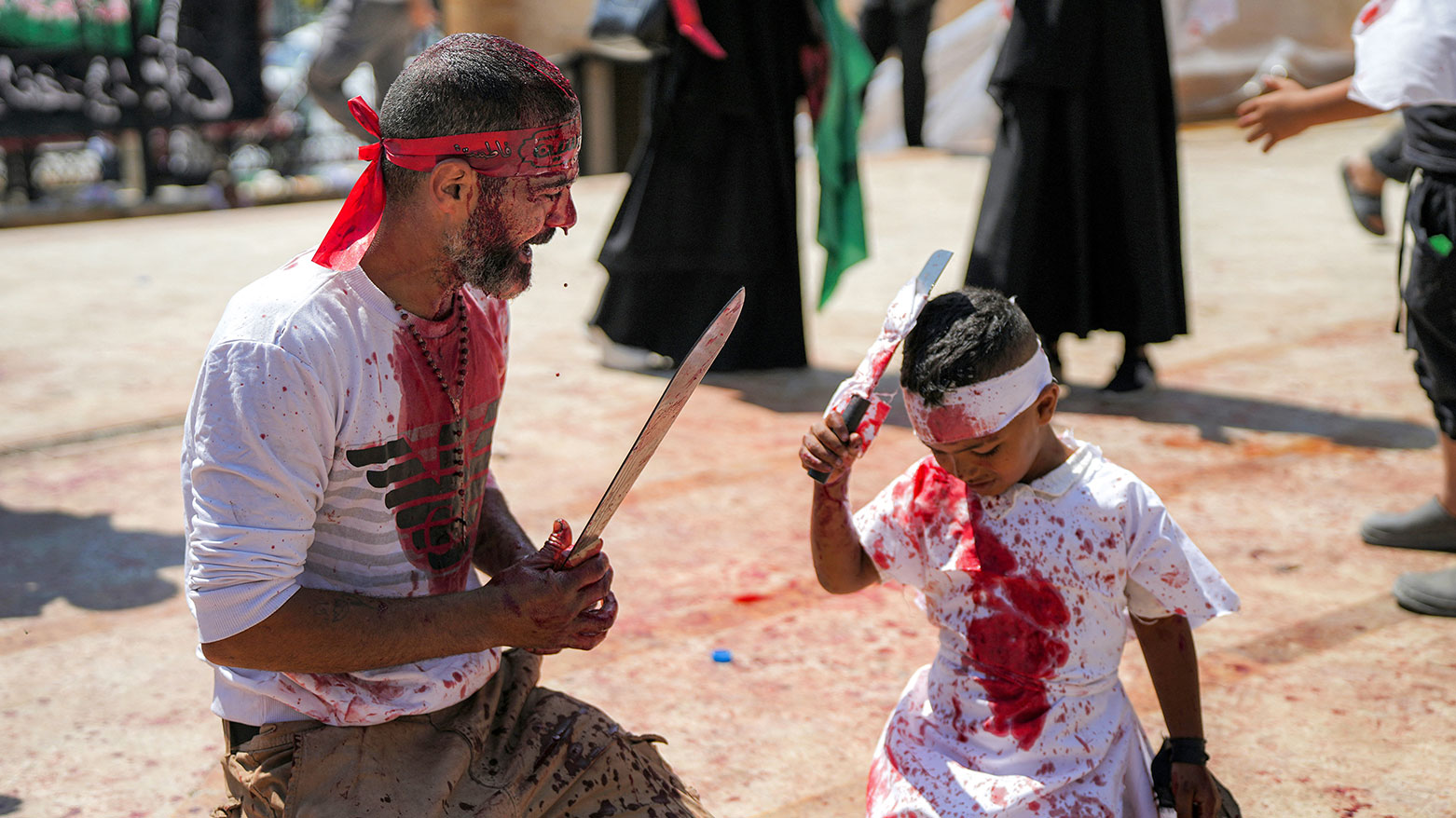
The symbols endure; the means of producing them evolve.
Commercialization and digital tools have not erased the banners' capacity to carry meaning, whether that meaning remains confined to remembrance or, as in the Al-Abbasiya procession, extends into explicit calls for accountability.
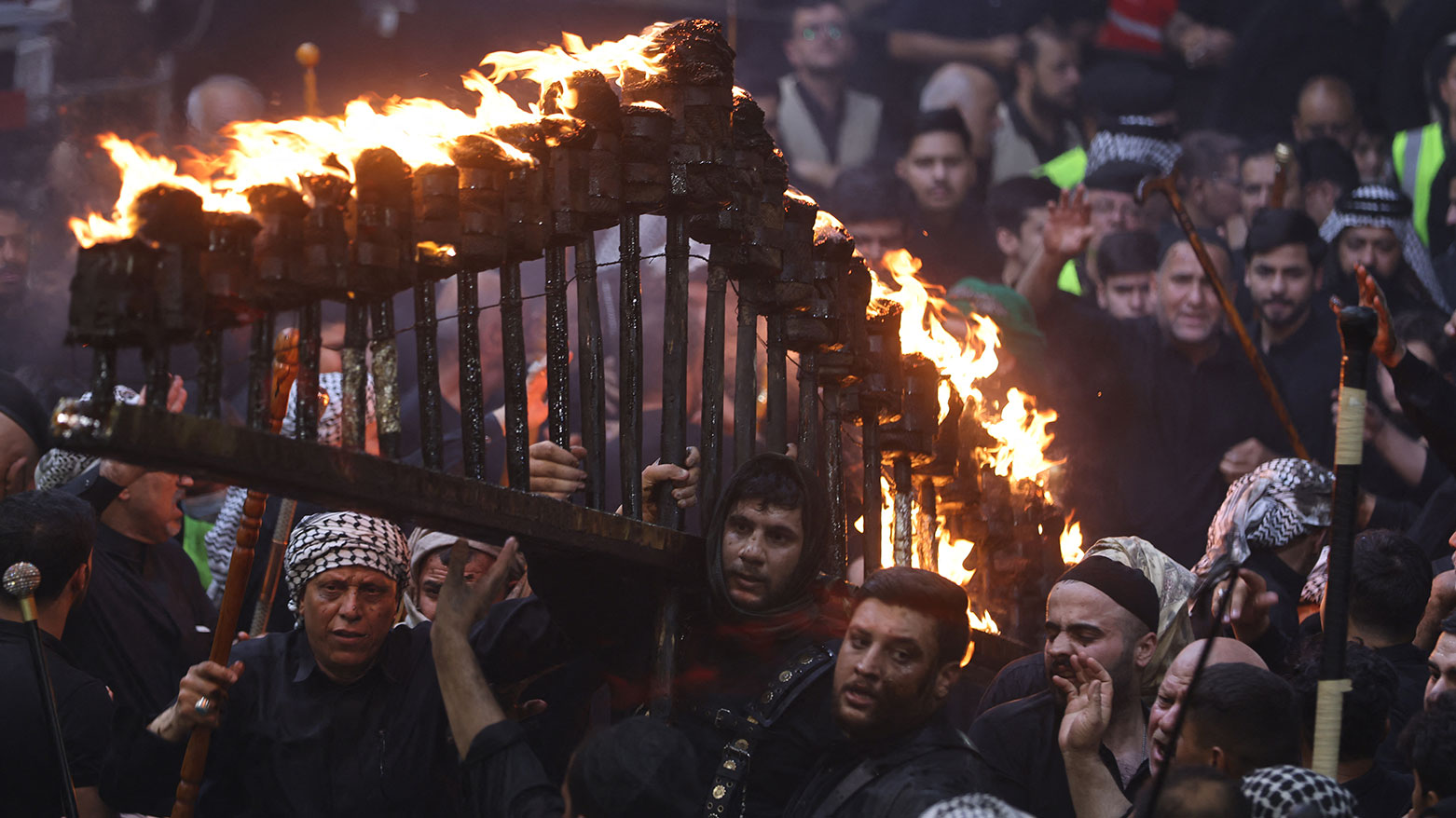
The themes that animate these rituals travel beyond Iraq.
In a public statement, New York City Mayor Zohran Kwame Mamdani described Ashura as "a time of remembrance, sacrifice and reflection," reminding audiences of "Imam Hussain's unwavering commitment to truth and dignity" and "the enduring values of faith, service to one another, and the belief that justice is always worth fighting for."
The statement illustrates how the moral vocabulary of Karbala, sacrifice in the face of oppression, the defense of dignity, can function as a civic language in distant contexts.
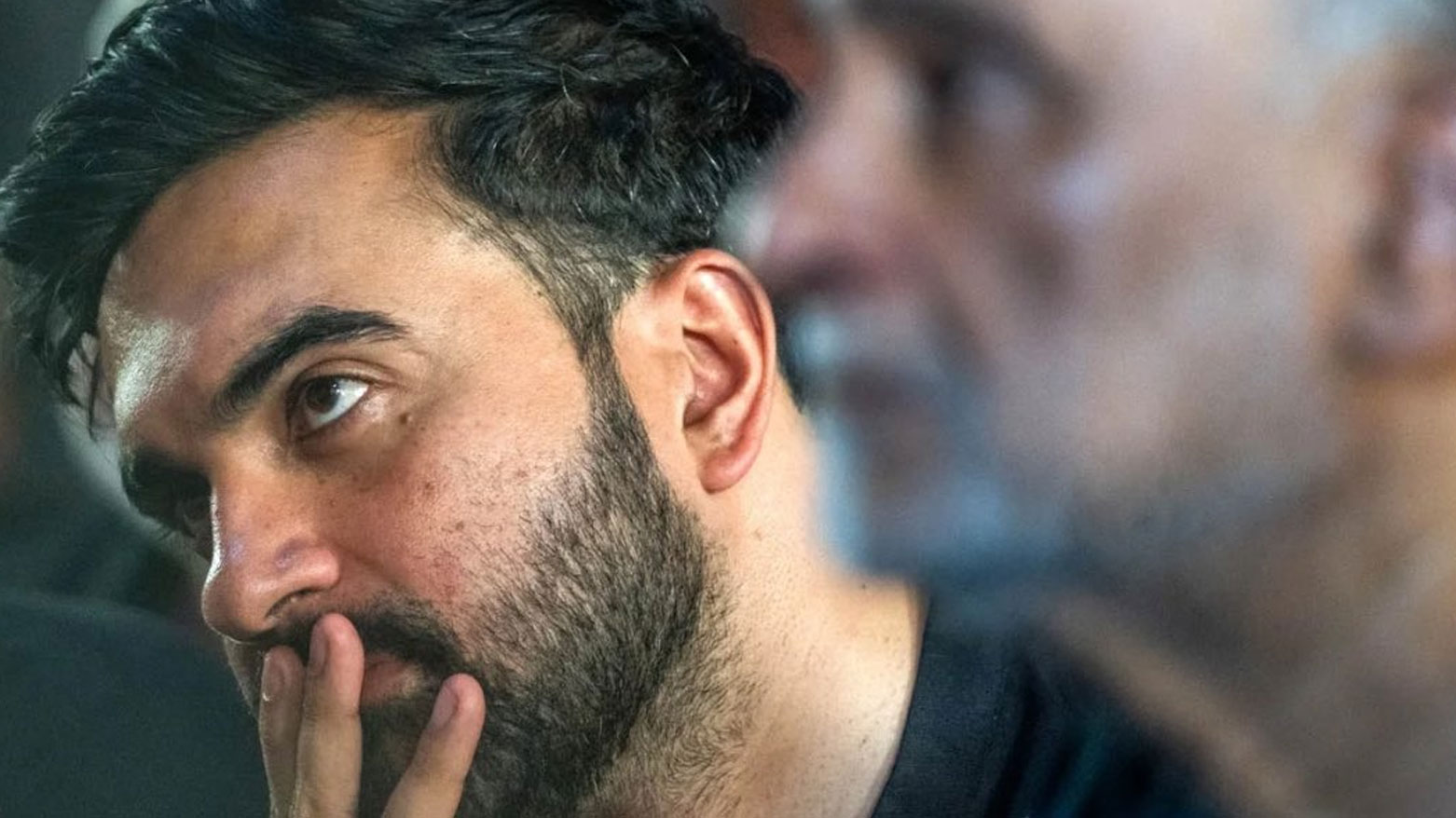
Elsewhere, the same gatherings occupy different political spaces.
Reporting by Ismaeel Naar in The New York Times described how Bahrain's authorities imposed restrictions on this year's Ashura observances, shortening processions and citing public safety amid regional tensions.
The measures, which included limits on timing and warnings against certain slogans, reflect governmental caution that large religious assemblies could become venues for expressing dissent.
In Karbala, by contrast, the ritual framework has accommodated direct commentary on governance without leaving the sphere of religious commemoration.
What the Al-Abbasiya procession reveals is not an aberration but a demonstration of how deeply embedded social institutions operate in Iraqi society.
Religious mourning, performed through rhythm, poetry, and movement, supplies both emotional catharsis and a structured moral language.
Within that language, citizens articulate aspirations for reform, accountability, and dignity—values they trace directly to the historical precedent of Imam Hussein.
The procession does not replace traditional observance; it activates the ethical core of that observance in the present. In doing so, it shows how collective memory, when enacted ritually, continues to shape contemporary public discourse.
|
Summary In the streets of Karbala during Ashura, the Al-Abbasiya procession blends centuries-old mourning rituals, chest-beating, elegiac chants, and black banners, with explicit calls for government reform and an end to corruption. Drawing on Imam Hussein's legacy of resistance to injustice, participants transform religious commemoration into a civic dialogue on accountability and dignity, revealing how ritual functions as living moral and social language in contemporary Iraq. |