Iraqi CTS Raids Green Zone: Officials Arrested in Corruption Probe
Iraqi Counter-Terrorism Service units conducted a midnight raid in Baghdad's Green Zone, arresting several officials in connection to a major corruption probe.
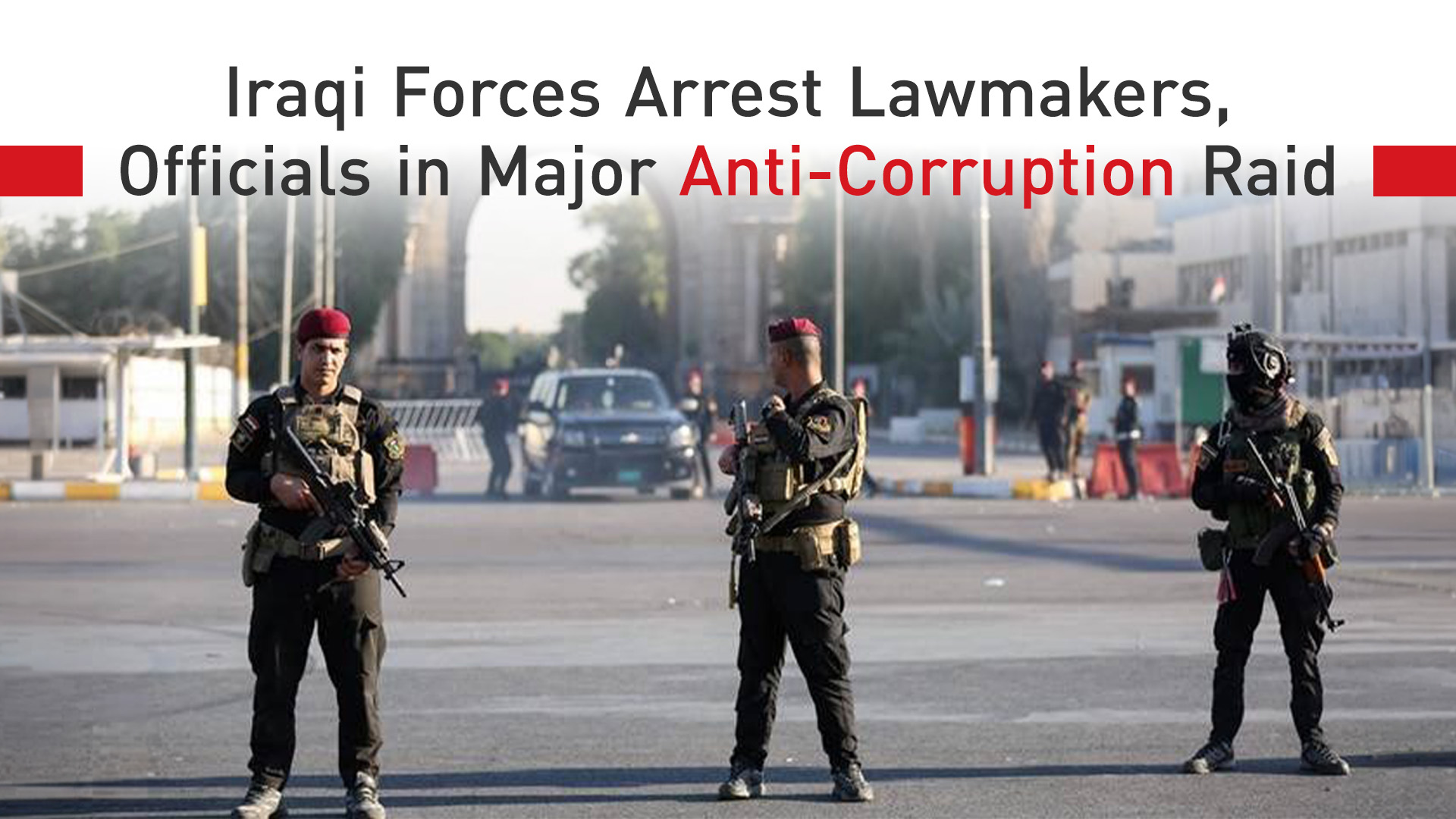
ERBIL (Kurdistan24) - In the early hours of Sunday, under the cover of a humid Baghdad night, the clinical silence of the Green Zone was broken by the low rumble of armored vehicles. At approximately 2:00 a.m., elite units of the Iraqi Counter-Terrorism Service (CTS) moved with practiced precision to seal every entrance of the capital's most heavily fortified district.
For several hours, the geographic heart of Iraqi political power, a zone housing the parliament, the U.S. Embassy, and the residences of the nation's senior-most officials, became the site of a rare and politically fraught security operation.
According to Kurdistan24's Baghdad correspondent Dylan Barzan, the raid was not a spontaneous escalation but a pre-planned execution of judicial orders.
Deploying heavily armed personnel and armored transport, the CTS targeted specific residential compounds where high-ranking officials and parliamentarians live.
By the time the sun rose over the Tigris, the gates had reopened and the district had ostensibly returned to its regular rhythm of military and diplomatic commutes, but the political landscape had been fundamentally altered.
The operation represents a significant broadening of an ongoing federal investigation into systemic graft.
Information obtained by Kurdistan24 suggests that the raid is inextricably linked to the case of Adnan al-Jumaili, the Undersecretary of the Ministry of Oil, who was detained last month.
Al-Jumaili's arrest was the first domino in what is now being described by observers as one of the most substantial corruption scandals in Iraq's modern history.
Reporting from various local media outlets and corroborated by security sources suggests that Sunday's arrests were predicated on confessions provided by the former oil official.
While the Iraqi government has yet to release a comprehensive list of those in custody, the names circulating in Baghdad's political circles include current and former members of the Council of Representatives, political party leaders, and influential businessmen.
The scale of the alleged network was brought into sharp relief by the Iraqi judiciary last week.
In an official disclosure, judicial authorities detailed the seizure of assets totaling more than $85 million linked to this specific investigative thread.
The findings were as cinematic as they were staggering: millions of dollars in physical cash were discovered not in banks or safes, but hidden inside residential walls or buried in pits four meters underground.
The tally of seized assets currently includes 98 billion Iraqi dinars, $11 million in U.S. currency, 70 residential properties, 21 luxury vehicles, and three kilograms of gold.
The significance of a CTS raid inside the Green Zone cannot be overstated.
As noted by Agence France-Presse (AFP), the district is Iraq's most protected political enclave, serving as home to the nation's executive and legislative branches alongside critical diplomatic missions.
Such operations are exceptionally uncommon and carry immense political risk, typically requiring the highest levels of executive and judicial authorization.
Two security officials, speaking to AFP on the condition of anonymity, confirmed that the raids were carried out under judicial warrants.
While the primary focus remains financial corruption, the investigation has reportedly expanded to include allegations of funding armed factions and the illicit smuggling of dollars and oil, activities that have long complicated Iraq's international relations.
The timing of the operation is particularly poignant for Prime Minister Ali al-Zaidi. Having recently assumed office with a mandate for reform, Zaidi has made the dismantling of corruption networks a central pillar of his administration.
His efforts are being closely watched in Washington, where he is scheduled to visit later this month.
For Zaidi, the Green Zone raid serves as a potent signal to both domestic audiences and international investors that his government is willing to penetrate even the most insulated corridors of power to enforce the rule of law.
However, the operation has also fueled a firestorm of speculation. Reports circulating in Baghdad suggest the investigation could eventually reach the highest echelons of the previous administration.
Names such as former Prime Minister Mohammed Shia' al-Sudani and former Finance Minister Taif Sami have been mentioned in unverified reports as being potentially implicated in the broader network. It must be noted, however, that these claims remain unconfirmed by the judiciary, and no official charges have been brought against these high-ranking figures.
According to various media reports, the individuals arrested include: Mohammed Saihoud, Hassan al-Khafaji, Muthanna al-Samarrai, Bahaa Nouri, Alia Nassif, Hussein Moanes, Adil al-Halawi, Mohammed Farman, Mudhar al-Karwi, Ziad al-Janabi, Alaa Suker, Mohammed al-Karbouli, Abdul Karim al-Sudani, Abbas al-Sudani, and Farhan al-Fartousi.
As the Green Zone gates remain open today, the sense of normalcy is fragile.
The Counter-Terrorism Service has proven it can strike at the heart of the political establishment, but the true test of this campaign will lie in the judicial proceedings that follow.
With millions in gold and cash already in federal custody and an "arrest list" that reportedly remains active, Sunday's midnight operation may be only the opening chapter in a much longer narrative of institutional reckoning.
|
Summary At 2:00 a.m., armored units of Iraq's Counter-Terrorism Service sealed the Green Zone to execute a series of targeted arrests. Linked to a massive oil ministry corruption probe and $85 million in seized assets, the operation marks a critical test for Prime Minister Ali al-Zaidi's administration. |
This article was updated on Sunday, Jun. 28, 2026, at 09:22am.