Convicted ISIS Extremist Used TikTok to Choose Britain as His Destination After Germany Expelled Him
Mohammed Yaseen, convicted in Germany for ISIS membership, attended beheadings and public floggings in Iraq before lying to British border officials about his identity and nationality
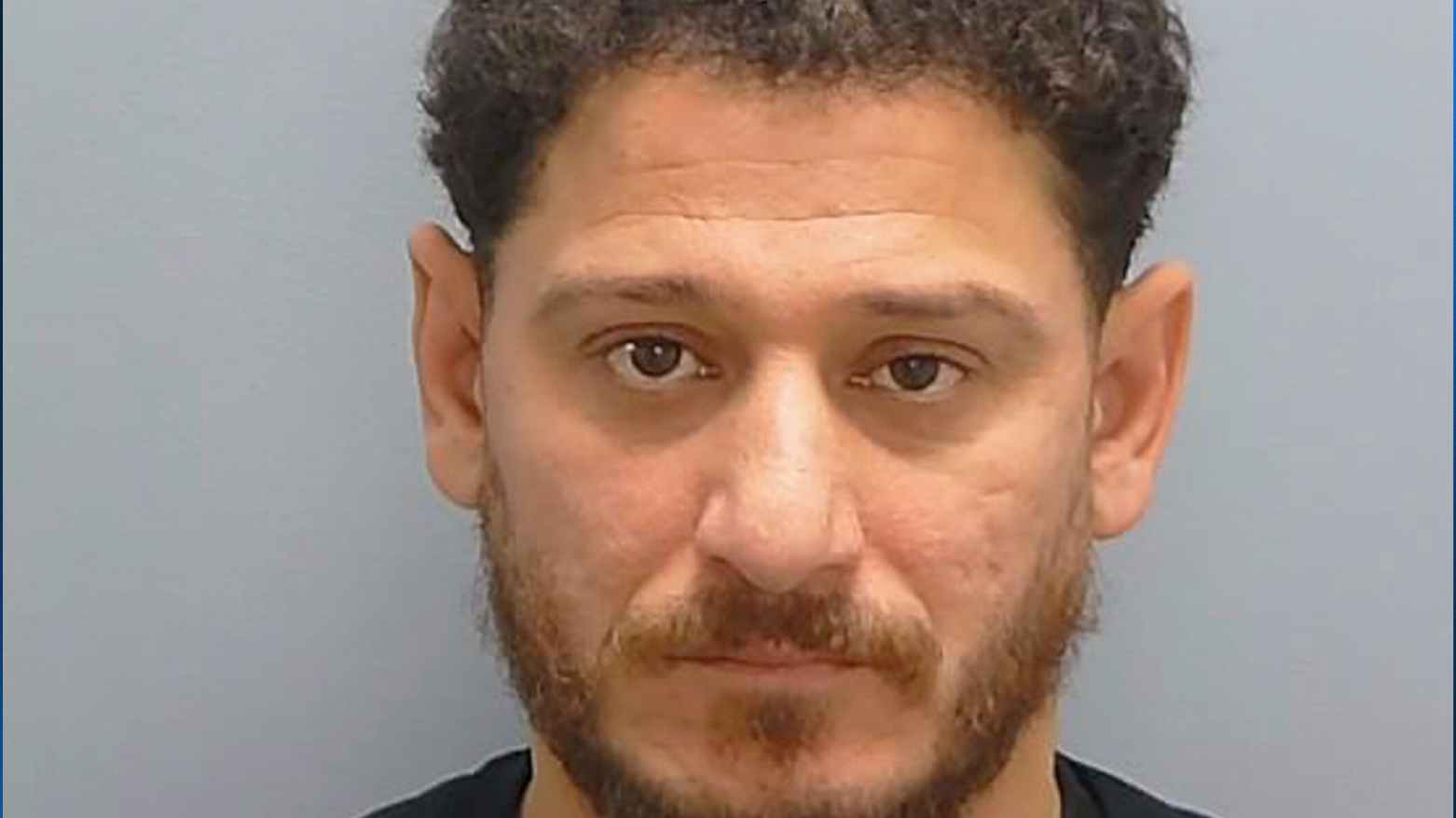
ERBIL (Kurdistan 24) - A convicted ISIS extremist from Iraq who had witnessed beheadings and public floggings as a member of the terrorist group was jailed in Britain after crossing the English Channel on a small boat, having been directed to the country by a TikTok video assuring him that the United Kingdom "accepts everyone."
Winchester Crown Court heard on Wednesday that Mohammed Yaseen, 35, an Iraqi national, chose Britain over France after watching a viral TikTok video claiming the UK welcomes asylum seekers and respects human rights. The Telegraph reported on Wednesday that Yaseen had already been convicted in Germany for ISIS membership, serving four years and three months in prison at a higher court in Düsseldorf for participating in a terrorist organization, before being expelled from the country for 20 years.
A Life Defined by Extremism in Iraq
Prosecutor Steven Molloy told the court that Yaseen had abandoned what was described as a "desolate" life in Iraq to join ISIS, attending beheadings and public floggings alongside fellow extremists. He was also found in possession of a Kalashnikov rifle. Between 2011 and 2014, Yaseen was accused of the rape and murder of a boy in Iraq, though he was not convicted on those charges, the court heard.
Judge Christopher Parker KC branded Yaseen a "significant public risk" and ruled he had voluntarily joined and supported ISIS before imposing a two-year custodial sentence. Yaseen now faces deportation upon his release.
From Germany to the English Channel
Despite being expelled from Germany, Yaseen was not deported to Iraq and refused to return there. He made his way to France, where, having grown dissatisfied, he decided to cross the Channel after TikTok videos convinced him Britain would be more welcoming. As the Telegraph reported on Wednesday, a Border Force vessel intercepted the small boat Yaseen was travelling on on Dec. 13, 2025, carrying approximately 80 people.
Upon arrival at the Manston immigration processing centre in Kent, Yaseen provided what prosecutor Molloy described as a "completely dishonest account" of his background. He claimed to be Mohammed Ashimiri, gave a false date of birth, and said he was a Kuwaiti national who had travelled from Kuwait to France via Belgium. "He said he did not like it in France but heard on TikTok that the UK accepts everyone and respects human rights," Molloy told the court.
Hotel, Biometrics, and a Christmas Eve Arrest
Following initial processing, Yaseen was placed at the Crowne Plaza Hotel in Basingstoke under standard asylum seeker accommodation procedures. Biometric checks subsequently exposed his false identity, revealing his true name, nationality, and criminal history. He was arrested at the hotel on Christmas Eve, Dec. 24, 2025.
Yaseen appeared in court requiring an Arabic interpreter. His defense lawyer, Katie Porter-Windley, confirmed she had been unable to communicate with him in English. However, Molloy told the court that police and prison staff had heard Yaseen speaking English on multiple occasions, with the defendant switching to Arabic only upon realizing he was being overheard. He pleaded guilty to one charge of attempting to enter the United Kingdom without valid immigration clearance on Dec. 13, 2025.
TikTok as a Migration Tool
The case has drawn sharp attention to the role social media platforms play in shaping irregular migration patterns across Europe. The Telegraph reported on Wednesday that official figures show approximately 36,000 people reached the UK by small boat in the year ending May 31, 2026, a 13 percent decline on the previous period, with the first five months of 2026 seeing roughly 9,000 arrivals, 38 percent lower than the same stretch of 2025, though numbers are expected to rise through summer.
The Yaseen case illustrates a specific vulnerability within that broader flow, where convicted criminals exploit identity deception at the point of entry, are housed in standard asylum accommodation, and are only identified through biometric screening that, in this case, took days to produce results while a dangerous individual remained at large in a civilian hotel.
|
BRIEF: |