China Conducts Strategic Missile Test in Pacific, Drawing Concern from Regional Neighbors
Japan, Australia, and New Zealand voice security and stability concerns after Beijing confirms launch from a strategic nuclear submarine
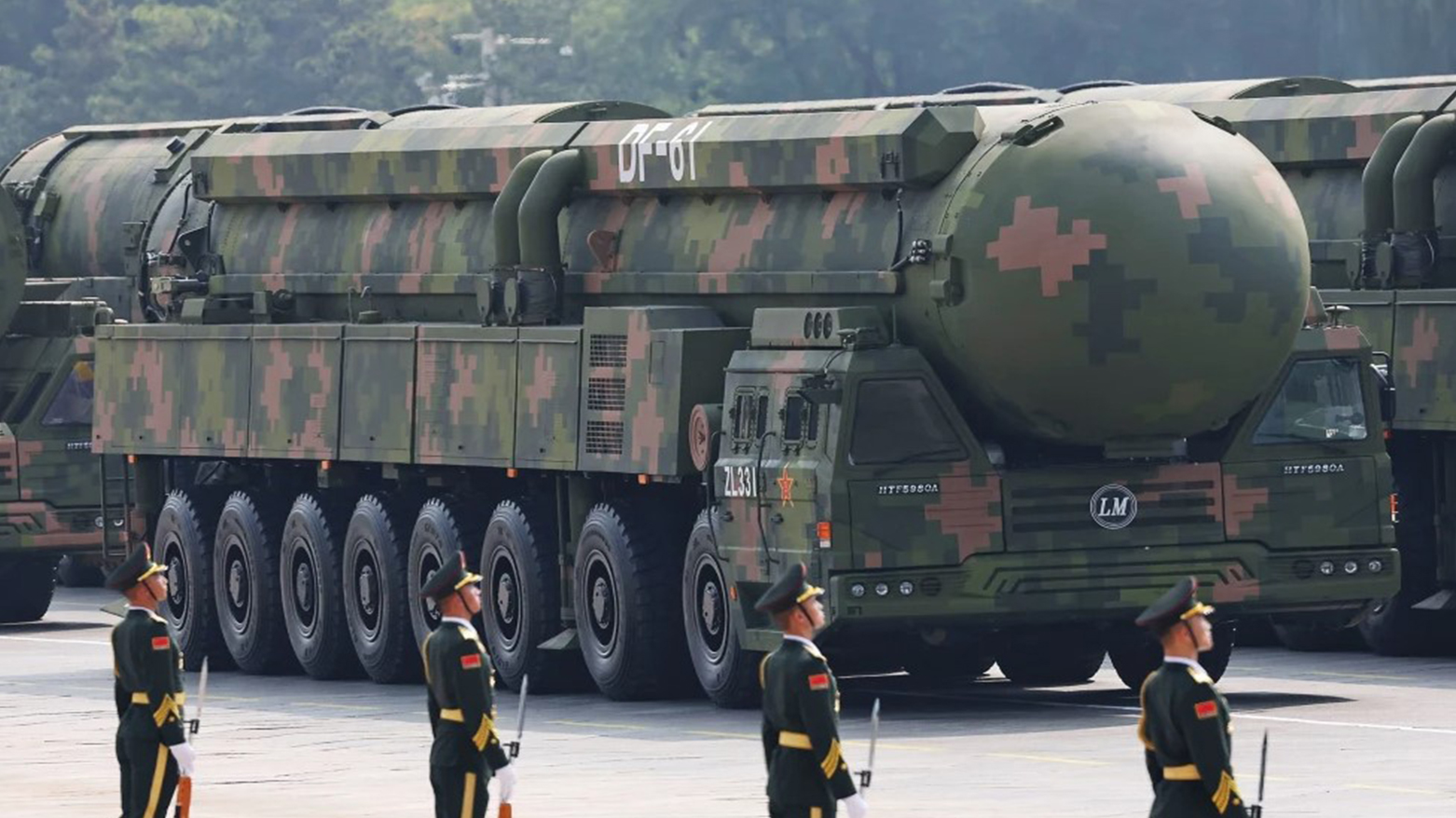
ERBIL (Kurdistan24) — China on Monday confirmed it had successfully launched a strategic missile from a nuclear-powered submarine into the Pacific Ocean, prompting expressions of concern from neighboring countries that warned the test could heighten regional tensions and undermine stability.
In a statement published on the Chinese navy's official WeChat account, People's Liberation Army Navy spokesperson Wang Xuemeng said a strategic nuclear submarine launched a strategic missile carrying a simulated training warhead at 12:01 p.m. local time.
According to the statement, the missile was fired into designated international waters in the Pacific Ocean and accurately reached its intended impact zone.
The announcement came after several Pacific governments disclosed that Beijing had informed them in advance of the planned launch.
Japan reacted by urging China to reconsider the missile test, citing concerns over regional security.
"We strongly called for a rethink of the ballistic missile test-firing, so that it won't pose a threat to Japan's security such as by passing through Japan's airspace," the Japanese government said in a joint statement released before the launch.
New Zealand also voiced alarm over the test.
Foreign Minister Winston Peters described the missile as "nuclear-capable" and said the launch was inconsistent with efforts to preserve peace in the Pacific.
"The Pacific is an Ocean of Peace, and we are deeply concerned by China's testing of nuclear-capable weapons into the South Pacific," Peters said in a statement. "It is not consistent with regional stability."
Earlier on Monday, Papua New Guinea's Foreign Minister Justin Tkatchenko confirmed that Chinese officials had notified his government of the planned launch.
"Yes, China has briefed me. I was personally called by the Chinese ambassador," Tkatchenko told AFP.
A New Zealand government source likewise confirmed to AFP that Wellington had received advance notification from Beijing regarding the upcoming intercontinental ballistic missile test.
Australia also criticized the launch, warning that the test could undermine security across the Pacific.
"Australia has been clear with China that we regard this as destabilising to the region," Foreign Minister Penny Wong told reporters on Monday.
Wong's remarks came just hours after Australia signed a landmark defense agreement with Fiji, underscoring Canberra's growing efforts to strengthen security partnerships across the Pacific amid increasing strategic competition with China.
The defense pact with Fiji reflects Australia's broader push to reinforce its influence in the Pacific Islands, where Beijing has expanded its diplomatic, economic, and security footprint in recent years, heightening concerns among Western allies over China's growing regional presence.
The missile launch comes amid intensifying strategic competition across the Indo-Pacific, where China's expanding military capabilities have become a growing source of concern for the United States and its regional allies.
Beijing has significantly modernized its armed forces over the past two decades, investing heavily in advanced naval assets, long-range missile systems, and nuclear deterrence as it seeks to project power farther beyond its shores.
China's submarine-based missile force forms a critical component of its nuclear triad—a three-pronged deterrent consisting of land-based missiles, strategic bombers, and ballistic missile submarines. Such systems are designed to ensure a credible second-strike capability in the event of a nuclear conflict.
The test also follows a period of heightened military activity in the region, including increased Chinese naval deployments around Taiwan, frequent military exercises in the East and South China Seas, and expanding defense cooperation among the United States, Japan, Australia, and other Indo-Pacific partners.
These developments have fueled concerns over an accelerating regional arms competition and the growing risk of military miscalculation.
Although China maintains that its military modernization is defensive in nature, many neighboring countries have expressed unease over the scale and frequency of its strategic weapons testing, particularly when involving long-range or nuclear-capable systems that can affect the broader Pacific region.
Monday's launch is therefore likely to add to ongoing debates over regional security, strategic deterrence, and the future balance of military power in the Indo-Pacific.