Gopal Highway Transforms Erbil-Duhok Travel, Anchoring Kurdistan's Infrastructure Drive
A modern highway linking the Kurdistan Region's two largest urban centers is reducing travel times, improving road safety, and reinforcing the Ninth Cabinet's broader strategy to strengthen trade, tourism, and long-term economic growth.
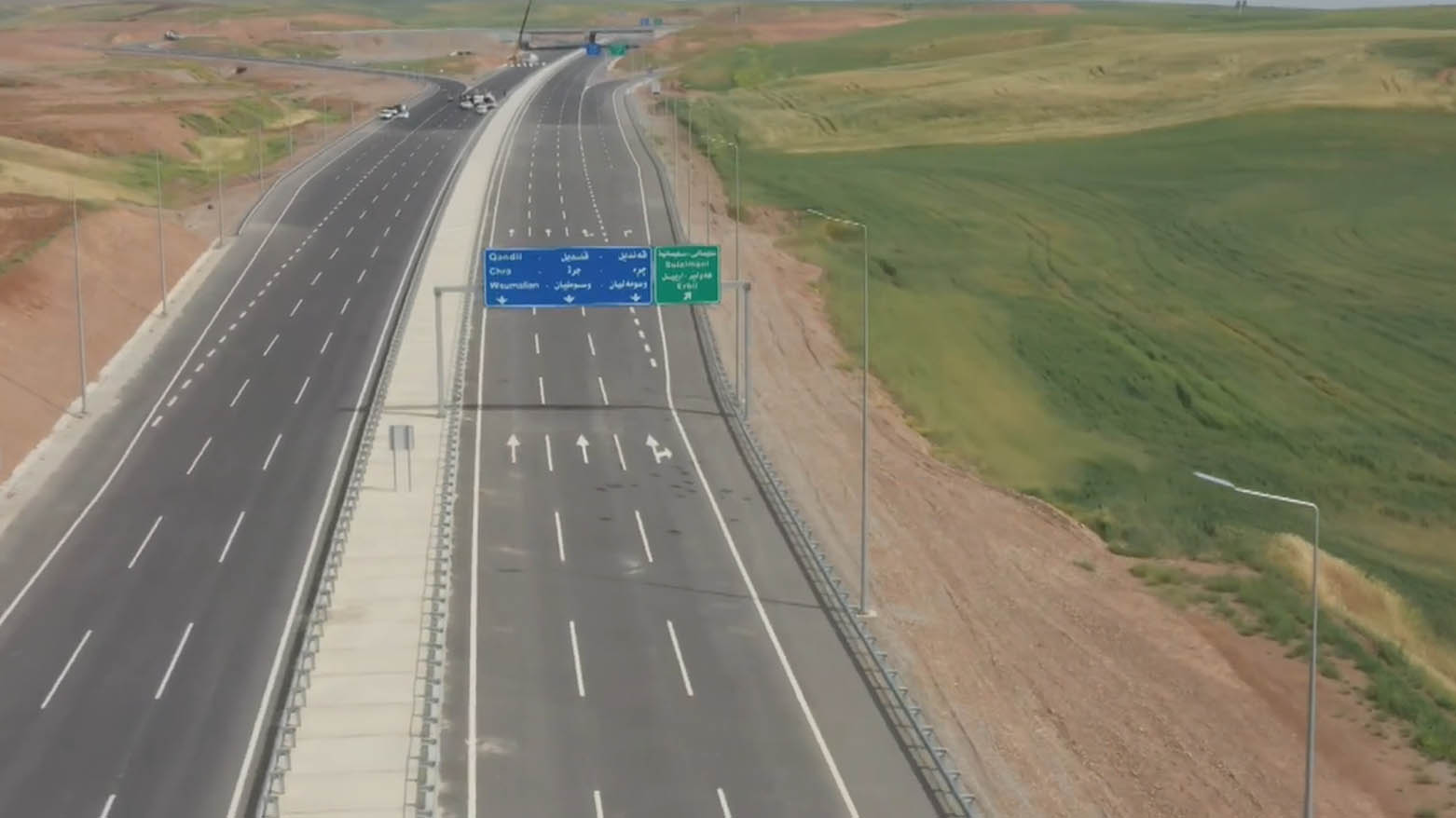
ERBIL (Kurdistan24) - One of the busiest transportation corridors in the Kurdistan Region has undergone a profound transformation, reshaping the way people and goods move between Erbil and Duhok. Once known for chronic congestion and lengthy delays, the route has been substantially modernized through the Gopal Highway Project, an infrastructure investment that the Kurdistan Regional Government (KRG) views as central to its broader effort to improve mobility, strengthen commerce, and support sustainable economic development.
Connecting two of the Region's principal economic, administrative, and tourism centers, the Erbil-Duhok corridor carries thousands of commuters, commercial vehicles, and visitors each day.
For businesses reliant on dependable logistics, efficient road links are as critical as reliable utilities or communications networks.
By significantly reducing travel times while enhancing road safety, the Gopal project illustrates how transportation infrastructure can influence economic activity well beyond the construction sector.
The most visible change has been the dramatic reduction in journey times.
According to the KRG, trips that previously required between four and five hours because of congestion and heavy freight traffic can now be completed in about one hour and 20 minutes.
The improvement has eased daily travel for workers, students, transport operators, and families while allowing freight to move more efficiently between the Region's commercial centers.
At the heart of the project is a 35-kilometer highway constructed to international engineering standards.
Beyond widening the roadway, the project incorporates modern traffic management systems designed to improve both efficiency and safety.
Speed enforcement cameras, surveillance technology, standardized lane markings, and upgraded traffic signage have been introduced to help regulate traffic flow and reduce accident risks along one of the Region's busiest highways.
Construction continues on the Etit-Ba'adre highway segment, which will complete a continuous expressway between Erbil and Duhok.
Government officials say the final section is expected to remove remaining bottlenecks, further shorten travel times, and create a more consistent, high-capacity route capable of accommodating growing passenger and freight traffic.
The economic implications extend well beyond faster journeys.
More predictable transportation lowers operating costs for logistics companies, facilitates the movement of agricultural products and commercial goods, and strengthens supply chains linking producers with domestic and international markets.
Tourism also stands to benefit, as improved accessibility encourages travel between two cities that serve as important gateways to the Kurdistan Region's cultural and natural attractions.
The project's impact is also being felt in everyday life.
Drivers and residents cited by the government say the upgraded road has made regular commuting less stressful and considerably more reliable, particularly for those who travel frequently between Erbil and Duhok for employment or business.
Improved road conditions and modern safety features are also expected to reduce the likelihood of serious traffic accidents, benefiting both private motorists and commercial transport operators.
The Gopal Highway forms part of a much broader infrastructure strategy pursued by the Ninth Cabinet under Prime Minister Masrour Barzani.
According to a statistical review released by the KRG's Department of Media and Information, the administration has launched 1,271 road projects with planned investment exceeding 5.3 trillion Iraqi dinars, covering nearly 5,940 kilometers of transportation infrastructure across the Kurdistan Region.
The report states that approximately 810 projects, representing about 3,055 kilometers of roads, have already been completed, while another 461 projects covering nearly 2,885 kilometers remain under implementation.
Complementing these initiatives are 2,747 municipal infrastructure projects valued at 3.4 trillion Iraqi dinars, alongside investments in bridges, pedestrian facilities, traffic engineering, and road safety systems intended to improve mobility and public safety.
Taken together, these investments reflect a broader view of transportation as a foundation for long-term economic competitiveness.
Alongside efforts to diversify the economy, encourage investment, expand tourism, and improve public services, modern road networks are increasingly positioned as strategic assets that connect communities, facilitate commerce, and strengthen the Kurdistan Region's role as a regional hub for trade and development.
The Gopal Highway stands as a prominent example of that approach, demonstrating how targeted infrastructure projects can reshape daily life while supporting broader economic ambitions.
|
Summary The Gopal Highway is reshaping travel between Erbil and Duhok by cutting journey times, improving safety, and strengthening trade and tourism. The project highlights the Kurdistan Regional Government's wider infrastructure strategy to modernize transportation and support long-term economic development. |