Iran Says Revolutionary Guards Strike Second Vessel in Strait of Hormuz
Iran's Revolutionary Guards said they struck a second vessel in the Strait of Hormuz and attacked a U.S. base in Qatar, intensifying a maritime confrontation with growing implications for Gulf security and commercial shipping.
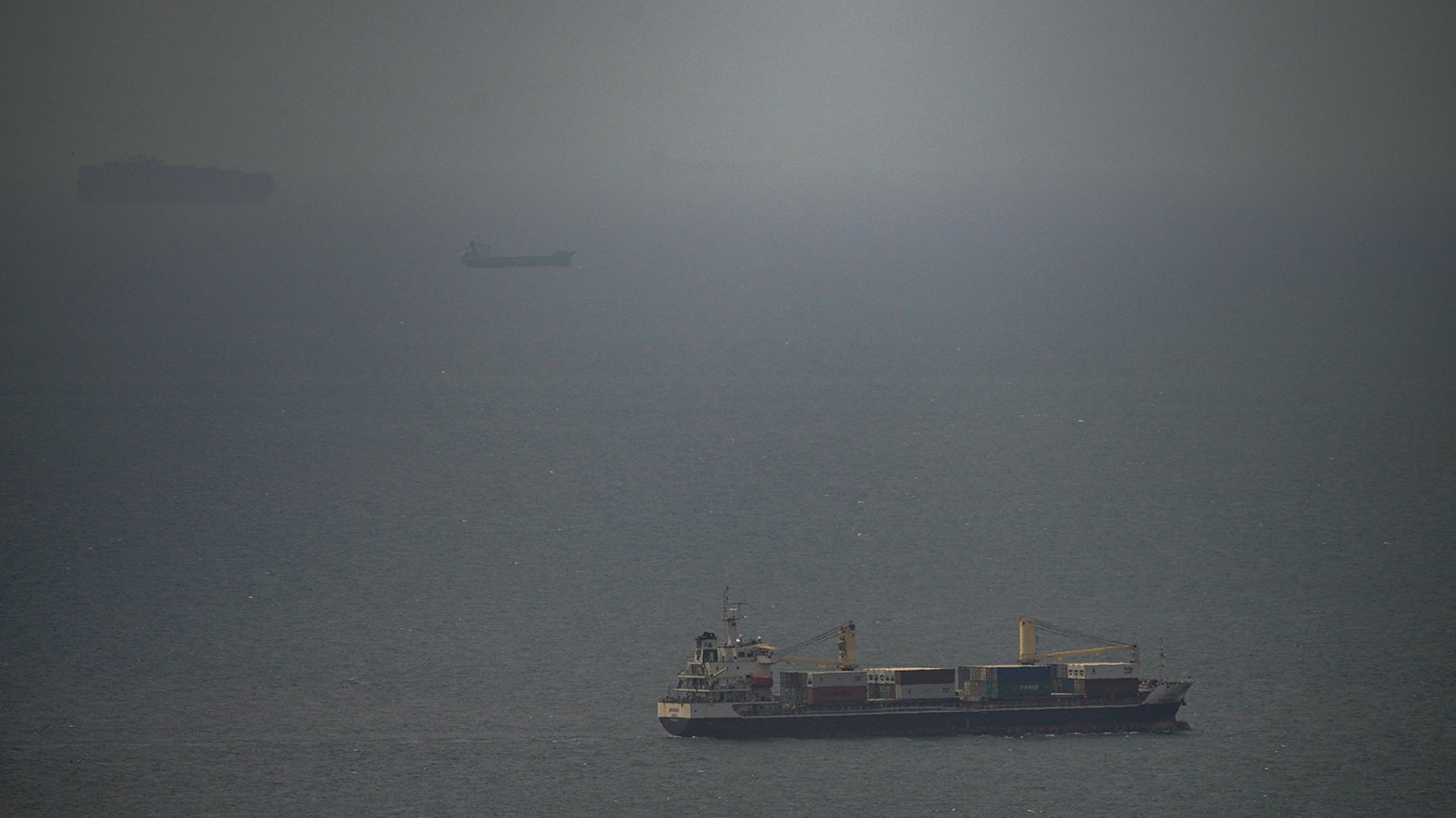
ERBIL (Kurdistan24) - Iran's Revolutionary Guards said Sunday they struck a second vessel transiting the Strait of Hormuz, marking a further escalation in the Gulf's rapidly expanding maritime confrontation after Tehran declared the strategic waterway closed and exchanged military strikes with the United States.
According to Agence France-Presse (AFP), the Guards announced through Iranian state television IRIB that the vessel had been targeted because it allegedly violated regulations governing navigation through the Strait of Hormuz.
In the same statement, the Guards also claimed responsibility for an attack on a U.S. military base in Qatar.
Neither claim had been independently verified at the time of publication, and no immediate response was issued by U.S. authorities regarding the reported strike on the base.
The reported attack on a second commercial vessel comes as the Strait of Hormuz has become the central arena in the latest confrontation between Tehran and Washington.
Iran previously announced that the waterway would remain closed "until further notice," a move that has heightened concerns over freedom of navigation through one of the world's most important energy transit routes.
According to Kurdistan24's earlier reporting, the latest incident follows an earlier confrontation involving the M/V GFS Galaxy, a Cyprus-flagged container ship that U.S. Central Command (CENTCOM) said came under attack while transiting the strait.
The U.S. military reported that the vessel sustained fire damage and engine-room flooding, while the United Kingdom Maritime Trade Operations (UKMTO) said the crew abandoned ship aboard a lifeboat after the incident off the coast of Oman.
Iran has offered a different account of maritime operations in the area. Iranian officials have maintained that vessels navigating the Strait of Hormuz must comply with what they describe as approved shipping procedures, arguing that enforcement measures are linked to the country's security interests.
The United States, meanwhile, has rejected restrictions on international transit through the waterway and continues to characterize attacks on merchant shipping as threats to global commerce.
The reported attack on the M/V GFS Galaxy prompted one of Washington's largest military operations in the current crisis.
According to CENTCOM and previous Kurdistan24 reporting, U.S. forces struck approximately 140 Iranian military targets using coordinated attacks involving aircraft, drones and naval assets.
The Pentagon said the operation targeted missile and drone launch sites, naval capabilities, ammunition depots, communications infrastructure and coastal surveillance systems that it says support operations against commercial shipping.
U.S. officials have described the campaign as part of a broader effort to safeguard civilian mariners and preserve freedom of navigation through the Strait of Hormuz rather than pursue wider offensive objectives.
Washington said the strikes followed repeated threats to commercial vessels, framing maritime security as the principal rationale behind the operation.
The military exchanges have increasingly extended beyond the waters of the Gulf.
According to AFP and earlier Kurdistan24 reporting, Iran launched missiles and drones toward several Gulf neighboring states after the U.S. strikes, while Qatar, the United Arab Emirates and Bahrain reported intercepting incoming projectiles or activating air defense measures.
Iranian state media also reported retaliatory attacks against U.S. military facilities in Bahrain, Qatar, Kuwait and Jordan, although those claims have not been independently verified.
The growing focus on commercial vessels underscores the strategic importance of the Strait of Hormuz, through which a substantial share of the world's oil and liquefied natural gas exports normally passes.
Even isolated incidents involving merchant ships can disrupt shipping schedules, increase insurance costs and heighten uncertainty across global energy markets, making developments in the narrow waterway closely monitored by governments, naval forces and the international shipping industry.
Despite the accelerating military confrontation, diplomatic engagement has not entirely ceased.
According to AFP, regional mediators continue efforts to preserve channels of communication between Washington and Tehran. Previous reports have also indicated that Qatar has remained involved in mediation initiatives aimed at reducing tensions.
For now, however, the reported strike on a second vessel illustrates how commercial shipping has moved to the center of the U.S.-Iran confrontation.
With competing narratives from Tehran and Washington, repeated incidents involving civilian vessels, and continued military activity across the Gulf, the Strait of Hormuz remains both a strategic maritime chokepoint and one of the principal flashpoints shaping regional security.
|
Summary Iran's Revolutionary Guards said they struck a second vessel in the Strait of Hormuz, escalating tensions in the Gulf after declaring the waterway closed. The reported maritime incident highlights growing risks to commercial shipping amid the expanding U.S.-Iran confrontation. |
This article was updated on Sunday Jul. 12, 2026, at 08:11am.