IRGC fires missile at cargo ship in Hormuz, defying US ultimatum as explosions hit Bushehr and Asaluyeh
Iran strikes commercial vessel in direct defiance of Saturday deadline as retaliatory explosions are reported across Iran's southern energy corridor, threatening the final collapse of the June 17
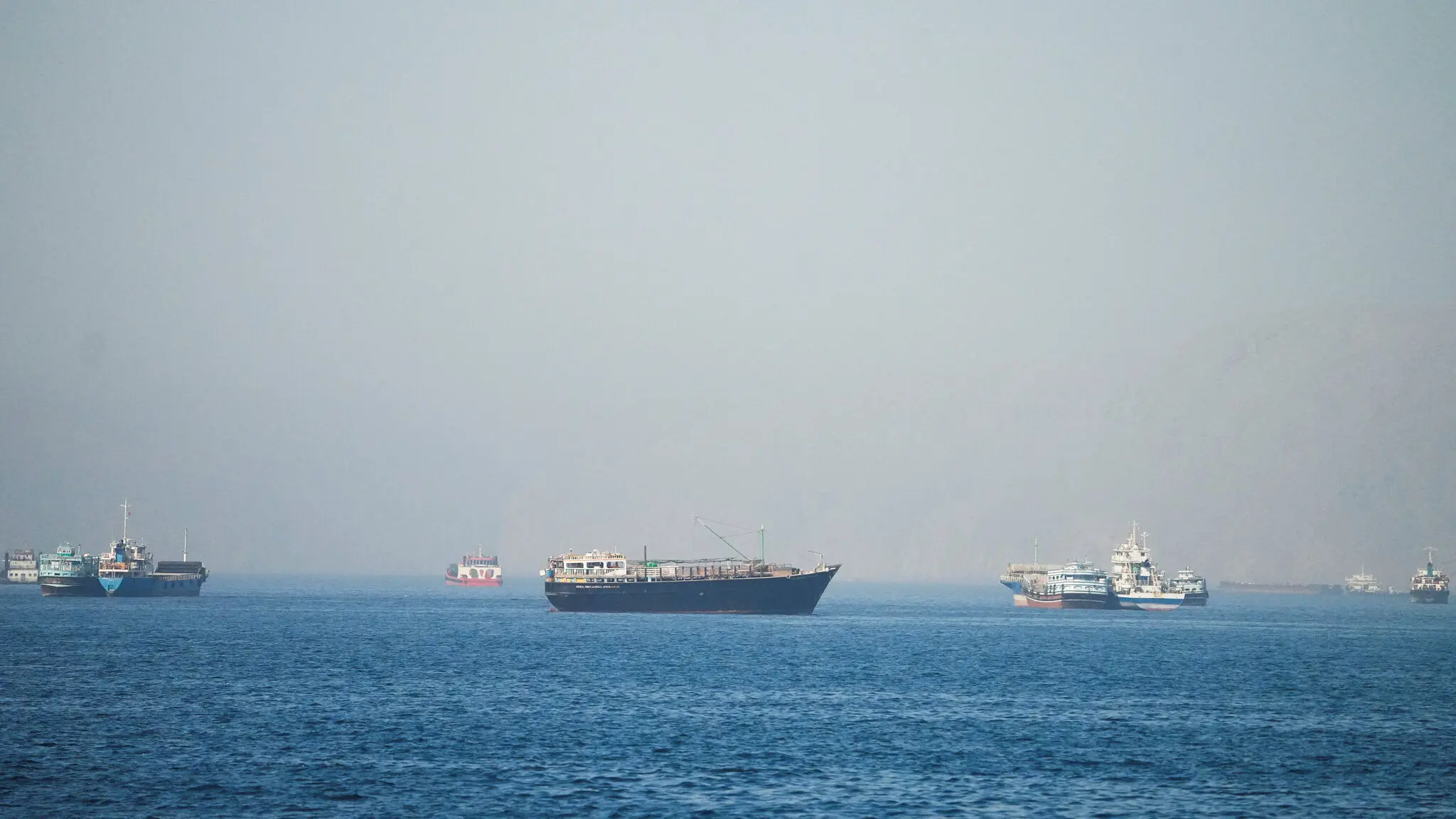
ERBIL (Kurdistan 24) - Iran's Islamic Revolutionary Guard Corps fired a missile at a commercial cargo ship attempting to transit the Strait of Hormuz on Saturday, striking and damaging the vessel in a direct act of defiance against Washington's Saturday ultimatum, a US official confirmed to Axios, as explosions were simultaneously reported across Asaluyeh and Bushehr Province in southern Iran, signaling that US retaliatory strikes were already underway.
The IRGC strike on the cargo ship came on the same day that Washington had set as a hard deadline for Tehran to acknowledge the strait is open and commit to halting all attacks on commercial vessels. Iran chose instead to fire another missile into a civilian-crewed ship in an international waterway, rendering the deadline moot and triggering what appears to be a fresh and significant round of American military retaliation against Iran's southern energy infrastructure.
The Ultimatum Tehran Chose to Ignore
Three US officials confirmed to Axios on Friday that the Trump administration had set a Saturday deadline for Iran, both directly and through regional mediators, including Qatar and Oman. Iranian Foreign Minister Abbas Araghchi traveled to Muscat on Saturday to meet Omani Foreign Minister Badr al-Busaidi in what Iran described as talks focused on maritime security and the Strait of Hormuz. The IRGC missile strike unfolded in parallel, making clear that whatever was discussed in Muscat, Tehran's military posture remained unchanged.
Iranian Foreign Ministry spokesman Esmail Baghaei had insisted on Friday that Iran had fulfilled its responsibilities under the memorandum of understanding, stating: "Iran accepted a clear responsibility regarding the establishment of normal arrangements and maritime services related to ship traffic in the Strait of Hormuz, and we have been very determined and resolute in fulfilling that responsibility." Saturday's missile strike directly contradicted that assertion.
Bushehr and Asaluyeh: Strikes at the Heart of Iranian Energy
The explosions reported across Asaluyeh and Bushehr Province on Saturday represent a significant escalation in the geographic and economic scope of American retaliatory action. Asaluyeh is the onshore processing and export hub for Iran's South Pars gas field, the world's largest natural gas reservoir, which Iran shares with Qatar's North Field. South Pars has already been struck during earlier phases of the conflict, with QatarEnergy disclosing on March 19, 2026, that damage to its associated LNG facility would result in $20 billion in lost revenue and require up to five years to repair.
Bushehr Province more broadly hosts Iran's only operating nuclear power plant, extensive petrochemical facilities, and a concentration of energy infrastructure representing a significant share of whatever export capacity Iran retains after months of conflict and US-imposed financial pressure. Strikes in this corridor carry consequences that extend well beyond the immediate military targets, threatening the physical infrastructure of an economy already pushed to the edge of collapse by the blockade, sanctions, and the accumulating damage of a war now entering its fifth month.
A Week That Dismantled the Peace Framework
Saturday's strike is the culmination of a week that has systematically dismantled the fragile peace architecture constructed around the June 17, 2026, memorandum of understanding. Iran struck three commercial vessels on July 6, prompting CENTCOM to hit approximately 80 Iranian military targets on July 7, including more than 60 IRGC boats. A second night of US strikes followed on July 8. On July 9, the IRGC widened the conflict geographically by firing 10 ballistic missiles at the US air base at Al-Azraq in Jordan, with Jordan's military intercepting eight. The US Treasury separately revoked the general license allowing Iranian oil sales on July 8, tightening the economic screws simultaneously with the military campaign.
President Trump declared the ceasefire "over" on Wednesday, July 8, before signaling openness to diplomacy the following day, a pattern of alternating threat and restraint that Iran appears to have interpreted as an absence of firm red lines. Trump had previously warned that Iranian attacks were "a very foolish violation of our ceasefire agreement" and that he could do "whatever I want" in response.
The Structural Flaw That Made Collapse Likely
Washington Institute for Near East Policy senior fellow Noam Raydan had warned on Friday, in remarks to RFE/RL, that the MOU contained a fatal ambiguity from the outset regarding the future management of the Strait of Hormuz. "Tehran wants to play a central role in drafting the future management of the Strait of Hormuz," Raydan said, a position that sits irreconcilably with Secretary of State Marco Rubio's stated position that "international waterways do not belong to any nation state" and that any Iranian tolling system would make a diplomatic deal "unfeasible."
Iran's chief negotiator, Ghalibaf, had sharpened Tehran's public posture on Friday, writing on X: "America still hasn't learned that bullying and breaking promises are no longer cost-free. Let me put it plainly: if you strike, you'll get hit." The explosions now reported across Bushehr Province and Asaluyeh confirm that the exchange is no longer a warning. It is already happening.
Qatari mediators had expressed hope that talks could resume after the funeral procession for Iran's Supreme Leader concluded on July 10, 2026. That diplomatic opening has effectively been extinguished by Saturday's events, leaving the region facing the prospect of an open-ended military exchange between the United States and Iran with no functioning ceasefire, a revoked oil license, a shattered memorandum of understanding, and explosions burning across Iran's energy heartland on a Saturday afternoon.
| BRIEF: The IRGC fired a missile at a commercial cargo ship in the Strait of Hormuz on Saturday, defying Washington's same-day ultimatum to halt attacks. Explosions were reported across Asaluyeh and Bushehr Province, indicating US retaliatory strikes on Iran's southern energy infrastructure were underway. |