Shorsh-Hetit Hospital Transforms Healthcare Access in Duhok's Amedi District
The opening of Shorsh-Hetit Public Hospital in Deralok has transformed healthcare access for Amedi district, while reflecting the Kurdistan Regional Government's broader investment in modern public medical services.
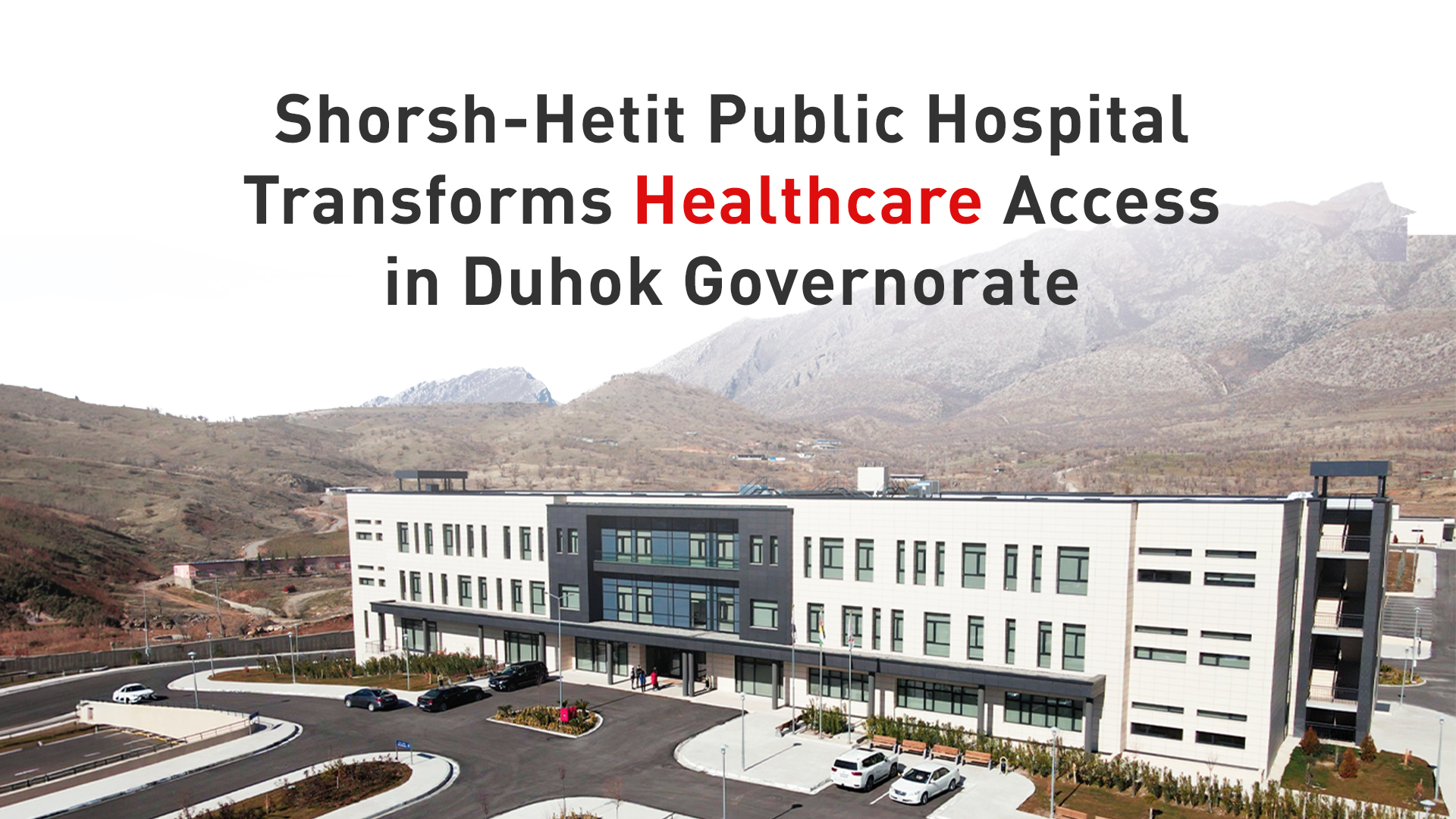
ERBIL (Kurdistan24) - For generations, families living in the mountainous communities of Amedi district measured medical emergencies not only in minutes but in kilometers. A serious illness, difficult childbirth, or traumatic injury often meant a race along the winding road to Duhok, where delays caused by distance, weather, or terrain could determine the outcome before a patient ever reached a hospital.
Today, residents say that reality has changed dramatically.
The opening of the 100-bed Shorsh-Hetit Public Hospital in Deralok has brought comprehensive healthcare to one of the Kurdistan Region's most remote areas, reducing dependence on distant medical facilities and offering thousands of families access to emergency and specialized care much closer to home.
For local residents, the hospital represents more than a new public building. It has become a symbol of security and reassurance, providing services that were once available only after lengthy journeys.
Dindar Salman, a resident of the area, told Kurdistan24 that the hospital has fundamentally altered daily life for communities stretching from Siriye to the surrounding villages.
He recalled years when patients were forced to travel to Duhok even in severe weather, remembering occasions when snow-covered roads complicated already critical medical emergencies. According to Salman, some patients did not survive the journey before reaching medical treatment, underscoring why the hospital had long been regarded as an essential need for the region.
Those experiences illustrate the broader impact of locating modern healthcare closer to rural communities. By shortening travel times during emergencies, the hospital is helping ensure that residents receive treatment more quickly while reducing both the physical and financial burden placed on patients and their families.
The facility now operates around the clock, providing continuous medical services across its departments. Its diagnostic capabilities have also reduced residents' reliance on private laboratories outside the district.
According to Ibrahim Mohammed Sharif, head of the hospital's laboratory department, the facility treats between 60 and 70 patients each day while conducting more than 150 laboratory tests using modern medical equipment. Operating 24 hours a day, the laboratory forms part of a broader network of services designed to keep diagnosis and treatment within the local community.
Beyond laboratory medicine, the hospital provides emergency care, primary healthcare, intensive care, obstetrics, neonatal services, dialysis, diagnostic imaging, specialized treatment, and surgical facilities, allowing patients to access a wide range of medical services under one roof rather than traveling elsewhere for different stages of treatment.
The hospital was officially inaugurated on Oct. 22, 2025, by Kurdistan Region Prime Minister Masrour Barzani. Built at a cost exceeding $43 million, the four-story facility spans approximately 43,000 square meters and was constructed to international healthcare standards. Officials say it is designed to serve more than 250,000 residents across Deralok, Amedi district, and neighboring communities.

Its opening reflects a broader approach to healthcare infrastructure that places equal emphasis on regional accessibility as well as clinical capacity. For remote districts, investment in hospitals can mean faster emergency response, improved preventive care, and greater continuity of treatment without requiring patients to leave their communities.
The Shorsh-Hetit project also fits within the Kurdistan Regional Government's wider strategy to modernize public healthcare across the Region.
According to the KRG Department of Media and Information, the Ninth Cabinet has renovated 67 hospitals and 31 specialized medical centers while establishing eight new hospitals, rehabilitation facilities, and cancer treatment centers. Authorities have also distributed advanced medical equipment across public health institutions as part of efforts to improve healthcare quality and expand access to specialized services.
That modernization is continuing elsewhere.
In Erbil, Rizgary Hospital, one of the Kurdistan Region's largest teaching hospitals, is undergoing a comprehensive transformation that includes advanced medical technologies, upgraded operating theatres, digital hospital management systems, improved environmental controls, and modern engineering infrastructure.
Hospital officials say the project aims not only to renovate aging facilities but also to strengthen clinical efficiency, patient safety, and the overall quality of public healthcare.
Read More: Erbil's Rizgary Hospital Set to Become Kurdistan Region's Leading Healthcare Center
Although the scale and objectives differ, Rizgary Hospital and Shorsh-Hetit Public Hospital reflect the same long-term policy direction: combining infrastructure investment with modern medical technology to improve healthcare delivery throughout the Kurdistan Region.
For residents of Amedi district, however, the significance of Shorsh-Hetit Hospital is measured less by construction figures than by everyday experience.
Where emergency care once depended on a difficult journey to Duhok, comprehensive medical services are now available much closer to home. That shift is easing pressure on families, supporting healthcare professionals with better facilities, and strengthening the resilience of communities that for years faced significant barriers to timely treatment.
As the Kurdistan Region continues investing in new hospitals, upgraded medical equipment, and digital healthcare systems, projects such as Shorsh-Hetit demonstrate how public healthcare infrastructure can reshape daily life, bringing quality medical care within reach while reinforcing the Region's broader commitment to accessible, modern healthcare for all.
|
Summary Shorsh-Hetit Public Hospital in Deralok has transformed healthcare access for Amedi district, ending long journeys to Duhok for emergency treatment. Serving more than 250,000 residents, the hospital reflects the KRG's wider healthcare modernization strategy and investment in public medical services. |