Iran's Qalibaf Says Tehran Sees Through 'American Games' as Tensions Deepen
Iranian Parliament Speaker Mohammed Baqer Qalibaf said Tehran judges Washington by its military actions rather than its rhetoric, as regional tensions persist and diplomatic contacts continue through mediators.
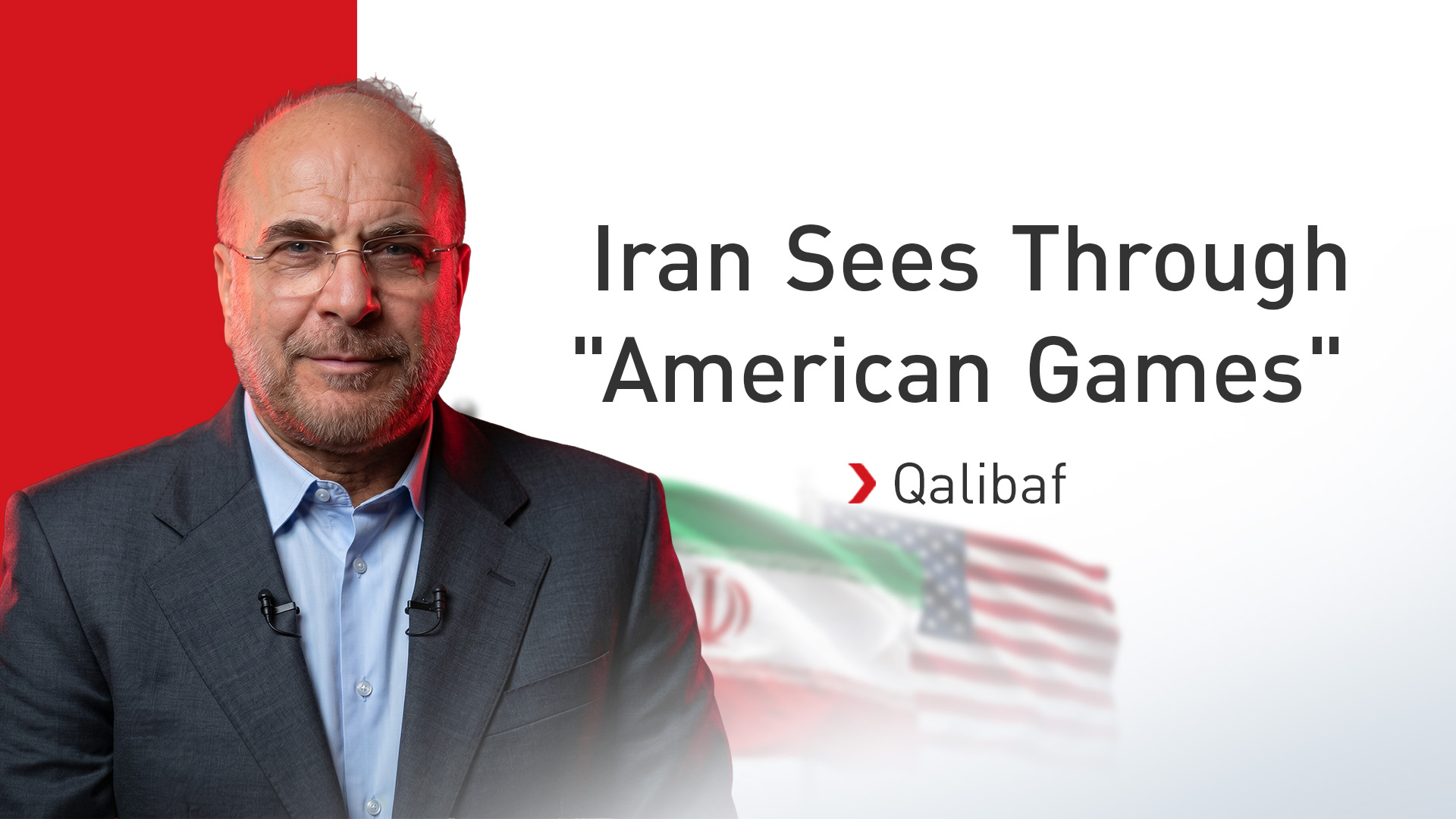
ERBIL (Kurdistan24) - Iranian Parliament Speaker Mohammed Baqer Qalibaf has sharpened Tehran's public criticism of Washington, arguing that recent U.S. military deployments in the Middle East contradict repeated statements expressing support for ending the conflict.
In a message posted Monday on the social media platform X, Qalibaf said the United States continues reinforcing its military presence across the region while simultaneously presenting itself as seeking a diplomatic end to hostilities.
He described that contrast as evidence of what he called "American games," asserting that Tehran has anticipated such developments and adjusted its preparations accordingly.
The parliamentary speaker concluded that the credibility of diplomatic efforts should be measured by actions rather than public declarations, arguing that official rhetoric must be matched by corresponding policy.
His comments add to a broader stream of Iranian messaging that has increasingly questioned Washington's stated intentions during the latest phase of regional fighting.
Rather than focusing solely on military developments, Iranian officials have sought to frame the conflict as one in which U.S. operational decisions and diplomatic statements are moving in opposite directions.
Coming from the speaker of parliament, the remarks carry political weight beyond a routine social media post.
They reinforce Tehran's narrative that military deployments provide a more reliable indication of U.S. policy than public calls for de-escalation, while signaling that Iran's leadership remains focused on preparedness despite continued diplomatic activity.
The statement was issued against the backdrop of an increasingly volatile regional security environment.
According to Agence France-Presse (AFP), Iranian President Masoud Pezeshkian on Monday described the confrontation with the United States as a "full-scale war," reflecting the severity with which Tehran now characterizes the conflict.
His comments followed reports of additional U.S. strikes inside Iran, including attacks extending beyond areas surrounding the strategically important Strait of Hormuz.
The waterway remains central to the current crisis because of its importance to global energy markets and maritime trade.
The renewed fighting has heightened international concern over freedom of navigation and the security of commercial shipping, placing the Strait once again at the center of regional strategic calculations, AFP reported.
Iran has continued responding militarily across the region.
AFP reported that the Islamic Revolutionary Guard Corps announced strikes against targets in several neighboring countries, while authorities in Bahrain said Iranian attacks had targeted the kingdom's air navigation systems.
Those developments illustrate how the conflict has expanded beyond direct exchanges between Tehran and Washington, affecting a broader regional security landscape.
Despite the ongoing military escalation, diplomatic communication has not ceased entirely.
AFP reported that Iranian Foreign Ministry spokesperson Esmaeil Baghaei confirmed that messages continue to be exchanged with the United States through mediators.
He said proposals had been conveyed via intermediary channels, indicating that diplomatic engagement remains active even as military operations continue.
That parallel track of continued dialogue alongside sustained military pressure provides important context for Qalibaf's remarks.
His criticism focused precisely on what he portrayed as the disconnect between diplomatic messaging and developments on the ground, arguing that confidence cannot be built through statements alone.
The parliamentary speaker's comments therefore fit within a broader official narrative that has emerged in Tehran during the current conflict.
Iranian leaders have increasingly emphasized that future assessments of U.S. intentions will depend on observable actions rather than declarations of support for diplomacy.
As military operations continue and indirect diplomatic contacts persist, Qalibaf's statement underscores Iran's effort to present itself as evaluating events through strategic developments rather than political messaging.
In doing so, it reinforces Tehran's public position that any meaningful progress toward reducing tensions will ultimately be judged by conduct on the ground rather than diplomatic rhetoric alone.
|
Summary Iranian Parliament Speaker Mohammed Baqer Qalibaf said Tehran has seen through what he called "American games," arguing U.S. military deployments contradict calls for peace. His remarks come as fighting continues and diplomatic contacts persist through international mediators. |