Kurdistan24 Represents Kurdistan Region at White House Correspondents' Dinner in Washington
Rahim Rashidi, Kurdistan24's Washington Bureau Chief, joined White House journalists and senior U.S. officials at the rescheduled correspondents' dinner, where talks centered on the Kurdistan Region, regional security, diplomacy, and U.S. support for President Masoud Barzani's leadership.
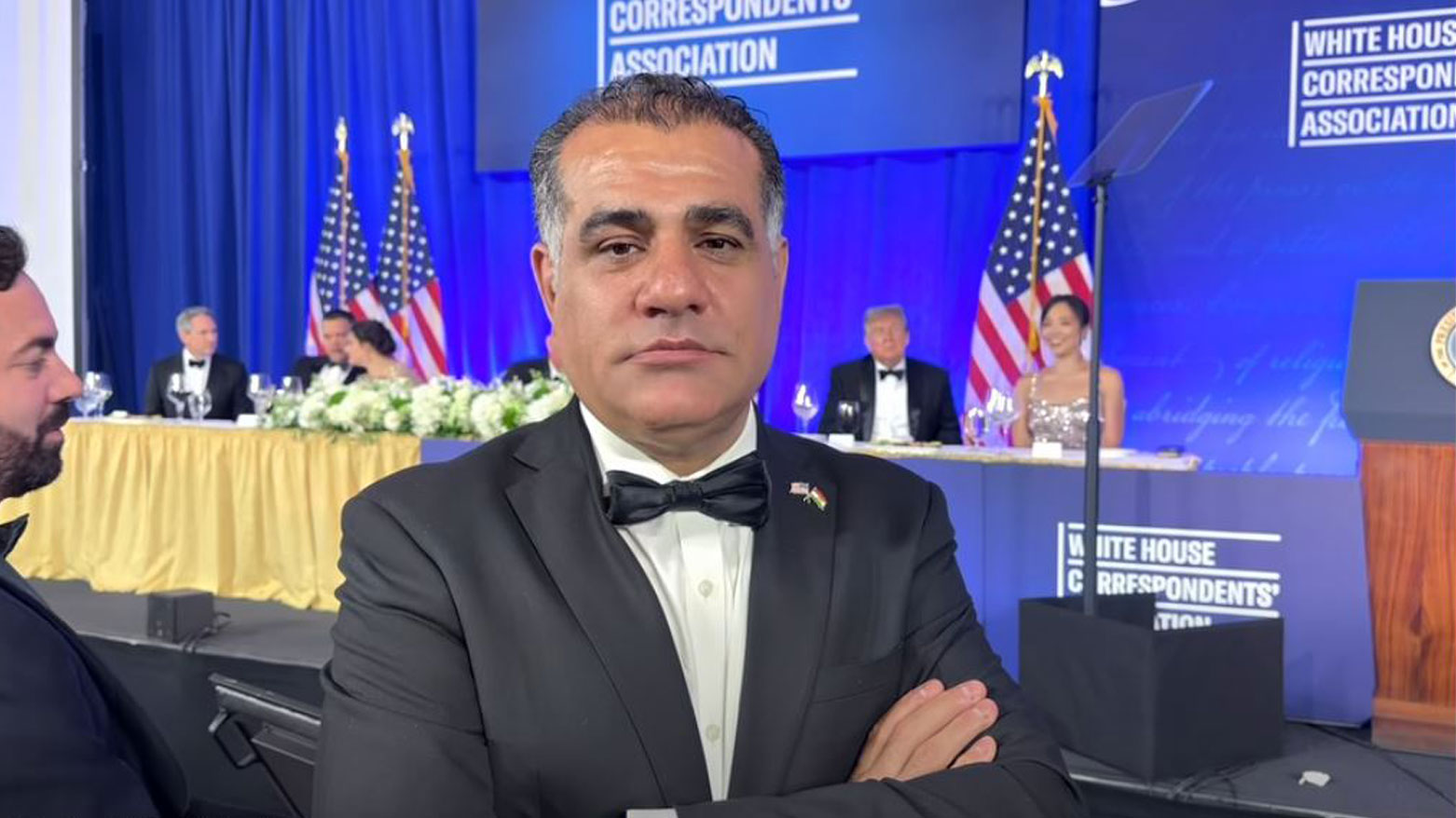
ERBIL (Kurdistan24) - Kurdistan24 strengthened its presence among leading international media organizations and policymakers on Friday as Washington Bureau Chief Rahim Rashidi represented the network at the rescheduled White House Correspondents' Association (WHCA) dinner, an event that brought together President Donald Trump, senior administration officials, members of Congress, diplomats and journalists from across the United States and abroad.
Held at the Waldorf Astoria under heightened security, the gathering offered far more than a ceremonial evening for the Washington press corps.
For Rashidi, it provided an opportunity to engage directly with influential decision-makers at a time when developments in the Kurdistan Region, Iraq and the wider Middle East continue to occupy an important place in U.S. foreign policy discussions.
Throughout the evening, Rashidi met with a broad cross-section of senior American officials, including cabinet members, congressional leaders, U.S. senators, diplomats, White House officials, members of the national security team and fellow correspondents covering the White House.
According to Rashidi, conversations consistently returned to issues affecting the Kurdistan Region, regional security and broader strategic developments across the Middle East. Those discussions reflected the continued interest among American policymakers in the Kurdistan Region's political and security role amid an evolving regional landscape.
Reflecting on the evening, Rashidi said he was honored to represent Kurdistan24 at one of Washington's most prominent annual gatherings of political leaders and journalists.
He said the opportunity to speak directly with senior officials provided valuable insight into how the Kurdistan Region continues to be viewed within the highest levels of the U.S. government.
Among the strongest impressions he took from those conversations, Rashidi noted, was the broad support expressed for the Kurdistan Region and for the leadership of President Masoud Barzani.
According to Rashidi, many of the officials he met spoke positively about President Barzani's longstanding efforts to promote peace, stability and dialogue across the region, describing those priorities as important contributions to regional security during a period marked by persistent geopolitical uncertainty.
The discussions also underscored the enduring strategic relationship between the United States and the Kurdistan Region. While the conversations covered a wide range of regional developments, Rashidi said they consistently reflected an appreciation for the Kurdistan Region's role as a reliable partner in an increasingly complex Middle East.
For Kurdistan24, participation in the correspondents' dinner also highlighted the network's expanding engagement within international political and diplomatic circles.
Beyond reporting on events in Washington, the occasion enabled direct exchanges with policymakers whose decisions influence developments affecting both the Kurdistan Region and the broader region.
The gathering served as another example of how journalism can function not only as a means of informing audiences but also as a bridge connecting governments, institutions and societies through dialogue and professional engagement.
The significance of this year's event extended beyond the customary interaction between government officials and the press.
The dinner marked the return of the White House Correspondents' Association's annual gathering after the original event on April 25 was abruptly interrupted by an assassination attempt targeting President Trump.
Secret Service agents evacuated the president and attendees before the event was canceled, prompting organizers to postpone the annual dinner.
Friday's gathering, held three months later, was intentionally scaled back. Unlike the original event, which had been expected to host several thousand guests, the rescheduled dinner welcomed a much smaller group of invited attendees under substantially tighter security arrangements at Washington's Waldorf Astoria Hotel.
Despite those extraordinary circumstances, organizers sought to preserve the event's longstanding purpose as a forum celebrating journalism while fostering dialogue between the White House and the journalists who cover it.
The evening included recognition of distinguished journalists through professional awards and highlighted new initiatives and standards aimed at reinforcing the importance of press freedom and responsible journalism in the United States.
President Trump addressed attendees in a speech that balanced humor with brief references to major policy issues.
Much of his remarks centered on lighthearted exchanges with the audience, while his comments on international affairs were limited largely to reiterating his administration's position that Iran must never acquire a nuclear weapon.
The atmosphere, however, remained notably collegial throughout the evening.
According to Rashidi, the dinner created opportunities to strengthen professional relationships, exchange perspectives with journalists from diverse organizations and engage in meaningful conversations with officials representing different branches of the U.S. government.
Those interactions, he observed, demonstrated the continuing value of direct dialogue between policymakers and the media, particularly at a time when international developments demand informed reporting and sustained diplomatic engagement.
For Kurdistan24, the evening represented more than attendance at a high-profile Washington event. It reflected the network's commitment to maintaining a direct presence where important foreign policy discussions take place and to ensuring that issues affecting the Kurdistan Region remain part of conversations among senior American decision-makers.
As relations between the United States and the Kurdistan Region continue to evolve amid wider regional challenges, opportunities for direct engagement between journalists and policymakers remain an important element of international understanding.
Rashidi's participation in the White House Correspondents' dinner illustrated that role, bringing Kurdistan24 into discussions that extended beyond headlines to the broader diplomatic relationships shaping the future of the region.
|
Summary Kurdistan24 Washington Bureau Chief Rahim Rashidi represented the network at the rescheduled White House Correspondents' Dinner, meeting senior U.S. officials, lawmakers and diplomats as discussions focused on the Kurdistan Region, regional security and continued support for President Masoud Barzani. |