Baghdad's Green Spaces Shrink as Construction Threatens Old Trees
Baghdad's shrinking green spaces draw criticism after mature trees are cut near the Palestine Hotel, as officials pledge to plant 190,000 saplings.
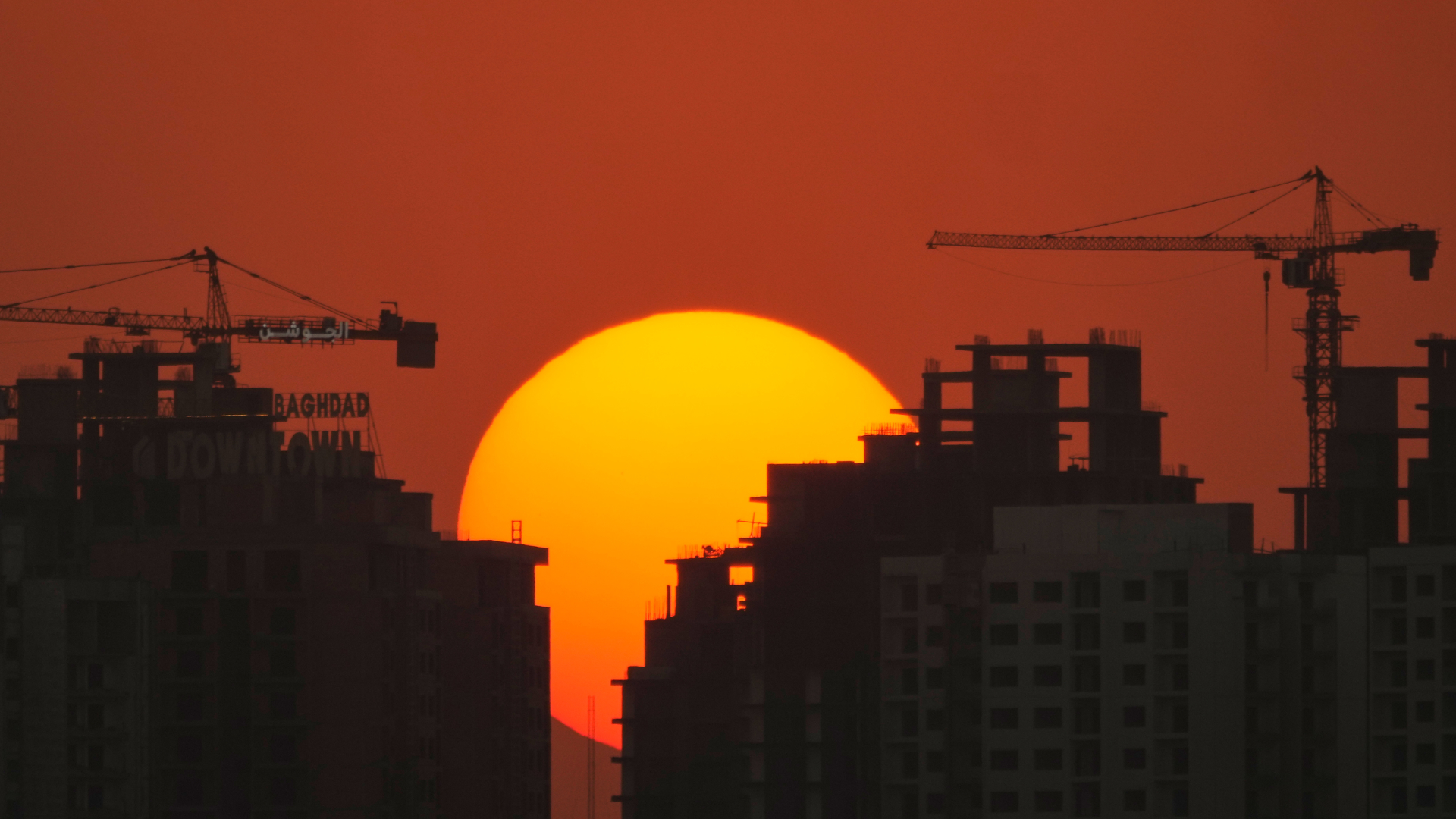
ERBIL (Kurdistan24) - The removal of decades-old trees near Baghdad's Palestine Hotel has renewed criticism of construction and investment projects that environmental campaigners say are consuming the Iraqi capital's remaining green spaces, despite restrictions intended to protect them.
Trees estimated to be more than 30 years old were cut down along Saadoun Street in central Baghdad to expose the renovated facade of the hotel, according to local reports.
Residents and nearby business owners criticized the decision, questioning why established trees were removed and whether authorities were adequately supervising changes to the city's streetscape.
The dispute reflects a wider conflict over land use in Baghdad, where housing, commercial development and restaurants are competing with parks, trees and undeveloped areas.
Environmental advocates say the losses are adding to the pressures of extreme summer temperatures, air pollution and desertification, while municipal authorities point to restrictions on converting green spaces and a new planting campaign.
The Iraqi Green Observatory has warned that cutting trees and allocating vegetated land to investment developments are among the city's most pressing environmental challenges.
It identifies weak enforcement and insufficient field inspections as central problems, arguing that the removal of vegetation reduces Baghdad's ability to absorb carbon dioxide and contributes to hotter, more polluted urban conditions.
The group's concerns are not limited to individual roadside trees.
In an Oct. 20 statement, the observatory warned that the planned "Baghdad Forests" project could be lost to an investment development with a different purpose. The project was conceived as a green area intended to improve air quality in a capital affected by industrial facilities, electricity generators and vehicle emissions.
Its proposed site at the former al-Rashid Camp was especially valuable, the observatory said, because transforming it into a forest could prevent the land from becoming a dumping ground and improve conditions in nearby neighborhoods.
It singled out al-Zafaraniya, which experiences pollution, emissions, and dust and sandstorms.
The observatory said it had seen no indication that planting work had begun at the large designated site.
Its warning described a risk of conversion rather than confirming that the forest project had been formally canceled or replaced. It urged preservation of the original environmental purpose.
The capital's authorities have outlined measures intended to protect existing greenery. Baghdad Municipality says it has prohibited the conversion of green spaces to other uses since 2022.
It has also announced plans to plant 190,000 saplings during this autumn to address shortages in the city's vegetation cover.
The Ministry of Agriculture has separately stressed that productive agricultural land cannot lawfully be destroyed for other purposes without approval through a central committee under the Council of Ministers.
That safeguard concerns agricultural land, while the municipality's stated prohibition covers urban green spaces.
Those positions set out official protections, but the complaints surrounding Saadoun Street raise questions about how consistently they are applied.
The available reporting did not establish whether the hotel-area trees were protected by a particular regulation, which authority approved their removal, or whether any investigation was underway.
Planting new saplings could increase greenery over time, but the municipal announcement did not provide survival targets, planting locations or a schedule for replacing mature trees lost to development.
It also did not establish how much shade or tree cover the campaign would restore.
Concern over Baghdad's shrinking vegetation predates the latest controversy.
In October 2025, Kurdistan24 reported that Iraqi environmental organizations estimated the capital's green cover at just 4.5 percent. An earlier Kurdistan24 article cited the Iraqi Ministry of Environment as saying that more than half of Baghdad's green spaces had disappeared since 2023.
Read More: Concrete Over Country: Iraq's Green Vanishes
Those assessments were reported at different times and did not provide matching methodologies, so they should not be treated as interchangeable measurements. Both, however, formed part of mounting public criticism of the speed at which Baghdad's green areas were being lost.
The pressure has also been felt in well-known public spaces. Kurdistan24 reported the reopening of Zawraa Park in October 2025, while noting residents' concerns about possible future construction and the absence, in their view, of a sufficiently coherent plan for urban greenery.
Read More: Battle for Green Space: Urbanization and Climate Change Threaten Iraq's Cities
The wider effects of environmental deterioration are a concern for young Iraqis as well.
At a Baghdad consultation described in a Sept. 22 UNICEF article by Richard Ruati, more than 30 young people and representatives of government and business discussed drought, heat, pollution and the lack of safe green spaces.
Participants called for practical environmental measures and greater involvement in decisions.
Basmalh Qasim Salih, a 21-year-old from Baghdad, spoke about wanting a healthier environment for the next generation, while others raised water conservation, waste management, renewable energy and youth-led projects.
The distinction between preservation and expansion remains central to the current debate.
The government's stated rules and planting plans indicate a policy commitment to greenery, but environmental advocates argue that preventing the removal of existing trees and safeguarding land designated for parks and forests must also be priorities.
For Baghdad, the unanswered questions concern the fate of sites such as Baghdad Forests, oversight of tree removal in established neighborhoods, and whether the promised autumn planting will translate into lasting green cover as construction continues.