Iran's Araghchi Discusses Alleged U.S. Violations With China as Talks Continue
Iranian Foreign Minister Abbas Araghchi appealed to China over what Tehran calls U.S. violations of the war-termination agreement, as Washington continues negotiations with Iran while keeping military options on the table.
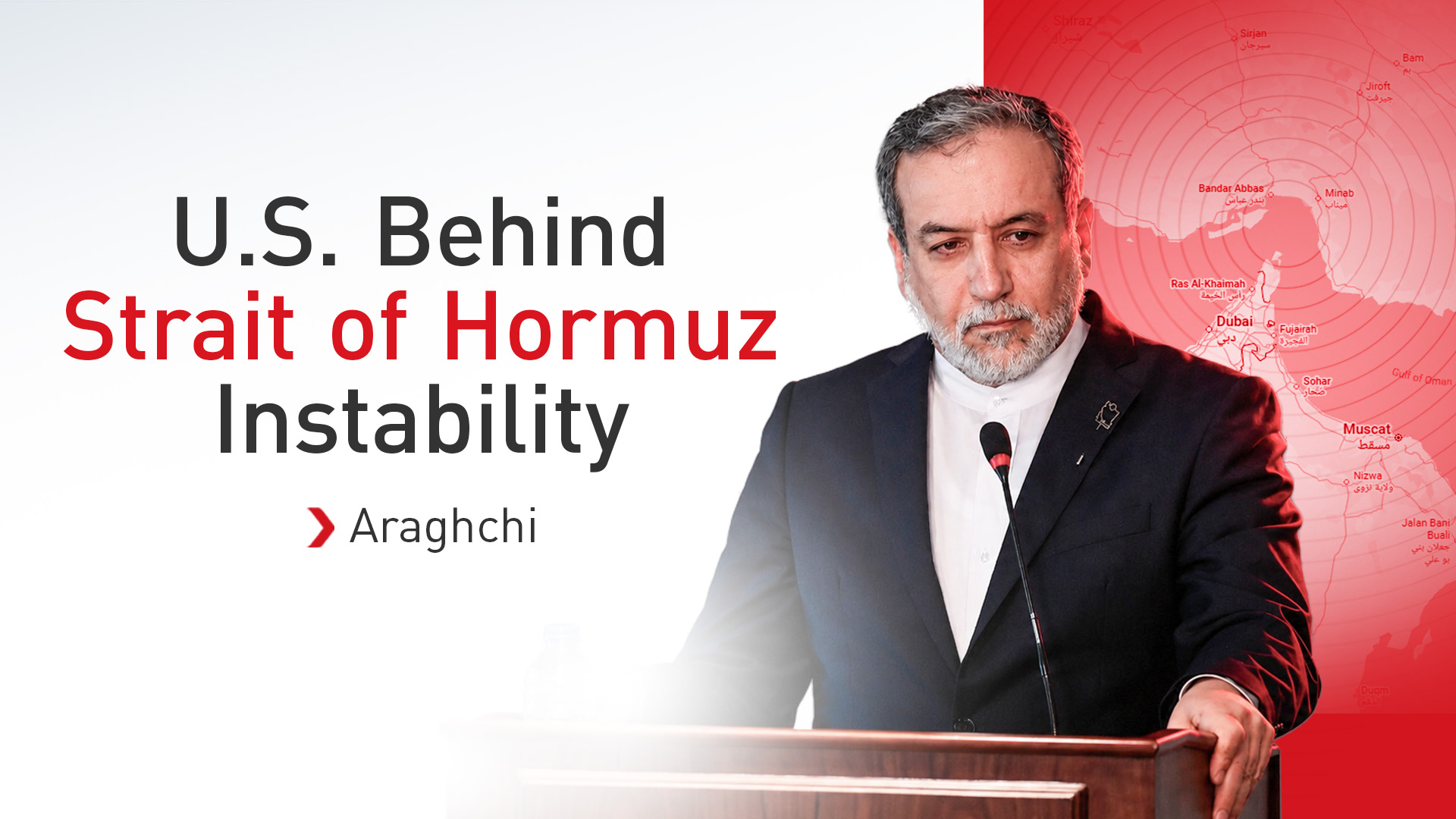
ERBIL (Kurdistan24) - Iranian Foreign Minister Abbas Araghchi has intensified Tehran's diplomatic engagement with Beijing, accusing the United States of violating the agreement that halted active hostilities and arguing that Washington's actions have fueled renewed instability in the strategically vital Strait of Hormuz.
According to a statement released Saturday by Iran's Foreign Ministry, Araghchi discussed the latest developments during a telephone conversation with Chinese Foreign Minister Wang Yi, portraying the exchange as part of Tehran's broader effort to rally international support while tensions with Washington remain unresolved.
During the conversation, Araghchi argued that recent U.S. actions have undermined the framework that ended active fighting, claiming Washington had failed to uphold the commitments outlined in the agreement. He further asserted that instability affecting the Strait of Hormuz is a direct consequence of what Tehran considers repeated American violations.
The Iranian foreign minister also accused the United States of targeting critical Iranian infrastructure during recent military operations, reinforcing Tehran's position that Washington bears responsibility for the deterioration of the security environment following the ceasefire arrangement.
The diplomatic outreach to Beijing comes as Iran seeks to strengthen ties with major international partners while presenting its account of the conflict to influential global powers. China, one of Iran's most important diplomatic and economic partners, has increasingly become central to Tehran's efforts to build international backing as pressure from Washington continues.
The Strait of Hormuz remains at the center of those discussions. The narrow waterway serves as one of the world's most important energy transit routes, making any deterioration in its security a matter of global concern. By linking recent tensions in the strait to alleged U.S. breaches of the war-termination agreement, Tehran is seeking to frame maritime instability as the product of Washington's military actions rather than Iranian policy.
Iran's diplomatic campaign has also extended beyond Beijing. The Foreign Ministry said Araghchi held separate talks with Russian Foreign Minister Sergey Lavrov, reaffirming Tehran's determination to prevent what it described as any U.S. attempt to "misuse" the Strait of Hormuz. The parallel consultations underscore Iran's effort to coordinate with both China and Russia as it navigates a period of renewed confrontation with the United States.
Those diplomatic contacts have unfolded against the backdrop of continuing military exchanges. According to the Iranian Foreign Ministry, direct hostilities resumed roughly two weeks ago, with U.S. strikes targeting bridges and other infrastructure across Iran. Tehran has responded by launching attacks against U.S. military bases in Kuwait, Bahrain and Jordan, extending the conflict beyond Iranian territory.
While Iran has focused on expanding diplomatic engagement with Beijing and Moscow, Washington has continued to pursue a strategy that combines negotiations with sustained military pressure.
Speaking to reporters in the Oval Office on Friday, President Donald Trump confirmed that discussions between the United States and Iran remain active, even as his administration reviews options for broader military action.
"Look, we're talking to them right now," Trump said, adding that he believed Iranian officials were becoming "more and more serious as the days go by."
According to Agence France-Presse (AFP), Trump said he had not yet decided whether to authorize a significantly larger military campaign against Iran, emphasizing that diplomacy remains open despite continued military preparations.
"We're locked and loaded and ready to go," the president said. "But we're talking to them, so I think while we're talking, we'll see what comes of it."
Trump maintained that Iran ultimately faces a choice between reaching an agreement with Washington or confronting what he described as a "much higher level" of military action if diplomacy fails. At the same time, he reiterated that preventing Iran from acquiring a nuclear weapon remains the administration's principal objective, while declining to identify the specific point at which he would authorize broader operations.
Read More: Trump Confirms Iran Talks While Weighing Broader Military Action
The president also addressed the international dimension of the crisis, saying Chinese President Xi Jinping and Russian President Vladimir Putin had assured him they would not provide weapons to Iran.
"I think, you know, I trust them. I don't think they'd want to have me disappointed," Trump said.
Those remarks add another layer to an increasingly complex diplomatic landscape in which both Washington and Tehran are actively engaging Beijing and Moscow while maintaining sharply different narratives about the conflict and its future.
For Iran, outreach to China and Russia reflects an effort to reinforce international partnerships while challenging Washington's account of recent events. For the United States, negotiations continue alongside preparations for possible military escalation, with the administration insisting that diplomatic engagement and military readiness are complementary rather than competing strategies.
As both governments pursue parallel diplomatic initiatives while keeping military options available, the future of the confrontation remains uncertain. The latest exchanges suggest that negotiations have not displaced strategic competition; instead, diplomacy has become another arena in which Washington and Tehran are seeking to shape both the course of the conflict and international perceptions of responsibility for its next phase.
|
Summary Iranian Foreign Minister Abbas Araghchi discussed alleged U.S. violations of the war-termination agreement with China while strengthening ties with Beijing and Moscow. The outreach comes as President Donald Trump says U.S.-Iran negotiations continue even as Washington keeps broader military options available. |