Iranian Government and IRIB Clash Over Editing of President Pezeshkian's Remarks
Iran's government has accused state broadcaster IRIB of censoring President Masoud Pezeshkian's remarks on international negotiations, while the broadcaster says its editorial decisions are intended to preserve national unity during a politically sensitive period.
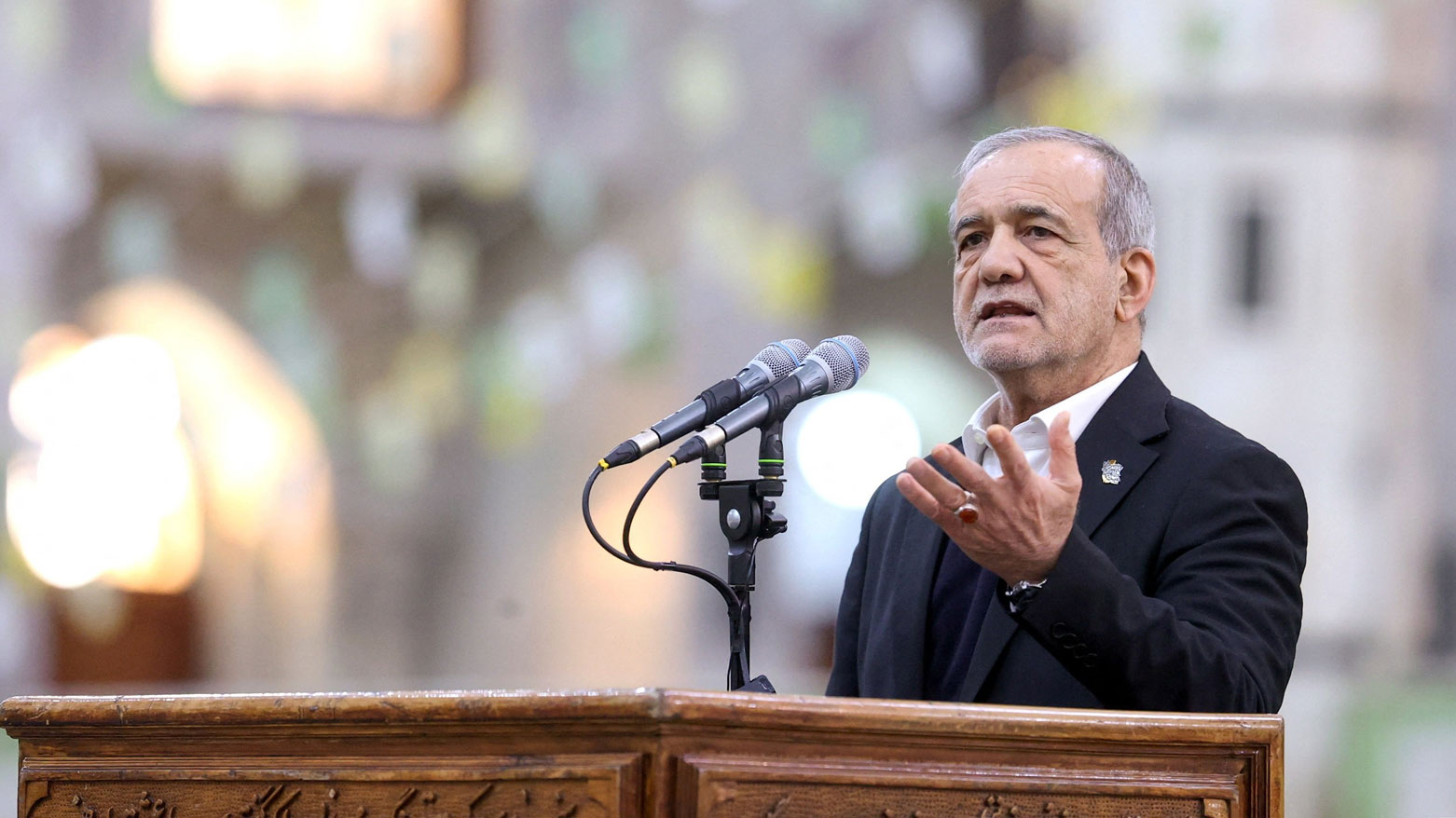
ERBIL (Kurdistan24) - Iran's government and the country's state broadcaster have entered an unusually public dispute over the editing of President Masoud Pezeshkian's televised remarks, exposing competing views over transparency, editorial responsibility and the presentation of official state messaging during a politically sensitive period.
The disagreement emerged after the Iranian Government's Media and Information Council accused the Islamic Republic of Iran Broadcasting (IRIB) of removing portions of the president's speech on international negotiations, delivered during National Industry and Resources Day.
In a strongly worded statement, the Council described the edits as an exceptional departure from accepted broadcasting practice and questioned the broadcaster's handling of official government communications.
According to the Council, the disputed broadcast was not an isolated case.
It argued that similar editorial decisions had previously affected remarks by other senior officials, including the Speaker of Parliament and the Chief Justice, particularly when they expressed positions supportive of the president.
By highlighting what it described as a recurring pattern, the government portrayed the latest incident as part of a broader concern over how official statements are presented to the public.
The criticism reflects growing insistence from the executive branch that presidential speeches and other official addresses should be aired in full and without alteration.
The Council argued that complete and accurate broadcasting of state communications is essential to maintaining public confidence, particularly when sensitive policy issues such as international negotiations are under discussion.
IRIB firmly rejected the allegations, dismissing the government's accusations as unfounded and defending its editorial approach as consistent with its institutional responsibilities.
The broadcaster said its decisions are guided by its legal mandate and by what it considers the broader public interest rather than political considerations.
The broadcaster also argued that limiting the public display of differing views among senior state officials serves a wider national purpose.
According to IRIB, maintaining a unified public message is especially important during the current sensitive period, when officials believe internal divisions could undermine national cohesion.
The contrasting positions underscore an institutional disagreement over how official information should be communicated rather than a dispute centered on individual personalities.
While the government is pressing for greater transparency and the unedited presentation of presidential remarks, IRIB maintains that editorial judgment remains necessary to balance public communication with broader national considerations.
The unusually public exchange highlights differing interpretations of the broadcaster's role within Iran's political system.
For the government, faithful transmission of official speeches is presented as a matter of public accountability. For IRIB, editorial discretion is portrayed as part of its responsibility to safeguard national unity while operating within its legal framework.
Although both sides say they are acting in the national interest, the dispute illustrates the challenges of managing official messaging at a time of heightened political sensitivity.
The exchange has brought rare public attention to competing institutional views over transparency, media responsibility and how the state's most consequential messages should reach the Iranian public.
|
Summary Iran's government has accused state broadcaster IRIB of censoring President Masoud Pezeshkian's remarks on international negotiations, while IRIB denies the allegations and says its editorial decisions are intended to preserve national unity, highlighting an unusual institutional dispute over official messaging. |