Christian Alliance Unveils 'Telkaif Initiative' to Safeguard Nineveh Plains Heritage
New proposal links legal reform, heritage preservation, and sustainable development to strengthen the long-term future of Iraq's indigenous Christian communities.
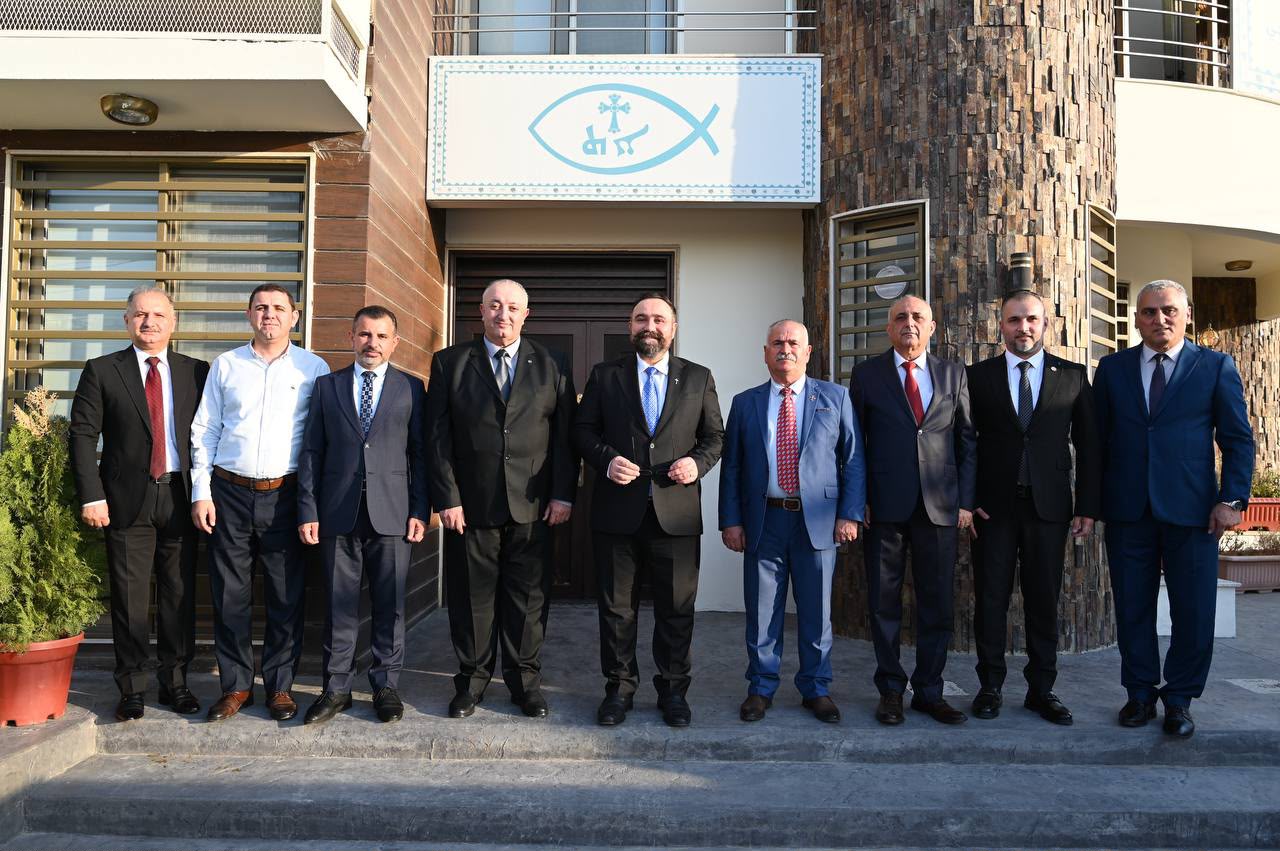
ERBIL (Kurdistan24) - An alliance representing Iraq's Christian community has unveiled what it describes as a broad national strategy to safeguard the future of indigenous Christians in the Nineveh Plains, combining legal reform, heritage preservation, economic resilience, and constitutional protections under a new project named the "Telkaif Initiative."
Announced during the Christian Alliance's monthly meeting on July 25, the initiative is presented as more than a political declaration.
According to the coalition, it is intended as a long-term framework for preserving the historical continuity of Christian communities while addressing legal and administrative issues that it says continue to affect their ancestral towns.
The alliance said the initiative seeks to reinforce justice, the rule of law, peaceful coexistence, and equal citizenship by protecting the demographic and cultural character of areas historically inhabited by Christians, particularly across the Nineveh Plains.
Central to the proposal is the symbolic choice of Tel Kaif (Tel Keppe), an ancient Chaldean town whose historical importance, the alliance argues, reflects the broader experience of Iraq's indigenous Christian population.
By naming the initiative after the town, organizers said they hope to highlight both its rich heritage and the demographic challenges they believe threaten communities throughout the region.
According to the alliance, preserving Iraq's religious and ethnic diversity extends beyond the interests of a single community.
It characterized that diversity as a national asset essential to the country's long-term stability, particularly after years of conflict that displaced large numbers of Chaldean, Syriac, Assyrian, and Armenian residents from their traditional homes, including during the ISIS offensive that devastated much of the Nineveh Plains.
Rather than focusing on one policy area, the initiative proposes an integrated approach designed to reinforce community resilience through several interconnected tracks.
The alliance said protecting property rights through constitutional and legal mechanisms forms the foundation of the effort, while stronger political representation is intended to ensure that indigenous Christian communities retain an effective voice within Iraq's institutions.
Economic recovery is presented as another pillar of the initiative.
The alliance argues that sustainable investment, employment opportunities, and reconstruction are necessary to encourage families to remain in, or return to, their ancestral towns.
At the same time, cultural and social programs are intended to preserve language, heritage, and historical identity, while youth-focused initiatives seek to strengthen younger generations' connection to their communities and encourage long-term settlement.
The proposal also envisions greater engagement with international organizations, diplomatic missions, and institutions concerned with ethnic and religious components' rights and indigenous peoples, reflecting the alliance's view that preserving Iraq's Christian heritage carries both national and international significance.
The alliance argues that many of the legal disputes and demographic concerns facing Christian communities today originate in policies introduced during the former Ba'athist government.
In its statement, it pointed specifically to demographic engineering measures implemented during the 1990s and to Revolutionary Command Council Resolution No. 117 of 2000, which it said resulted in the redistribution of land and property in several predominantly Christian towns, including Telkaif, Teleskof, Bakhdida (Al-Hamdaniya), Bartella, Karamles, and Batnaya.
According to the alliance, those measures altered ownership patterns and affected long-held property rights, including the redistribution of approximately 1,600 residential plots in Telkaif.
Although Resolution No. 117 was later repealed through Resolution No. 12 of 2004, the coalition contends that administrative and legal consequences from those earlier policies continue to shape property disputes in government institutions.
On that basis, the initiative calls for comprehensive legal and administrative measures to address what the alliance describes as the remaining effects of previous demographic policies.
It maintains that restoring property rights through constitutional processes is essential to strengthening confidence in the rule of law and ensuring equal treatment for all citizens.
The alliance further emphasized that land and administrative procedures should not be used to alter the demographic composition of historically diverse communities.
Instead, it argues that constitutional protections for private property and equal citizenship should guide future policy decisions affecting the Nineveh Plains.
Looking ahead, the initiative outlines a series of long-term objectives that extend beyond legal restitution.
Alongside restoring property rights, the alliance advocates removing remaining administrative obstacles linked to earlier policies, accelerating reconstruction in areas damaged by conflict, promoting sustainable development, and creating conditions that allow indigenous Christian communities to maintain a lasting presence in their ancestral homeland.
The proposal concludes with an appeal for broad national participation, urging Iraqi state institutions, political parties, civil society organizations, academics, public figures, and members of the diaspora to support the initiative.
According to the alliance, preserving Telkaif and the wider Nineveh Plains is not solely about protecting one religious community but about safeguarding Iraq's constitutional commitment to diversity, coexistence, and equal citizenship.
Framing the initiative as a national project rather than a community-specific campaign, the alliance said its broader objective is to ensure that one of Mesopotamia's oldest indigenous populations can continue living securely in its ancestral homeland while contributing to Iraq's pluralistic social fabric under the protection of constitutional law.
|
Summary The Christian Alliance has launched the Telkaif Initiative, a broad strategy aimed at protecting Iraq's indigenous Christian communities through legal reform, heritage preservation, reconstruction, and constitutional safeguards while strengthening the long-term resilience of the Nineveh Plains. |