CENTCOM Chief's Two-Week Iran Strike Plan Shapes Trump's Next Move
Adm. Brad Cooper's proposed 10-to-14-day air campaign has emerged as a key option for President Trump as Washington weighs stronger military action against Iran amid renewed regional escalation.
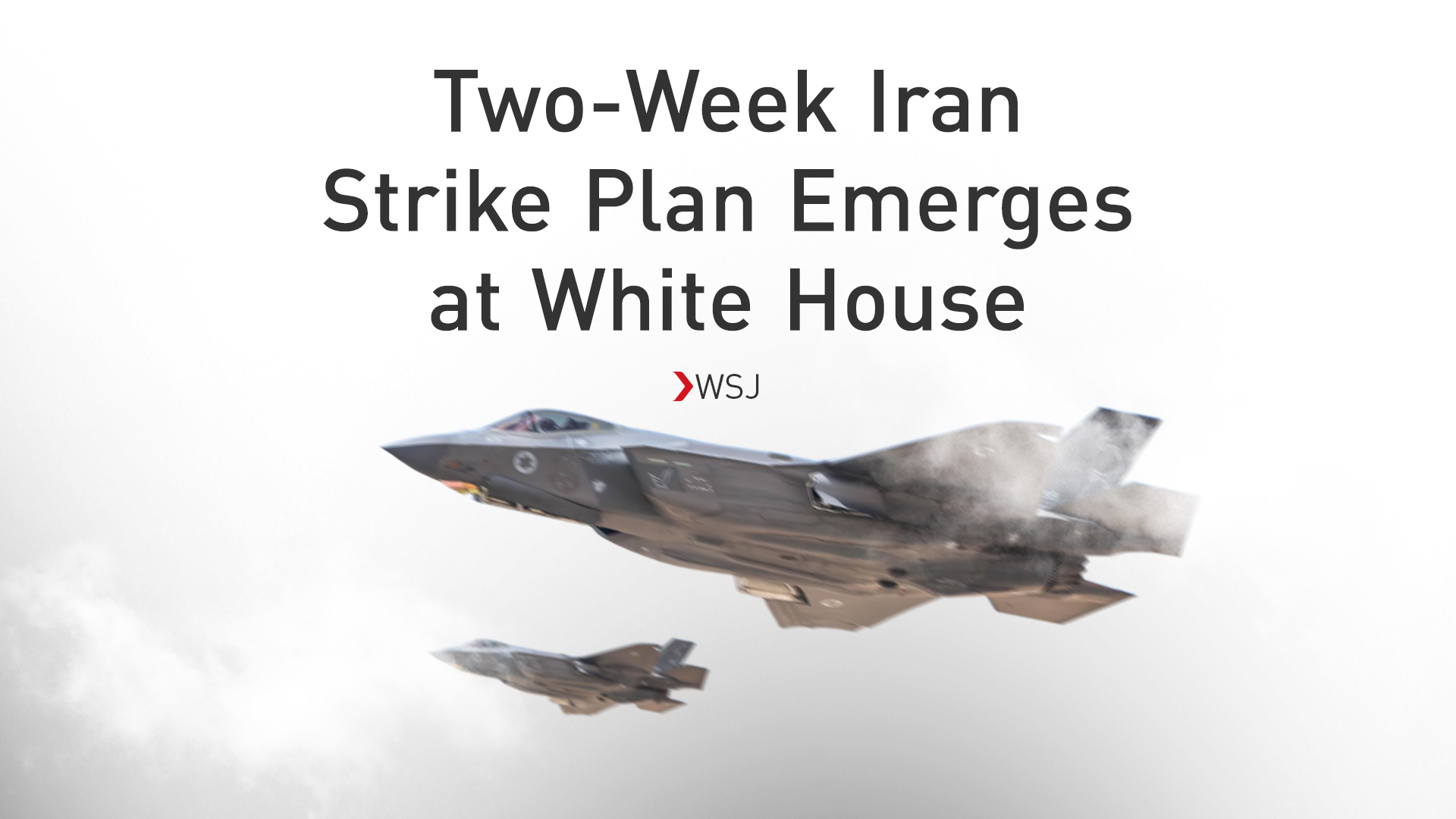
ERBIL (Kurdistan24) - A proposal for an intensified U.S. air campaign against Iran has emerged as one of the most consequential military options before President Donald Trump, underscoring the increasingly difficult balance between expanding military pressure and preserving the possibility of diplomacy after the latest exchange of attacks between Washington and Tehran.
According to reporting by The Wall Street Journal's Michael R. Gordon, Lara Seligman, and Annie Linskey, Adm. Brad Cooper, commander of U.S. Central Command (CENTCOM), has developed an operational plan calling for an intensive air campaign lasting roughly 10 to 14 days.
The proposal is designed to significantly degrade Iran's missile capabilities following Tehran's latest missile attack targeting U.S. forces in Jordan, an incident that American officials said was successfully intercepted, the newspaper said.
The reported plan has become increasingly significant after CENTCOM announced fresh strikes against Iranian targets on Wednesday night, describing the operation as a "powerful response" to Iran's attempted attacks on American forces in the Middle East. Those strikes are viewed as an immediate military response while broader decisions over the conflict's trajectory remain under discussion within the administration.
At the center of those deliberations is Adm. Brad Cooper, whose responsibilities extend across U.S. military operations in the Middle East.
The newspaper reported that although the U.S. Admiral has maintained a lower public profile than Chairman of the Joint Chiefs of Staff Gen. Dan Caine and Defense Secretary Pete Hegseth, the CENTCOM commander has reportedly argued that a more sustained offensive would reduce Iran's ability to continue launching missile attacks, potentially shifting the military balance after months of intermittent fighting.
The proposal, however, reflects only one side of an ongoing strategic debate.
According to the Wall Street Journal, Caine has presented a more cautious assessment, warning that a broader campaign carries operational risks at a time when U.S. inventories of Patriot and THAAD interceptor missiles have come under increasing strain.
Those defensive systems continue to protect American forces and regional allies, and officials have reportedly weighed whether expanded offensive operations could place additional pressure on already limited stockpiles.
Neither Cooper nor Caine has publicly commented on internal policy discussions, while the Pentagon has emphasized that senior military leaders remain aligned in carrying out any decision made by the president.
Trump has also sent mixed public signals, combining forceful rhetoric with continued references to negotiations.
Speaking publicly on Wednesday, the president indicated the United States was prepared to intensify military pressure on Iran while also suggesting diplomatic channels had not been entirely closed. That dual message reflects a broader administration effort to retain strategic flexibility as the conflict evolves.
The military debate comes against the backdrop of a rapidly expanding regional crisis.
Fresh U.S. strikes followed Iran's latest missile attack against American forces in Jordan, while the Associated Press reported that Saudi Arabia has publicly joined operations targeting Iranian-backed militia infrastructure in Iraq. The development represents a notable widening of regional military involvement and illustrates how neighboring states are becoming increasingly entangled in the confrontation.
At the same time, diplomatic efforts appear to have stalled once again.
According to AP reporting by Farnoush Amiri, Matthew Lee, Aamer Madhani, and Konstantin Toropin, officials in Washington acknowledge that no immediate pathway exists for restarting direct negotiations, while analysts cite growing mistrust between both governments following the collapse of previous diplomatic initiatives.
The strategic picture has also become more complicated beyond the battlefield. Continued instability around the Strait of Hormuz has heightened concerns over global energy markets, while military planners remain mindful of the demands placed on U.S. resources by multiple security commitments worldwide.
Additional U.S. measures, including fresh sanctions targeting Iranian companies accused of supporting the Islamic Revolutionary Guard Corps and continued military deployments, illustrate Washington's effort to combine economic and military pressure while keeping multiple options available.
For now, the latest CENTCOM strikes appear to represent a measured response rather than a definitive shift toward a prolonged offensive. Whether the White House ultimately adopts Cooper's proposed two-week campaign or continues with more limited military actions while leaving room for diplomacy remains uncertain.
What is clear is that the operational planning now underway has become central to Washington's response as the United States confronts mounting regional instability and weighs how far it is prepared to escalate its conflict with Iran.
|
Summary Adm. Brad Cooper's reported proposal for a 10-to-14-day air campaign has become a key option for President Trump after Iran's latest missile attack. The plan highlights Washington's debate over escalation, diplomacy, military readiness, and the widening regional implications of the conflict. |