Iranian Pilgrims Stream Into Iraq for First Arbaeen Since War
The first Arbaeen pilgrimage since the U.S.-Iran war began is drawing millions of worshippers to Iraq, where religious devotion unfolds alongside heightened regional tensions and renewed geopolitical uncertainty.
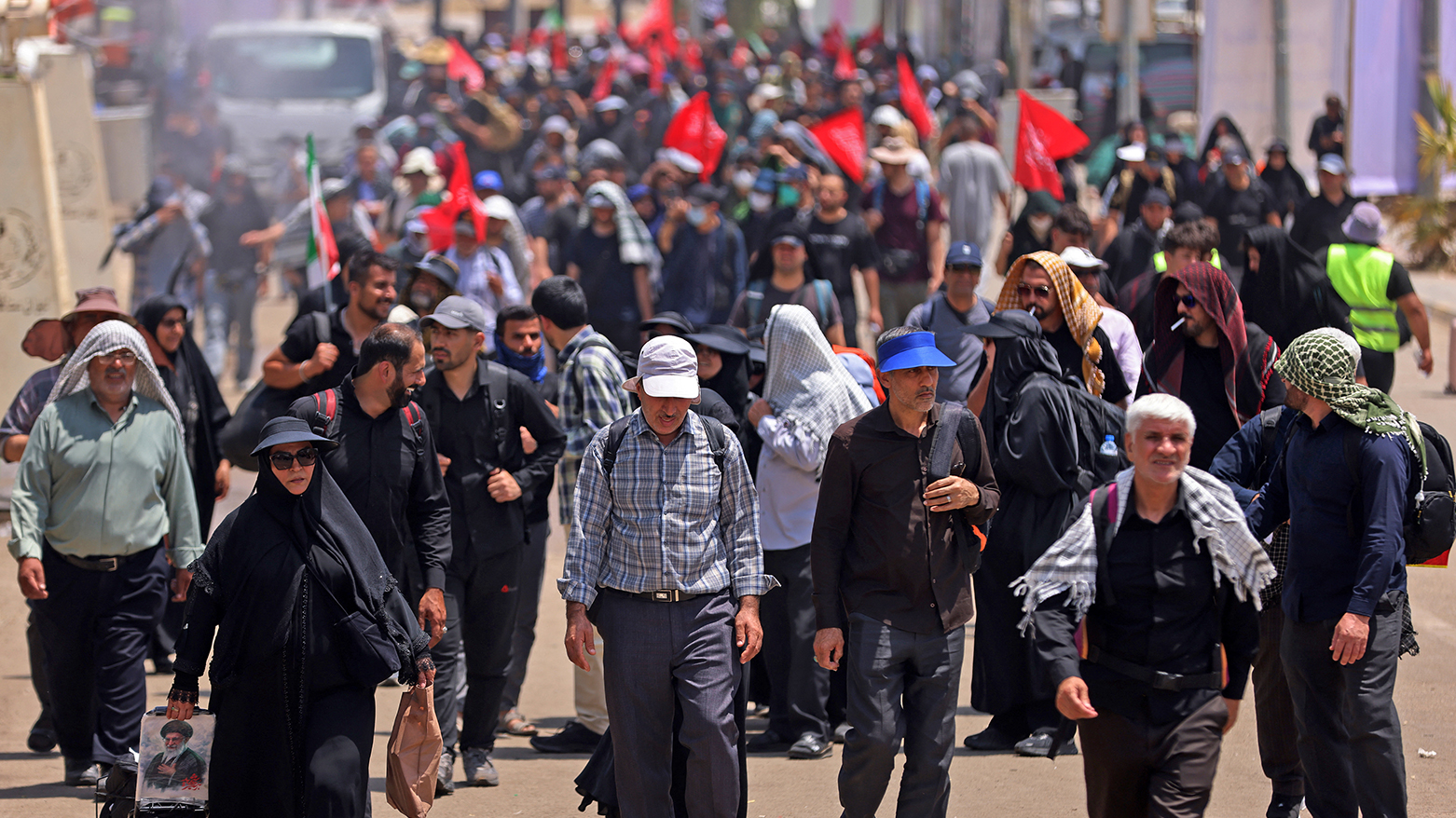
ERBIL (Kurdistan24) - Hundreds of thousands of Iranian pilgrims are crossing into Iraq for this year's Arbaeen pilgrimage, transforming border crossings into vast corridors of faith at a time when the Middle East remains gripped by conflict. For many making the journey, the annual commemoration has acquired an added layer of meaning, unfolding for the first time since war erupted between the United States and Iran earlier this year.
According to Agence France-Presse (AFP), the flow of pilgrims through Iraq's eastern frontier has remained strong despite months of military confrontation, economic hardship and continuing regional uncertainty.

Their destination is Karbala, where millions of Shia Muslims gather each year to mark Arbaeen, the 40th day of mourning for Imam Hussein, the grandson of the Prophet Mohammed whose death at the Battle of Karbala in 680 remains central to Shia religious identity.
This year's pilgrimage differs markedly from previous gatherings.
Rather than taking place during a period of relative regional stability, it is unfolding while military tensions between Washington and Tehran remain elevated, placing Iraq once again at the crossroads of broader geopolitical rivalries.

As one of the world's largest annual religious gatherings draws millions across international borders, Iraq is hosting the event while navigating an increasingly fragile regional security landscape.
At the al-Zurbatiyah border crossing, AFP described crowds arriving under intense summer heat, many dressed in black mourning attire and carrying portraits of Iran's slain leader, Ali Khamenei.
The scene reflected both religious devotion and the emotional impact of months of war, with pilgrims expressing grief, resilience and solidarity as they entered Iraq.

For Amir, a 55-year-old pickup driver who has attended Arbaeen for years, the pilgrimage feels fundamentally different in 2026.
"The difference is that we are at war," he told AFP.
Despite the dangers and economic pressures facing many Iranian families, he said the pilgrimage remained an obligation that transcended hardship.
"There is anxiety and fear," Amir added, referring to the strains of the conflict and Iran's struggling economy. Yet he insisted that the challenges had strengthened, rather than weakened, the determination of many worshippers to complete the journey.

Such sentiments have become part of this year's pilgrimage experience. While Arbaeen has always centered on remembrance, sacrifice and faith, many participants now also view the journey as an expression of perseverance after months of conflict.
The close relationship between Iraq and neighboring Iran, shaped by shared religious traditions as well as longstanding political ties, has amplified that symbolism.
Earlier this month, the remains of Khamenei, who was killed during the opening phase of the war, passed through the holy cities of Karbala and Najaf as part of funeral ceremonies that drew large crowds before his burial in Iran.

For many pilgrims, those events remain closely connected to their decision to travel.
Fatemeh Moradi, a 52-year-old pilgrim who has participated in Arbaeen several times before, told AFP that this year's journey was dedicated to "our martyred leader" as well as others killed during the conflict.
Having lost relatives in the war, she described martyrdom as a source of pride rooted in Shia tradition and its enduring reverence for sacrifice.
Elsewhere along the route, Iraq's longstanding culture of hospitality remained unmistakable despite the tense regional backdrop.

Volunteers greeted arriving pilgrims with water, drinks and food, continuing a tradition that has become synonymous with Arbaeen as communities across Iraq welcome millions of visitors each year.
According to Iraqi authorities, approximately 3.5 million foreign pilgrims had entered the country by Friday to participate in this year's observances.
Among them was Hamed Kameli, a 39-year-old electrician from the Iranian city of Qom, making his first Arbaeen pilgrimage in seven years.
"Because of the aggression against my country, our presence here is certainly very different from previous years," he told AFP.

"We will never give up our country... we will avenge our leader," he added, reflecting sentiments expressed by some pilgrims. Those remarks represent the views of individual participants rather than official Iraqi authorities.
The pilgrimage is taking place as political rhetoric across the region continues to harden.
Earlier Saturday, Iran's Khatam al-Anbiya Central Headquarters warned neighboring governments against serving as what it described as a "defensive shield" for the United States.
Read More: Iran Warns States Against Supporting U.S. Military Efforts as Regional Tensions Deepen
Commander Ali Abdollahi urged regional states to reconsider military cooperation with Washington, warning that countries supporting U.S. operations could become entangled in a broader conflict.
The statement reflected Iran's official position and has not been independently verified.

The warning followed renewed comments from U.S. President Donald Trump, who, according to AFP, said Washington would hit Iran "very hard" if hostilities continued. Together, those exchanges illustrate how tensions between the two adversaries continue to shape the broader regional environment.
Few countries feel those pressures more acutely than Iraq. Maintaining ties with both Washington and Tehran while hosting one of the largest annual religious gatherings in the world places Baghdad in a uniquely sensitive position.
The arrival of millions of pilgrims demonstrates Iraq's enduring religious significance, even as the country remains deeply affected by developments beyond its borders.

Yet amid heightened security concerns and increasingly confrontational political rhetoric, the essence of Arbaeen endures.
For the millions walking toward Karbala, the pilgrimage remains above all an act of remembrance, faith and communal devotion, one that continues to unite worshippers across borders even as the wider Middle East confronts one of its most uncertain periods in recent years.