President Barzani Reaffirms Support for Ezidis, Calls for Dignified Return on 12th Anniversary of Genocide
Kurdish leader honors victims, Peshmerga fighters and Coalition forces, says abnormal conditions in Sinjar (Shingal) "will not last forever"
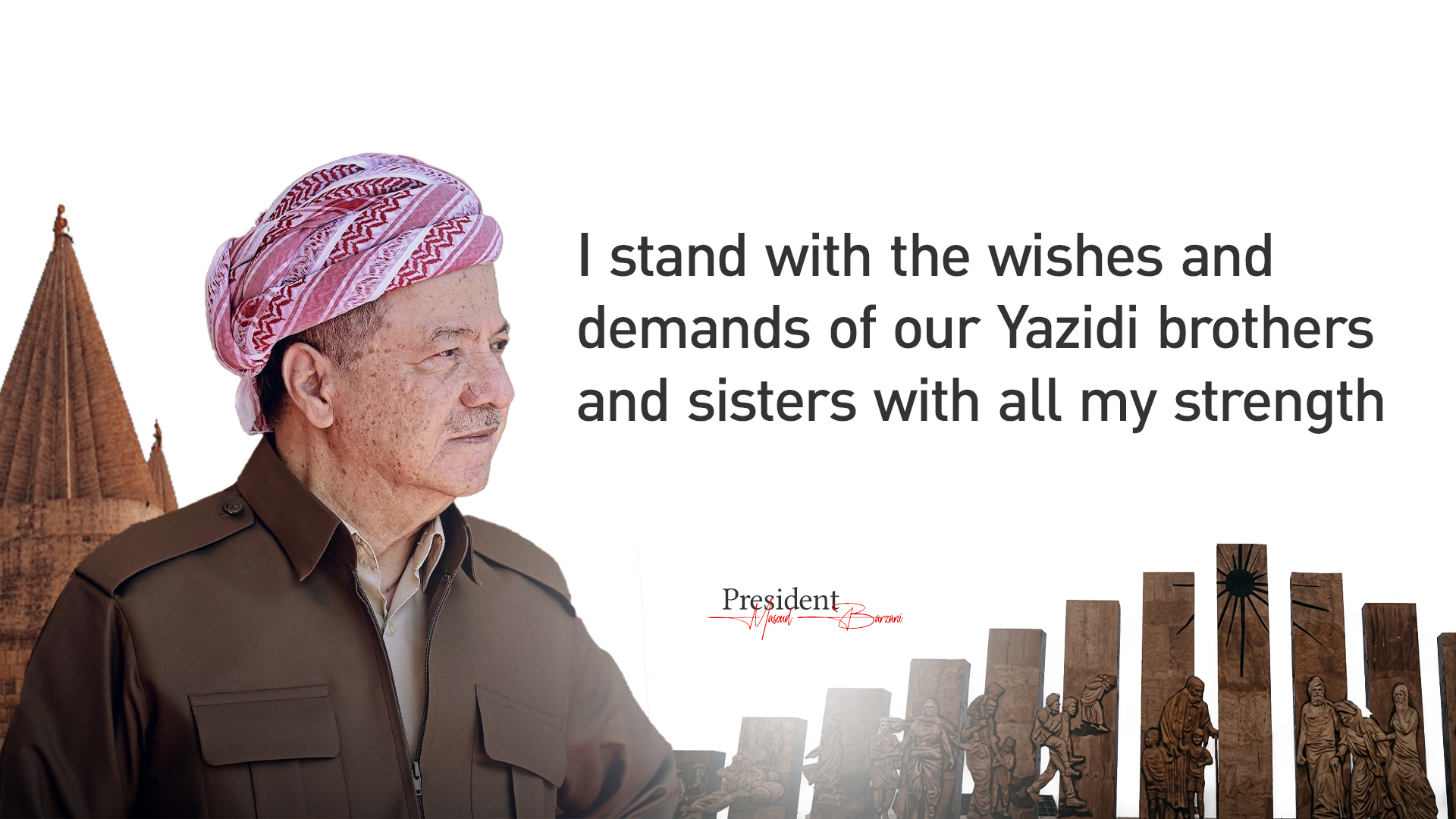
ERBIL (Kurdistan24) — President Masoud Barzani on Monday reaffirmed his unwavering support for the Yazidi community, calling for the dignified return of displaced families to their ancestral homeland in Sinjar (Shingal) and compensation for the immense losses they suffered, as the Kurdistan Region marked the 12th anniversary of the genocide committed by the Islamic State (ISIS).
In a message issued on the anniversary of the August 3, 2014, attack on Sinjar, Barzani described the atrocities committed by ISIS against the Yazidis as "a pain that will remain forever in the memory of the people of Kurdistan," saying the community was targeted because of its Kurdish identity, ancient heritage, and religious beliefs.
"The crime perpetrated at the hands of ISIS in the Sinjar region was a continuation of the series of tragedies, massacres, and atrocities that have been committed against the people of Kurdistan throughout history," Barzani said.
He paid tribute to the victims of the genocide, honoring the souls of the martyrs and recalling the sacrifices made during the battle to defend and liberate Sinjar.
Barzani praised the Peshmerga fighters who remained on Mount Sinjar despite the ISIS assault, saying their courage prevented the extremist group from capturing the mountain.
He also commended the Peshmerga forces who fought to break the siege of Mount Sinjar, liberate the city, and help defeat ISIS.
"We salute the bravery and fearlessness of those heroic Peshmerga who remained on Mount Sinjar and prevented the terrorists from seizing the mountain," he said. "We salute the loyalty and courage of all those heroic Peshmerga who shed their blood to break the siege of Mount Sinjar and liberate the city of Sinjar, shattering the myth of ISIS."
The Kurdish leader also expressed gratitude to the people of the Kurdistan Region for standing in solidarity with the Yazidis during one of the darkest chapters in their history.
In addition, Barzani thanked the U.S.-led Global Coalition against ISIS for its support during the campaign against the extremist group.
"We also extend our great respect and thanks to the Coalition Forces, who played a prominent role in assisting the Peshmerga and in the retreat and defeat of the terrorists," he said.
Reaffirming his commitment to the Yazidi community, Barzani pledged to continue supporting their aspirations and called on Yazidis to remain united and hopeful despite the challenges they continue to face.
"I reaffirm to our Yazidi brothers and sisters that I support their wishes and demands with all my power," he said. "I also call upon them to remain united among themselves and to maintain hope for the future in order to ensure a bright tomorrow."
Barzani also expressed confidence that the current situation in Sinjar would eventually change, stressing that displaced Yazidis deserve to return home with dignity.
"Certainly, the imposed and abnormal situation that currently exists in Sinjar will not last forever; our Yazidi brothers and sisters must return to their ancestral lands with dignity, and they must be compensated for their losses and suffering," he stated.
Concluding his message, Barzani paid tribute to the victims of the genocide and all those who sacrificed their lives for the freedom of Kurdistan.
"Thousands of salutes to the pure souls of the martyrs of Sinjar and all the martyrs on the path to the freedom of Kurdistan," he said.
ISIS overran Sinjar on Aug. 3, 2014, killing thousands of Yazidis, abducting women and children, and forcing tens of thousands to flee to Mount Sinjar, where many were trapped without food or water before humanitarian aid and military operations led by the Peshmerga and supported by the U.S.-led Coalition helped break the siege.
The atrocities were later recognized by the United Nations and several countries as genocide.