SOMO: Kurdistan's Daily Oil Exports Fall to 20,000 BPD Amid Regional Crisis
A senior SOMO source told Kurdistan24 that regional instability, attacks on oil fields, and the closure of the Strait of Hormuz have reduced the Kurdistan Region's daily oil production
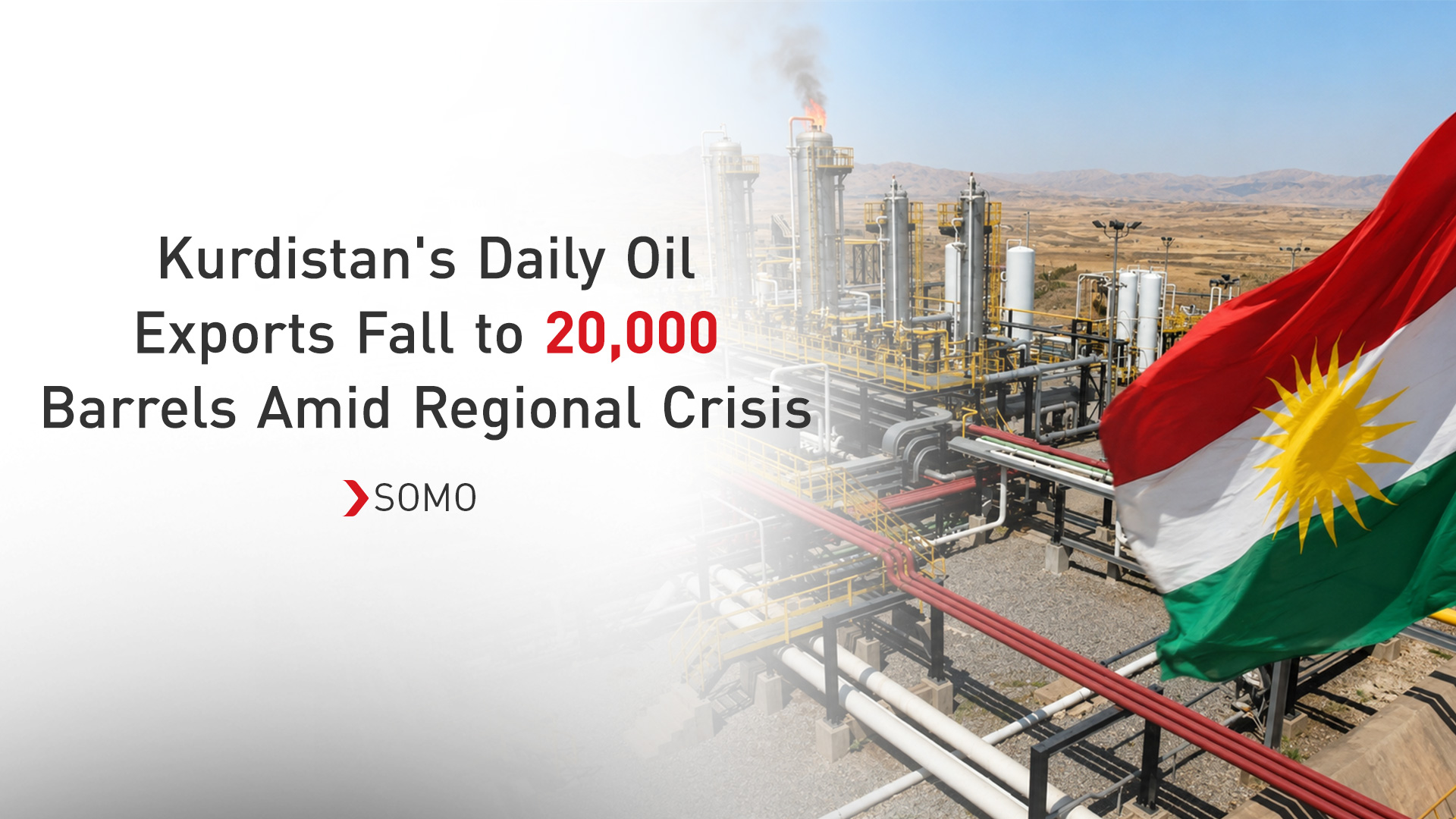
ERBIL (Kurdistan24) - Oil exports from the Kurdistan Region have fallen sharply as regional tensions and the closure of the Strait of Hormuz continue to disrupt Iraq's energy sector, with a senior source at Iraq's State Organization for Marketing of Oil (SOMO) telling Kurdistan24 that daily production and exports have dropped to just 20,000 barrels.
The senior SOMO official said on Wednesday, that attacks targeting oil fields, combined with escalating regional instability, have reduced the Kurdistan Region's oil production and exports from 230,000 barrels per day to only 20,000 barrels.
The source added that the closure of the Strait of Hormuz has had a direct impact on oil production and export levels in both Iraq and the Kurdistan Region.
According to the source, the agreement allowing crude exports through the pipeline linking the Kurdistan Region and Kirkuk to Türkiye's Ceyhan port remains in effect. However, export volumes have declined significantly because of the consequences of the regional crisis.
The official said Iraq exported a total of 42 million barrels of crude oil during July, including seven million barrels shipped through the Kurdistan Region pipeline to the Turkish port of Ceyhan.
During the same period, Iraq's average daily oil production reached 1.95 million barrels.
The SOMO source further explained that the ongoing crisis has reduced Iraq's pipeline exports to 60,000 barrels per day.
Likewise, daily oil production in the Kurdistan Region has fallen from 230,000 barrels to just 20,000 barrels, highlighting the severe impact of regional instability and the Strait of Hormuz closure on the region's energy sector.
The latest figures illustrate the scale of the disruption facing Iraq's and the Kurdistan Region's oil industry as regional tensions continue to weigh heavily on production and export operations.