Pezeshkian Defends Government Unity While Iran Issues Warning to Gulf Countries
The Iranian president dismissed resignation rumors and defended government unity, while Reuters reported that Tehran has warned Gulf countries it could target their energy infrastructure in response to any new US military strike.
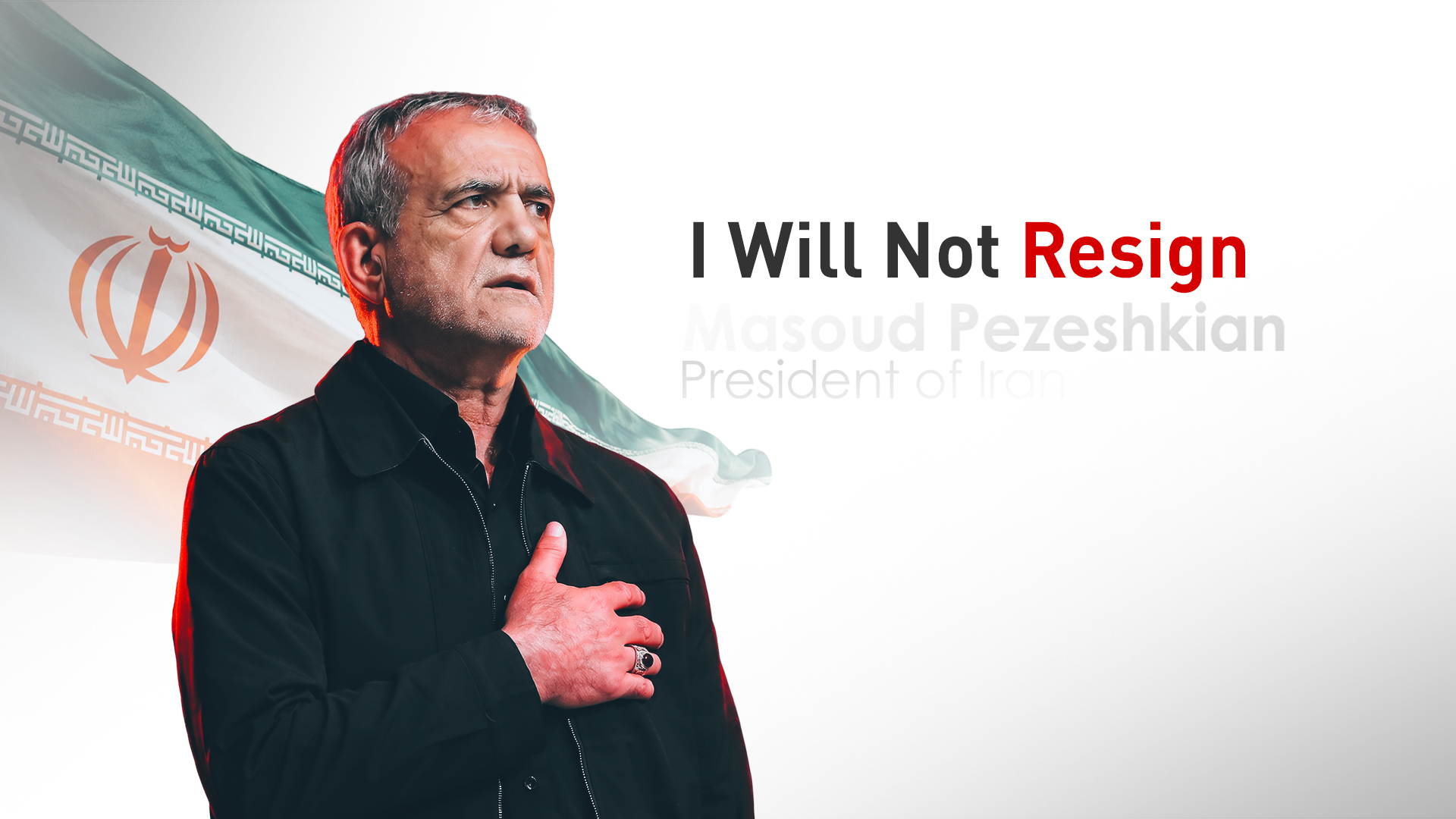
ERBIL (Kurdistan24) - Iranian President Masoud Pezeshkian said communication with Supreme Leader Mojtaba Khamenei has become "very difficult," while describing his leadership as a major source of strength for Iran. The remarks came as he firmly rejected speculation that he intends to resign and amid reports that Tehran has warned Gulf states against supporting any new US military action.
Speaking in remarks carried by Iranian state television on Wednesday, Pezeshkian said some parties are attempting to create divisions inside the country by using a letter from the supreme leader regarding a memorandum of understanding with Washington as a pretext.
Responding to reports that he may step down, Pezeshkian strongly denied the claims.
"I will not resign and I will remain in my position. If I decide to resign, I will announce it officially," he said.
His comments followed claims by Mohammad Bagher Kharazi, secretary-general of Iran's Hezbollah Party and a figure described as close to the late Ali Khamenei, who alleged that Pezeshkian had threatened to resign 28 times since taking office.
According to Kharazi, Mojtaba Khamenei had said he would approve any future resignation request if such a request were made again.
Pezeshkian also rejected reports of disagreements between his administration and Iran's military institutions, saying his government is fully coordinated with the armed forces. He argued that those attempting to portray differences between himself and the supreme leader are seeking to weaken the government.
He added that threatening to resign would run contrary to the supreme leader's wishes and would be unfair to those serving alongside the government.
Pezeshkian also said that reaching Mojtaba Khamenei has become very difficult, while emphasizing that his leadership remains a major source of strength for the country.
Mojtaba Khamenei assumed the position of supreme leader after succeeding his father, Ali Khamenei, who was killed in US and Israeli strikes on Feb. 28. Since taking office, he has not appeared publicly.
Reuters reports Iranian warning to Gulf states
Separately, Reuters reported that the Iranian government has warned Gulf countries that any new US strike on Iranian territory would be met with attacks targeting their energy infrastructure.
According to Reuters, citing five sources, Iran informed Gulf states that any new military strike would trigger retaliation against sensitive energy infrastructure across the region. The warning was reportedly delivered through diplomatic channels after US President Donald Trump threatened on July 28 to strike Iran's energy network and infrastructure.
The news agency said two senior Iranian officials, two Gulf sources and a senior Middle East diplomat familiar with the discussions stated that Iranian Foreign Minister Abbas Araghchi held talks with his counterparts in Saudi Arabia, Türkiye and Qatar, as well as with Pakistan's army chief.
According to the senior diplomat, Araghchi urged Washington's Gulf allies to use their influence with Trump to dissuade him from launching another military strike. He also warned that any attack on Iran would result in strikes against US interests and energy facilities across the Gulf.
Earlier, Trump said Washington was making good progress in talks with Tehran on reopening the Strait of Hormuz and resolving Iran's nuclear issue, while repeating his warning that Iran would face an unprecedented military strike if the strategic waterway remained closed.
"We're having very good talks and the Strait of Hormuz will reopen very soon. Otherwise, Iran will face a powerful strike, and we don't want that," Trump said in an interview with Fox News.
Trump also said the United States had been close to launching what he described as the largest attack on Iran since World War II before Tehran requested negotiations. He reiterated that Iran would not be allowed to obtain a nuclear weapon, warning that "if Iran acquires a nuclear weapon, the world will be different."
The latest statements underscore continued diplomatic engagement alongside escalating warnings as tensions remain high between Tehran and Washington.