Green Iraq Observatory: Recurring Fish Deaths Expose Iraq’s Deepening Environmental Crisis
The Green Iraq Observatory says repeated fish deaths in Iraq have become an annual pattern, pointing to worsening water and pollution crises and a lack of lasting solutions.
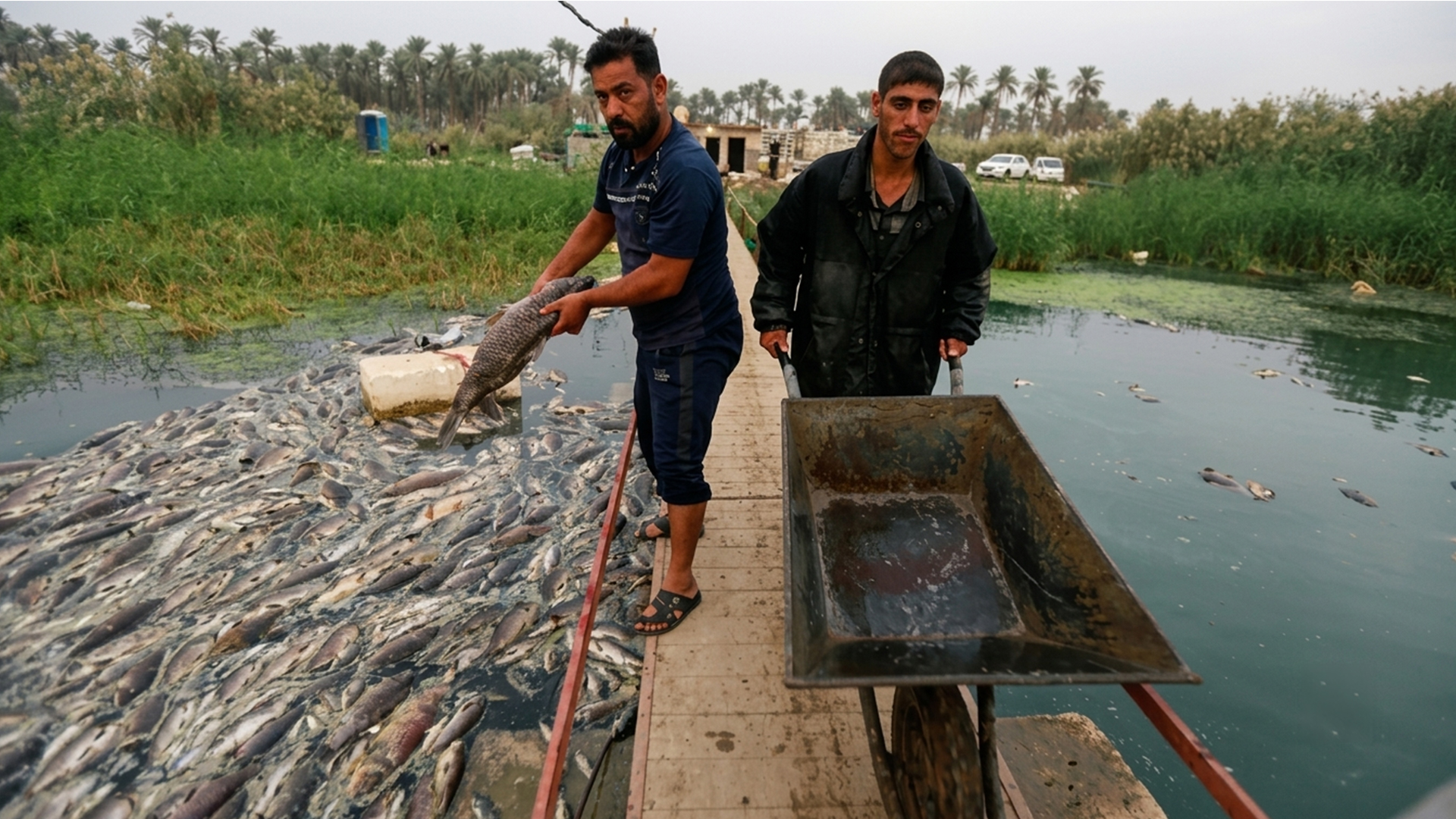
ERBIL (Kurdistan24) - Recurring fish die-offs across Iraq’s rivers and marshes are increasingly becoming an annual phenomenon, the Green Iraq Observatory warned, saying the pattern reflects a deepening water and pollution crisis amid the absence of lasting measures to prevent it from recurring.
The observatory said the latest two waves of fish deaths occurred this year. The first was recorded in April, when more than 1,000 tons of fish died in the Tigris and Diyala rivers, with the heaviest losses reported in Wasit province.
According to the observatory, the incident followed severe pollution caused by untreated sewage and industrial waste. Increased water releases from the Hamrin Dam also swept accumulated pollutants toward the Tigris, resulting in more than 20 cases of poisoning and skin injuries that required hospitalization.
The second incident was recorded at the beginning of August in the Al-Amshan Canal in Maysan province. The Agriculture and Water Committee of the provincial council attributed the fish deaths to a sharp decline in the water releases allocated to the canal.
The observatory noted that the incident coincided with an announcement that Iraq’s total water reserves had risen to around 34 billion cubic meters, arguing that this indicates the root of the problem is primarily administrative rather than solely a consequence of resource scarcity.
The Green Iraq Observatory said the latest incidents are not isolated cases, pointing to a record of similar fish die-offs across Iraq over recent years.
In 2018, tens of thousands of tons of fish died in the Euphrates River in Babil province. In 2020, millions of fish died in the Hindiyah Barrage, followed by another mass die-off in the Dalmaj Marsh in Diwaniyah.
In 2023, tons of fish died in the Ezz River in Maysan, in the same area where the phenomenon recurred this year. Last year, a widespread fish die-off was recorded in Ibn Najm Marsh in Najaf.
The observatory said the repeated incidents have, in most cases, been met with temporary investigative committees whose findings were not conclusively announced and which did not result in accountability for a responsible party.
The observatory identified several recurring factors behind the fish deaths, including declining levels of dissolved oxygen caused by the decomposition of organic matter and the spread of harmful algae.
It also pointed to the direct discharge of untreated sewage and industrial wastewater into rivers, as well as the loss of waterways’ natural ability to purify themselves after consecutive years of drought.
Poor management of water allocations among provinces was also identified as a contributing factor.
The Green Iraq Observatory called on relevant government authorities to establish fair and sustainable water allocations for provinces and marshlands rather than relying on short-term decisions.
It also urged authorities to strengthen environmental monitoring of sewage-treatment plants and industrial facilities located along rivers, and to establish an early-warning system to monitor oxygen levels and pollutants in partnership with academic institutions and civil society.
The observatory further called for fair and rapid compensation for affected fish farmers.
It warned that continued failure to implement lasting solutions threatens Iraq’s food and water security and could lead to further losses in biodiversity and the livelihoods of tens of thousands of families dependent on fish resources.