Iraq's PMF Rejects Accusations Against Falih al-Fayyadh
The Popular Mobilization Forces (PMF) says its forces were placed on alert before the attacks as an internal investigation examines the unit that suffered the heaviest losses.
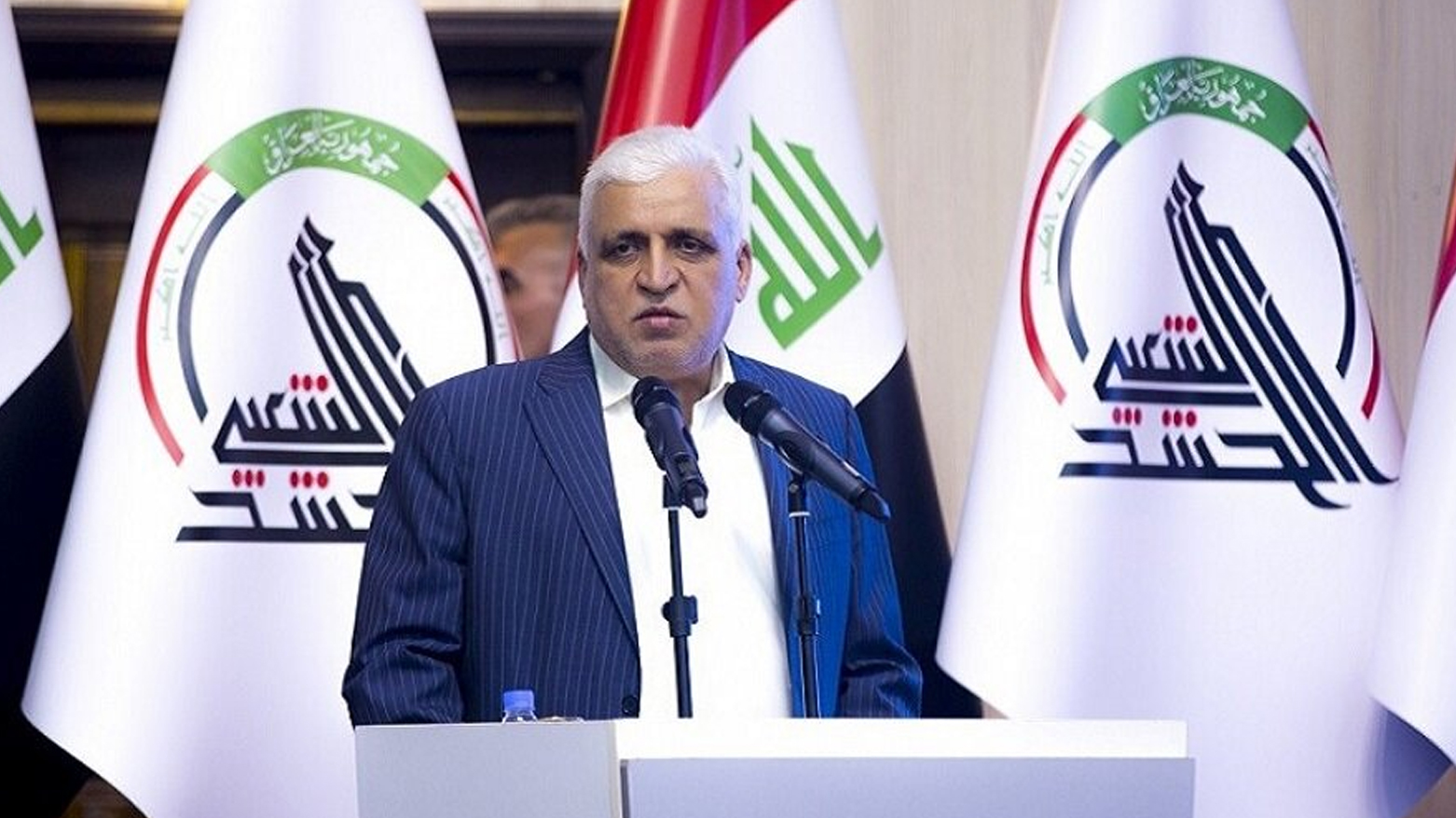
ERBIL (Kurdistan24) - The Popular Mobilization Forces (PMF) Authority has rejected accusations against its chairman, Falih al-Fayyadh, that he knew in advance about attacks targeting PMF headquarters but failed to warn the forces, saying military units had been placed on heightened alert two days beforehand.
In a statement issued Sunday, the PMF said regional tensions had prompted it to raise the readiness of its forces and instruct units to take additional precautions before the attacks.
The authority said those measures helped limit casualties and material damage, although it did not provide figures.
The statement comes as senior PMF figures are also reviewing battlefield developments and operational readiness.
According to the Iraqi News Agency (INA), Badr Organization Secretary-General Hadi al-Amiri met with PMF commanders on Saturday to discuss field developments, coordination and measures to maintain a high level of combat readiness.
PMF rejects claims against its chief
The PMF's response was directed at allegations concerning Fayyadh's handling of security preparations. The authority did not identify the political actors behind the accusations but said some parties were using the deaths and injuries of PMF personnel in political disputes and attempts to settle scores.
According to the statement, all PMF forces had been placed on high alert following the emergence of regional tensions, while military units were specifically instructed two days before the attacks to exercise "the utmost vigilance."
The PMF said the precautions reduced the scale of the losses. It also defended its leadership against claims that it had failed to take adequate measures to protect its personnel.
The authority warned that it reserved the right to take legal action against individuals or political parties that deliberately spread what it considers false information or damage the reputation of its leadership.
PMF opens probe into unit's preparedness
At the same time, the PMF acknowledged that one unit failed to implement the required precautions.
The authority said the 4th Regiment of the 30th Brigade suffered the highest number of fatalities because it did not adequately apply the security measures that had been ordered. The PMF presidency has consequently ordered an investigation into officials responsible for the regiment to determine whether negligence contributed to the losses.
The internal inquiry provides the PMF with a formal mechanism to examine its own operational response while rejecting broader accusations against Fayyadh.
The separate meeting between al-Amiri and PMF commanders, reported by INA, also focused on reviewing field performance and improving coordination and operational capabilities. The discussions underscored the importance the organization is placing on readiness as it assesses recent developments.
Baghdad faces pressure over armed groups
The PMF's statement comes as the Iraqi government faces wider pressure to prevent armed groups from carrying out operations outside state institutions.
Iraqi Counter-Terrorism Service and National Intelligence Service forces recently dismantled an armed network in Babil that authorities said was preparing drone attacks against specified targets. Government spokesperson Haider Aboudi said the operation resulted in the arrest of members of the network and the seizure of drones, weapons and other equipment. Authorities did not publicly identify the intended targets or establish a connection between the suspects and the PMF.
Baghdad has simultaneously been pursuing greater state control over weapons and armed activity. Aboudi said Prime Minister Ali al-Zaidi was holding dialogue with armed groups over the issue and referred to a Sept. 30 deadline for weapons held outside state institutions to be relinquished.
Regional pressure has added urgency to that policy. During an Aug. 5 meeting, Saudi Foreign Minister Prince Faisal bin Farhan and Iraqi Foreign Minister Fuad Hussein stressed that Iraqi territory and resources should not be used to launch attacks against neighboring countries, according to the supplied report.
Two days later, al-Zaidi met Saudi intelligence chief Khalid Ali Humaidan and agreed on the importance of strengthening security coordination and information exchange. Al-Zaidi said: "We will not allow Iraqi territory to become a place from which any activity that harms the countries of the region is launched."
Against that backdrop, the PMF's rejection of the allegations represents an effort by its leadership to defend its handling of security preparations while also acknowledging an internal review of the unit that suffered the heaviest losses.