Kurdistan Region Moves to Register 45 Protected Areas
The Kurdistan Region plans to register 45 natural protected areas with the IUCN, potentially expanding protected land beyond 30% while strengthening conservation, international cooperation and sustainable tourism.
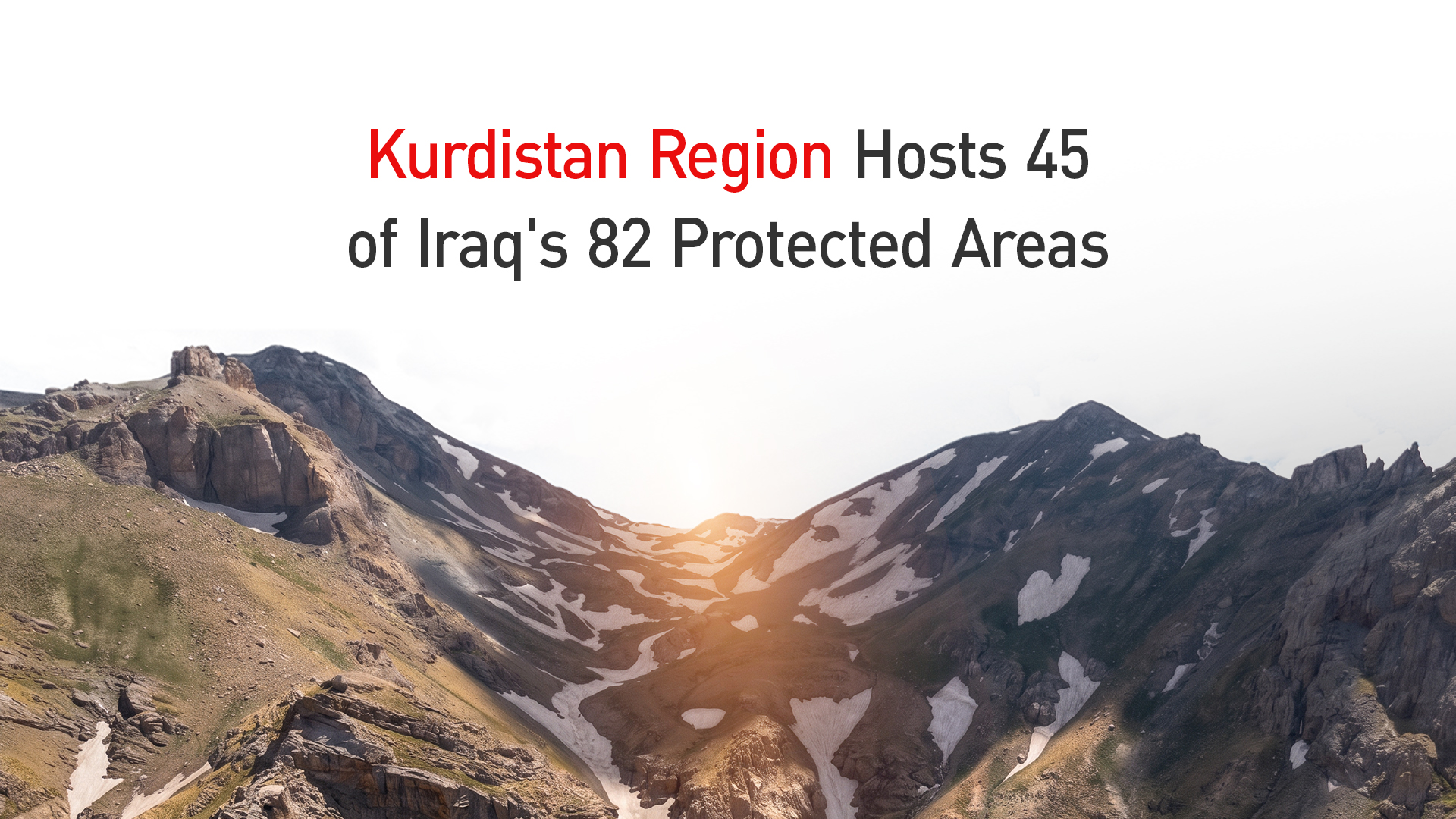
ERBIL (Kurdistan24) - The Kurdistan Region is moving to secure international recognition for 45 natural protected areas, a step that could place more than 30 percent of its land under protected status and deepen cooperation with global conservation institutions.
According to figures from the Kurdistan Region Environmental Board, 45 of Iraq's 82 officially identified natural protected areas are located within the Kurdistan Region.
The planned registration of those areas with the International Union for Conservation of Nature (IUCN) is intended to strengthen their legal and environmental protection while bringing the Region's conservation efforts into closer alignment with international standards.
The initiative covers landscapes ranging from mountain ecosystems and oak forests to wildlife habitats and areas important for birds and other species.
Among the most significant sites are the Barzan protected area and Halgurd-Sakran National Park, particularly within the Soran Independent Administration.
45 Protected Areas Across Kurdistan
The scale of the figure gives the initiative significance beyond the designation of individual reserves.
With 45 of Iraq's 82 identified natural protected areas situated in the Kurdistan Region, officials say formal international registration would substantially expand the share of land receiving protected status.
The Environmental Board has said that the process would raise the proportion of protected land in the Kurdistan Region above 30 percent.
The move would also provide a framework for applying domestic environmental regulations, including Directive No. 9 of 2011, alongside international conservation standards.
The Region's geography is central to its conservation importance.

Its Zagros mountain landscapes, forests, valleys and wildlife habitats provide areas for a wide range of animal and bird species.
Environmental Board figures indicate that most of Iraq's 410 rare animal and bird species are found in the Kurdistan Region.
The authorities' challenge, however, is not simply to designate areas on paper but to maintain their ecological integrity in the face of pressures including deforestation, drought and broader environmental degradation.
Seeking International Recognition
The proposed IUCN registration would build on the Kurdistan Region's decision in 2025 to join the international organization, creating an institutional channel for greater cooperation on conservation and biodiversity.
IUCN Regional Director for West Asia Dr. Hany al Shaer previously described the Region's membership as an opportunity to strengthen nature conservation and develop partnerships focused on biodiversity, climate resilience and sustainable development.
Bayan Sami Abdul Rahman, Senior Advisor to KRG Prime Minister Masrour Barzani for Foreign Affairs and Climate Change, has likewise said the membership reflects the government's commitment to protecting mountains, rivers and forests and using natural resources sustainably.
For the protected areas themselves, international recognition could provide access to expertise, capacity-building and environmental partnerships.
The Environmental Board has also linked the registration process to the possibility of obtaining support from international environmental funds.
Hejar Mahir, Director of Environment in the Soran Independent Administration, said international registration would give greater visibility to environmental problems affecting Barzan and Halgurd-Sakran.

He pointed particularly to deforestation and drought, as well as the need for stronger protection of wildlife and birds. In his assessment, international recognition could also increase support for communities living around protected areas.
The significance of such support extends beyond conservation agencies. Protecting forests and wildlife increasingly involves managing the relationship between protected landscapes and the communities that live alongside them.
Conservation Beyond Government
Barzan offers an example of that community dimension.
A local female environmental activist described environmental protection in the area as part of a longstanding local tradition, noting that residents have historically protected wild animals that enter orchards, gardens or residential areas rather than treating them simply as intruders.

Her account illustrates a broader point: formal government protection can be strengthened when local communities participate in safeguarding wildlife and natural habitats.
The Barzan experience, as described by the activist, is therefore "presented as an example of community-based conservation rather than as a substitute for state regulation."
The Environmental Board's plans also place particular importance on Halgurd-Sakran National Park and other protected landscapes where the protection of forests, wildlife and bird habitats must be combined with effective environmental management.
The Kurdistan Region's natural heritage includes species such as the Persian leopard and Kurdistan newt identified in previous KRG material, alongside a diverse range of birds and plant life associated with the Zagros ecosystem.

The proposed international registration would seek to give these conservation efforts a stronger institutional framework while maintaining the role of domestic authorities and local communities.
From Conservation to Sustainable Tourism
The conservation initiative also intersects with the Kurdistan Region's effort to diversify its economy and expand tourism, although protected areas are not being established solely for tourism.
KRG Board of Investment figures show that tourism attracted approximately $7.68 billion, or 34.78 percent, of more than $22 billion invested across the Region during the seven years covered by the figures.
That investment has increasingly focused on the Region's natural landscapes, creating a policy challenge: how to make mountains, forests, rivers and wildlife destinations economically valuable without undermining the ecosystems that attract visitors in the first place.

The proposed Senk National Park near Erbil illustrates that approach. Planned across 1,500 hectares, the project is designed to combine environmental preservation with wildlife observation, cultural heritage, recreation and tourism facilities.
The protected-area initiative provides a broader conservation framework within which such projects can be developed. Sustainable tourism can potentially generate economic activity around natural areas, but its long-term viability depends on maintaining the environmental assets on which it relies.
A Broader Green Strategy
The same tension between development and environmental preservation is visible in the Region's wider green infrastructure projects.
In Duhok, the KRG is developing a national park covering approximately 1.25 million square meters, with an investment of about 135 billion Iraqi dinars, or $103 million. Around 70 percent of the project is planned as greenery and water features, alongside tourism and recreational facilities.

In Shaqlawa, the Sork Park project similarly reflects efforts to expand green spaces and diversify the tourism experience in one of Erbil Governorate's established mountain destinations.
These projects are distinct from the formal protection of natural areas, but together they point to a broader government approach in which environmental planning, public green space and tourism infrastructure increasingly overlap.
For the 45 protected areas, however, the central issue remains conservation rather than development. International registration would be significant because it could establish a stronger connection between the Region's domestic environmental policies and international conservation standards.
Kurdistan's International Conservation Role
The planned registration of the 45 protected areas represents the next stage of a process that began with the Kurdistan Region's entry into the IUCN in 2025.
The Environmental Board's initiative would give practical meaning to that membership by placing a substantial number of the Region's natural areas within an internationally recognized conservation framework.
For Kurdistan, the potential benefits extend from stronger protection against environmental degradation to greater access to international expertise and partnerships. For local communities, officials hope it can bring additional attention to challenges such as drought, deforestation and wildlife protection.

The effort also reflects a wider shift in the Region's environmental policy: from protecting individual landscapes through local initiatives toward building a broader conservation system linked to international standards.
With 45 of Iraq's 82 identified natural protected areas located within the Region, the scale of that responsibility is substantial. Whether international registration ultimately delivers the resources and protection envisioned by officials will depend on implementation, but the initiative places Kurdistan's natural heritage more firmly within the framework of global conservation.


Kurdistan24 correspondent Abubakr Sulaiman contributed to this report.