Trump Hails ME Countries Signing Makkah Joint Defense Agreement
US president posts on Truth Social praising the landmark defense pact as proof the Middle East is coming together, congratulating the three nations' leadership in one of the most enthusiastic foreign policy endorsements of his second term
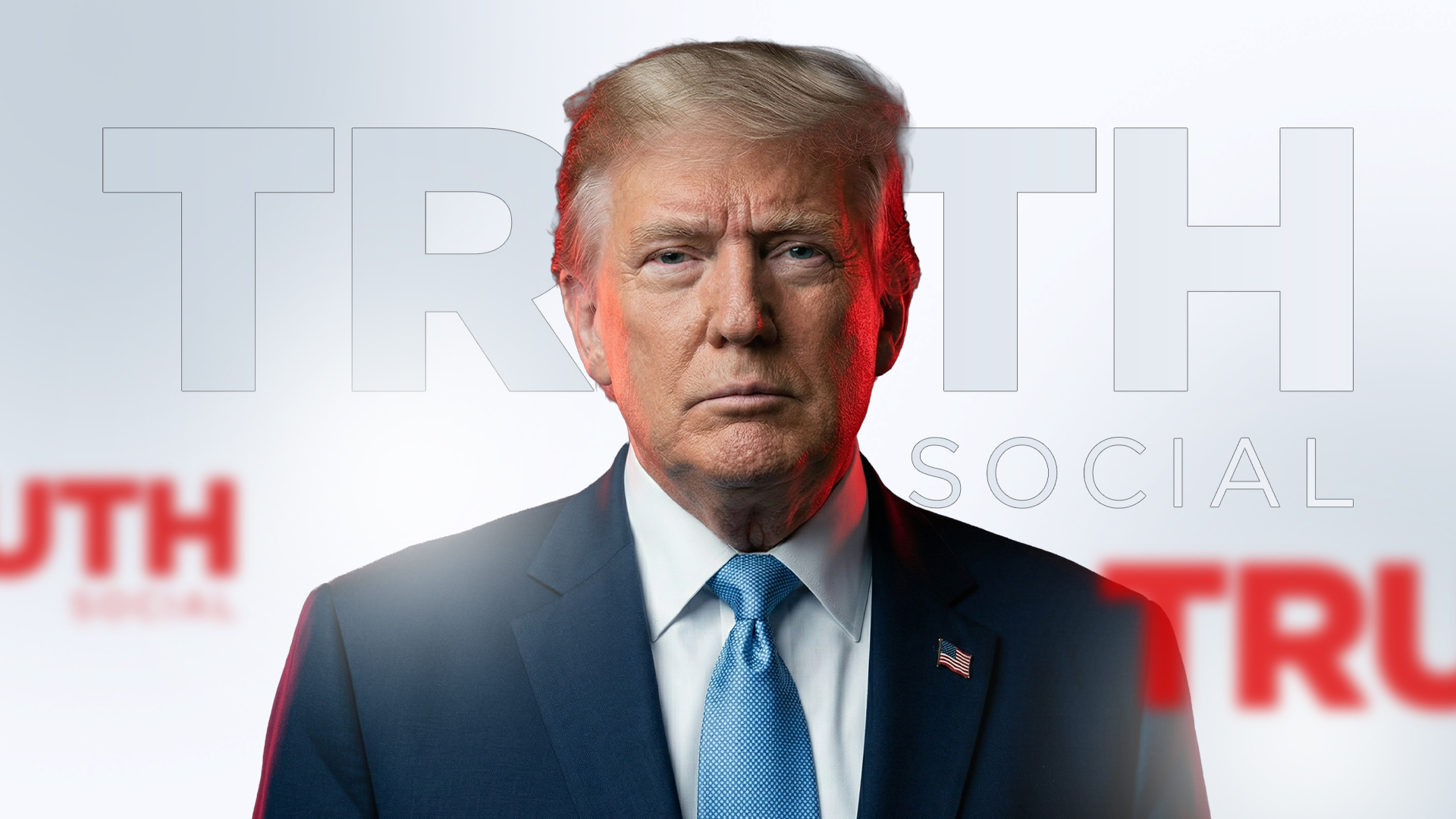
ERBIL (Kurdistan 24) - President Donald Trump celebrated the signing of the Makkah Joint Defense Agreement by Saudi Arabia, Türkiye, and Pakistan on Truth Social, calling it a big, bold, and important first step and expressing his happiness at seeing the Middle East coming together in a more meaningful way around collective self-defense.
"Very happy to see that Saudi Arabia, Turkey, and Pakistan have recently, and finally, signed the Mecca Joint Defence Agreement," Trump wrote on Truth Social. "It shows how the Middle East is coming together, and how Countries will finally be able to defend themselves in a more meaningful way. Congratulations to the Great Leadership of the three Nations mentioned. THIS IS A BIG, BOLD, AND IMPORTANT FIRST STEP — WOW!"
The post, signed under his full name, President Donald J. Trump, represents one of the most enthusiastic and unambiguous foreign policy endorsements the president has posted on Truth Social during his second term, combining a congratulatory message to three key US allies with a broader strategic observation about regional integration and collective security.
The Makkah Joint Defense Agreement brings together three of the Muslim world's most significant military and political powers under a collective defense framework that Turkish President Recep Tayyip Erdogan had already described in his Al Jazeera interview as sending an important message to the world. Erdogan said the agreement calls on signatory countries to take unified steps if one of them is subjected to an external attack, establishing a mutual defense principle that mirrors, in its basic structure, the Article 5 commitment at the heart of the NATO alliance.
Saudi Arabia, as the host of the agreement and custodian of Islam's two holiest sites, brings its formidable oil wealth, its Gulf Cooperation Council leadership role, and its newly demonstrated willingness to conduct joint military operations alongside the United States, as shown by the joint US-Saudi strikes on Iranian proxy targets in eastern Iraq on July 28, 2026. Türkiye contributes NATO's second-largest military by personnel, its strategic position bridging Europe and the Middle East, and the diplomatic credibility it has built through its active engagement in Syria, Libya, and the broader regional transition following the Iran war. Pakistan brings one of the world's largest standing armies, a nuclear deterrent, and its established role as one of the primary mediators between the United States and Iran throughout the five-month conflict.
Trump's enthusiastic endorsement reflects a strategic calculation visible throughout his second term: Washington's preference for regional allies to take greater responsibility for their own security rather than depending on American military presence and financial resources to underwrite regional stability. The Makkah agreement, by establishing a formal collective defense mechanism among three major US-aligned states, advances precisely that goal, creating a regional security architecture that reduces the burden on American forces while keeping three key allies aligned with Washington's broader strategic interests.
The agreement also carries direct relevance to the ongoing US-Iran conflict. A formal collective defense pact among Saudi Arabia, Türkiye, and Pakistan signals to Tehran that any further expansion of Iranian proxy or direct military activity against Gulf state infrastructure would face a coordinated response from three substantial military powers, rather than the bilateral responses that have characterized the conflict so far.
Trump's use of the word "finally" in his Truth Social post is notable, suggesting the administration had been encouraging or awaiting this agreement for some time and views its signing as the completion of a diplomatic process Washington has supported behind the scenes. His characterization of it as a "first step" implies that further integration and potentially additional signatories may be expected to follow.
Turkish President Erdogan had already praised the Makkah agreement in his Al Jazeera interview, describing it as carrying an important message to the world. Saudi Crown Prince Mohammed bin Salman, who met with both Vice President JD Vance and President Trump in Washington this month, discussed the kingdom's regional security vision in those meetings, a vision of which the Makkah agreement now appears to be a central pillar. Pakistan, for its part, has been one of the most active diplomatic actors of the entire Iran war period, with Interior Minister Mohsin Naqvi making three visits to Tehran as a mediator and Prime Minister Shehbaz Sharif and Army Chief Asim Munir sending a special letter directly to Iran's Supreme Leader Mojtaba Khamenei in June 2026.
The Makkah Joint Defense Agreement, endorsed by Trump, praised by Erdogan, and anchored by Saudi Arabia's regional leadership, represents one of the most significant new security architecture developments to emerge from the turbulence of the Iran war period, and the first formal step toward a Muslim-world collective defense framework that could reshape the region's security landscape for years to come.