Syria Hands Death Sentence to Assad Cousin in War Crimes Case
The ruling against Wassim al-Assad comes as Damascus moves to prosecute former regime officials, secures the extradition of an ex-general from Lebanon and pursues Islamic State leaders.
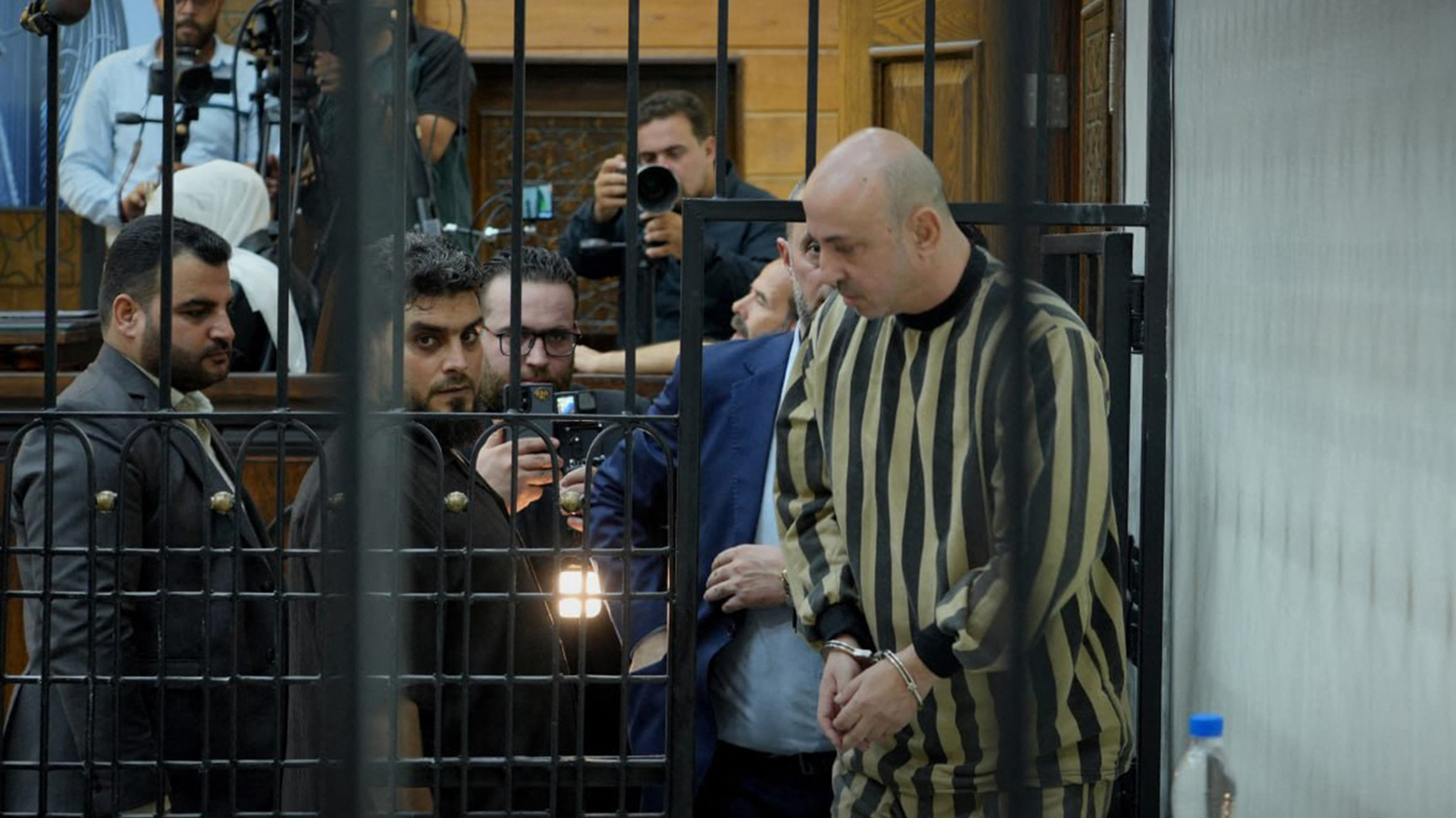
ERBIL (Kurdistan24) - A Syrian court on Tuesday sentenced Wassim al-Assad, a cousin of ousted President Bashar al-Assad, to death over crimes committed during the country's civil war, marking another major step in Damascus' campaign to prosecute figures accused of atrocities under the former regime.
The ruling, reported by Agence France-Presse (AFP) on August 18, comes as Syria's transitional authorities widen their pursuit of people accused of killings, torture and other abuses during the conflict. In a parallel development, Lebanon has decided to extradite former Syrian Brig. Gen. Adel Issa to Syria to face charges including killing and crimes against humanity, according to a Lebanese judicial official cited by AFP.
The two cases underscore the expanding reach of Syria's post-Assad accountability drive, which is taking place alongside efforts to combat remaining Islamic State networks and restore state authority after years of war.

Court Convicts Assad Cousin
Wassim al-Assad, 46, appeared in court and was convicted of multiple murders as well as "murder accompanied by torture and brutality," which Judge Fakhr al-Din al-Aryan said amounted to crimes against humanity and war crimes, according to AFP.
"He is therefore sentenced to death," the judge said.
The court found that Wassim al-Assad had formed two armed groups loyal to the former authorities that participated in deadly attacks near Damascus. He was also convicted of inciting civil war and sectarian fighting, deprivation of liberty and torture.
The court acquitted him of drug smuggling and trafficking charges, citing insufficient evidence, while retaining the possibility of reopening those parts of the case if new evidence emerges.
The sentence can be appealed before Syria's Court of Cassation, the country's highest judicial body.

Wassim al-Assad was arrested last year near the Lebanese-Syrian border in what Syrian authorities described as an ambush. His first trial session was held in June.
Although he did not occupy a senior government position, he had become a prominent figure associated with the former regime's armed networks. The US Treasury sanctioned him in 2023, describing him as a paramilitary leader and a significant figure in a regional drug-trafficking network.
During the war, he frequently posted photographs of himself near luxury vehicles and alongside armed men, sometimes appearing in military clothing and encouraging support for Bashar al-Assad.
Damascus Expands Prosecutions
The verdict follows a landmark decision last week, when Syria's judiciary sentenced Bashar al-Assad to death in absentia over atrocities committed during the civil war.
Six former military and security officials, including Maher al-Assad, Bashar al-Assad's brother and former commander of the elite Fourth Division, were also sentenced to death in absentia.
Former security official Atif Najib, who was the only one of those defendants present in court, received a death sentence for crimes against humanity linked to his tenure as head of political security in Daraa, where the uprising against the Assad government began.

The trials represent an important departure from Syria's previous political and judicial system, in which senior regime figures largely escaped accountability for atrocities committed during the conflict.
Syria's civil war, which began in 2011 with the violent suppression of anti-government protests, ultimately killed more than half a million people and displaced millions more. Tens of thousands also disappeared.
The transitional authorities have pledged to pursue justice for victims while rebuilding state institutions after Assad fled Syria for Russia in December 2024.
Lebanon to Extradite Former Syrian General
The accountability process is also extending beyond Syria's borders.
A Lebanese judicial official told AFP on Tuesday that Beirut's public prosecutor had decided to extradite former Syrian general Adel Issa to Syria.
Issa, 67, was detained in Lebanon earlier this month after Damascus issued an arrest warrant accusing him of killing and crimes against humanity committed while he served in the Syrian army.
The Lebanese official said the extradition met the legal requirements under a 1951 judicial cooperation agreement between Lebanon and Syria and was based on documents and evidence supplied by Syrian authorities.

Issa reportedly served as a general in the Syrian army's 17th Brigade under Bashar al-Assad. He had gone to the Syrian embassy in Beirut for administrative paperwork when embassy staff discovered the warrant and contacted Lebanese authorities.
The extradition reflects a notable change in relations between Beirut and Damascus.
For decades under the Assad family, Syria exercised extensive political and military influence over Lebanon and was accused of involvement in assassinations and other acts of violence there. Since Assad's fall, however, officials from both countries have sought to establish a new relationship centered on security cooperation and other practical matters.
The decision to return Issa to Syria could become an early test of that emerging judicial and security cooperation.
Pursuit of Islamic State Continues
The transitional government's justice campaign is unfolding alongside an effort to prevent the resurgence of another threat: Islamic State.
Syrian authorities announced Tuesday that their security forces, working with unnamed international partners, had arrested Hamza Abdullah Mohammad, also known as Abu Jihad al-Muhajir, near Manbij in Aleppo province.
The Interior Ministry described him as a prominent Islamic State military leader who had served as the group's general commander in the Damascus region and previously acted as a deputy military commander. Authorities also said he had been responsible for Islamic State operations in Idlib.
"This operation is part of ongoing security efforts to pursue IS cells and leaders, dismantle its networks, and prevent its attempts to regroup and threaten the security of citizens and stability in the country," the ministry said, according to AFP.

Although Islamic State lost its territorial stronghold in Syria in 2019, remnants of the group remain active, particularly in the country’s vast desert regions. The organization continues to claim sporadic attacks, mainly against Syrian security forces.
The Syrian government has increasingly cooperated with international partners in the fight against the group and joined the US-led coalition against Islamic State last year.
The arrest of Mohammad illustrates the challenge facing Damascus: it is attempting to prosecute the former regime's alleged perpetrators while simultaneously dealing with armed extremist networks that survived the collapse of the previous government.

Justice and the Death Penalty
The death sentences announced this month have also raised questions about the direction of Syria's transitional justice system.
The United Nations has opposed the death penalty while acknowledging the importance of accountability for the victims of Syria's long conflict.
Following the sentencing of Bashar al-Assad and other former officials, the UN said that addressing demands for "justice, accountability, and truth" could help restore confidence in institutions and support sustainable peace.

The tension presents a difficult balance for Syria's new authorities. Victims and their families have spent years demanding punishment for crimes committed during the conflict, while international human rights organizations and the United Nations have consistently opposed capital punishment.
The legal process is therefore being watched not only for the identities of those prosecuted, but also for the standards of evidence, judicial independence, defendants' rights and the treatment of death sentences.

A Test for Syria's New Order
Tuesday's verdict against Wassim al-Assad is significant because it demonstrates that the transitional authorities are moving beyond political declarations and pursuing cases against figures associated with the former system.
At the same time, the extradition of Adel Issa from Lebanon suggests that Damascus is beginning to build cross-border judicial cooperation to reach suspects who left the country.
The simultaneous arrest of a senior Islamic State commander adds another dimension to the challenge facing the transitional government. Syria is seeking to establish accountability for the past while preventing new violence from undermining its authority.
That combination makes the coming months crucial for Damascus.

If the authorities can conduct credible trials while maintaining security and avoiding new cycles of retaliation, the cases could strengthen confidence in Syria's emerging institutions. If justice becomes perceived as selective, politically driven or excessively punitive, it could deepen the divisions left by the war.
For now, the death sentence handed to Wassim al-Assad marks another decisive moment in Syria's attempt to reckon with its past, while the cases unfolding in Lebanon and the continuing campaign against Islamic State show that the country's transition remains inseparable from its security and regional environment.
