Ukrainian Ambassador Rules Out Ceding Territory For Peace
Ukraine’s ambassador to Iraq, Ivan Dovganych, rules out ceding territory, says the war’s end lies in Moscow, and discusses a planned Erbil consulate.
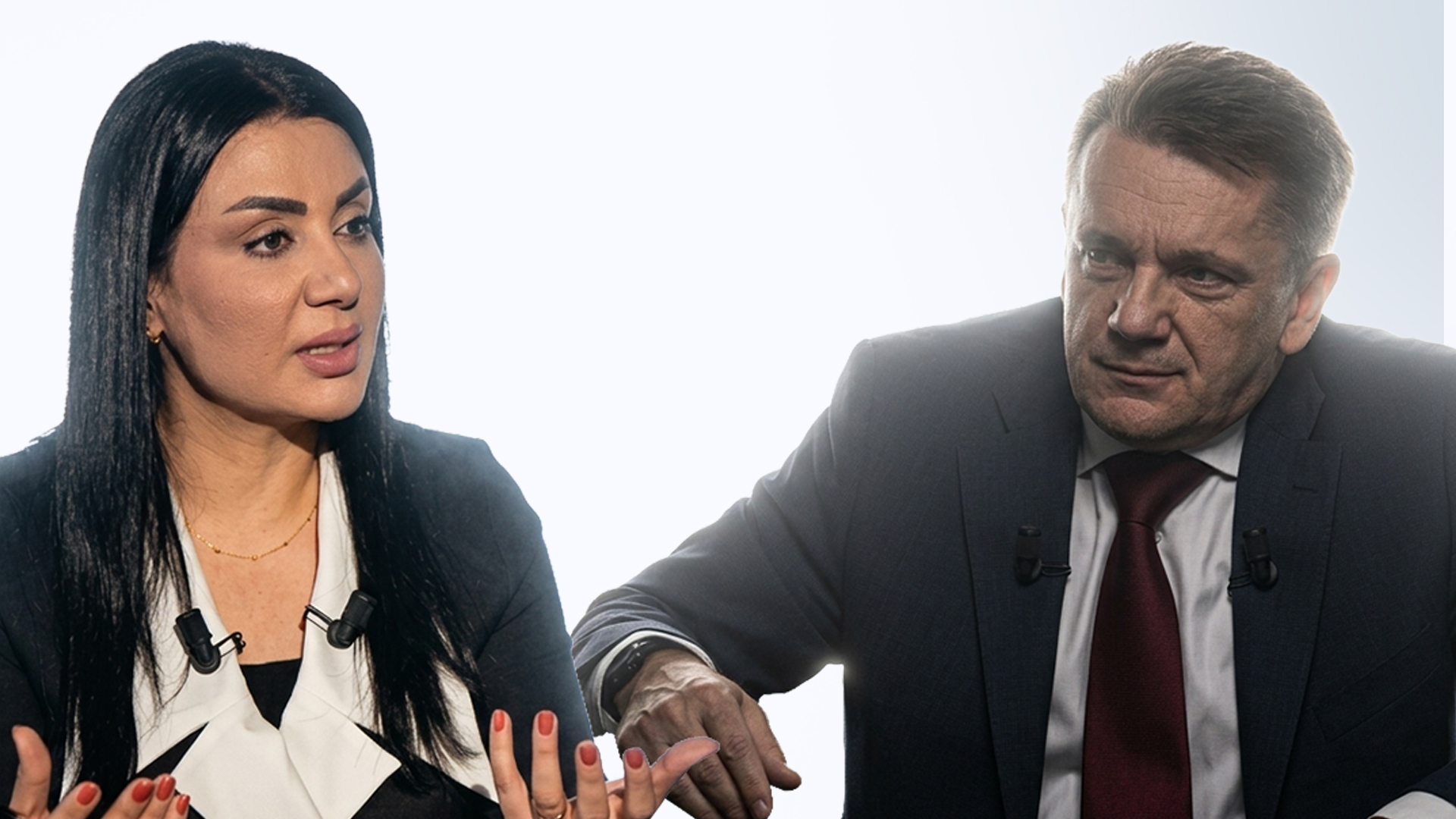
ERBIL (Kurdistan24) - Ukraine’s Ambassador to Iraq, Ivan Dovganych, said on Tuesday that Kyiv will not agree to cede territory for peace, adding that the decision to end the war lies with Moscow. He also disclosed that he fought on the front line and that his son is serving there now.
“The answer is not in Kyiv, or in Paris, or in London, or in Washington. The answer and the decision are in Moscow,” Dovganych said in an interview on the program Basi Roj, hosted by Zhino Muhammad.
Dovganych said Ukraine wants peace more than anyone: “No one in the world wants peace more than Ukrainians want.” He said it must be a lasting peace rather than a ceasefire that gives Russia a pause before a new invasion.
He said Ukraine appreciates US efforts and is personally grateful to President Donald Trump for his attempts to bring peace or declare ceasefires. He cited a recent energy ceasefire that Trump proclaimed and President Zelenskyy backed. According to Dovganych, Russia responded that night with 200 drones and 16 missiles, leaving 500,000 Ukrainian families without power by morning.
Asked whether Ukraine would give up territory for peace, he said, “We are never going to agree with that.” He said the territory of Ukraine is protected by its constitution and that its fate cannot be decided without the opinion of all Ukrainians. At minimum, he said, that would require a referendum, which cannot be held during war.
The host cited remarks attributed to the US president that a new president should be designated in Ukraine. Dovganych said the idea of elections was first raised by Russia, which he said wants a new leader who would capitulate. He said Ukrainian law does not allow elections in wartime, but that Zelenskyy has said Ukraine is ready to change its legislation and hold elections after at least 60 days of ceasefire. He said any successor would likely be as tough on Russia as Zelenskyy, or tougher, and that Zelenskyy could well be re-elected. He added that the majority of the population supports the government.
Asked about a reported trilateral meeting between the United States, Russia, and China on ending the war, from which Ukraine is excluded, Dovhanych said leaders can meet at any time and place, but that everything will finally be decided by the Ukrainian nation. “The Ukrainian nation is the main actor in this war,” he said.
On the coming winter, he said Russia has been unable to break through the front line in five years, which he said shows the effectiveness of Ukraine’s defense. He said this leaves President Vladimir Putin with the option of striking civilian infrastructure in the hope that exhausted Ukrainians will elect a president ready to capitulate. “We are preparing, and we will survive,” he said.
Technology, Europe, and the front line
Asked about artificial intelligence and technology, Dovganych said Ukraine’s advanced systems help it fight a stronger and larger enemy, but that the secret of its resilience lies elsewhere. He said it rests on simple, practical measures: warning systems so civilians know where to go during an attack, nets and concrete T-walls to shield power plants, water supplies, and data centers, and well-trained crews who can quickly repair damage. He said Ukraine is ready to share this experience with other countries.
Asked about support for Gulf states, he said that as far as he knows it is continuing, with practical steps such as protecting key facilities and developing warning systems. He said he is not involved in the process and that military cooperation is negotiated between governments, not through the media. “The war of the 21st century is not a war just between drones; it is a war between people,” he said.
The host also cited an argument raised by Trump that European nations are paying the price for aiding Ukraine. Dovganych said he sees no logic in it and that it serves Russia, which hopes Ukraine will be left alone. “No, vice versa: the problems of Europe are because Russia attacked Ukraine,” he said.
On reports of forced conscription in Ukraine, he said mobilization is under way because the country needs soldiers. He said Ukrainian technology helps protect them and that attackers suffer far heavier losses than defenders. He said the ratio was roughly three Russian soldiers to one Ukrainian in 2022, then five to one, and that his son, who briefs him on the front, reports sometimes 10 to one in his sector.
Iraqis recruited into the Russian army
Dovganych said Ukraine is not recruiting Iraqis. Citing Western sources, he said about 5,000 Iraqi citizens have been recruited into the Russian army since 2022 or 2023, a subject he called painful and sensitive. “Frankly speaking, they are victims,” he said.
He said some Iraqis went to Russia believing they would find jobs or study, with some promised money or citizenship. He said others already living there were told by police that, over minor administrative violations, they could choose between a four-year army contract and 10 years in prison. He said Russian commanders send them into deadly attacks, and that Russia has lost more than one million soldiers.
‘I am first of all a man and a father’
Dovganych revealed that he fought on the front line as a private soldier, a fact he said he had never before discussed with the media. He said he had never served in the army, but that on the first day of the invasion he found himself in the trenches with a machine gun.
“When you wake up in the morning and see Russian helicopters flying toward Kyiv, you have one choice: to protect your family and to go to the army,” he said. “I am first of all a man and a father.” He said he was wounded and that another soldier took his place at the machine gun.
He said his son is now fighting on the front line. “Of course, I am proud of him. But I would like to have him back alive,” he said. Asked why he was speaking about his service, he said his aim was to show the Kurdish people that Ukraine is not sending soldiers from other countries or poor people. He said he knows even millionaires who fight as ordinary privates, and that Ukrainian officials share the same risk.
Consulate in Erbil and trade ties
On relations with the Kurdistan Region, Dovganych said Kurds and Ukrainians have traditionally had warm and friendly ties. He said the Ukrainian government has decided to open a consulate general in Erbil and has applied to the Federal Government of Iraq in Baghdad for the required approval. “Once that approval is made, we are ready to move very, very fast,” he said, adding that the timing does not depend on him.
He said he first proposed the idea in 2006, when he was chargé d’affaires in Baghdad. He said the consulate would also serve as a trade mission, giving Kurdish and Ukrainian business communities direct contact without the middlemen who he said raise prices for buyers. At present, he said, Ukraine’s consul travels to Erbil once a month for a few days of “mobile consular days,” which he called insufficient. He said a branch of the Ukrainian International Chamber of Commerce already operates in Erbil.
Dovganych said Iraq does not depend on Ukrainian grain but is one of the world’s biggest buyers of Ukrainian sunflower oil, and that, as far as he understands, most of those exports go through the Kurdistan Region. He said Ukrainian business circles regard the Region as stable in a very unstable neighborhood and as a possible gateway to the wider region. He said he has not yet discussed the plans with the Kurdistan Regional Government, but that his contacts so far suggest a very positive reception.
He said more than 700 Ukrainians live permanently in Iraq, more than 400 of them in the Kurdistan Region, mostly in Erbil and Sulaimani. He thanked the Kurdistan Regional Government for creating conditions in which Ukrainians feel the Region is a second home.
Asked what Kurds and Ukrainians have in common, Dovganych said Ukrainians see Kurds as excellent warriors able to fight a much stronger enemy. He said both peoples have difficult histories and are now seen as capable fighters. He added that both are sincere and ready to become real friends, and said an agreement made with a Kurdish businessman is known to be kept, which he called “a huge capital” in a world short of trust.
Visas and Iraq’s position
The host raised complaints from Ukrainian women married in Erbil whose husbands reportedly face visa denials even with invitation letters. Dovganych said he does not handle individual cases and would consult the consul before giving a full answer. He said Iraq is traditionally seen as a high-risk region for illegal migration, and that Ukraine’s visa rules largely mirror those of the European Union, which he said required stricter requirements for such countries as a condition of Ukraine’s visa-free regime.
On Iraq’s stance at the UN, Dovganych said Baghdad has usually abstained to keep a balance between Russia and Ukraine, but has a few times voted for resolutions supporting Ukraine’s territorial integrity. He said he is grateful for Iraq’s balanced policy and understands its aim of staying out of regional or global wars. On the conflict involving Iran and the United States, he said Ukraine supports all positions that favor peace and believes crises can be solved through negotiations.
The ambassador said this was his first visit to the Kurdistan Region and that, in three days of back-to-back meetings, he had not yet tasted Kurdish cuisine or seen the Erbil Citadel, which he said he had long wanted to visit. A historian by first degree, he said he hopes to do both once the consulate opens.
You can Read the Full interview from this link: ‘No Peace Without Us’: Ukraine’s Envoy to Iraq Confronts Regional Fallout