US Economic Pressure Deepens Iran's Cost-of-Living Crisis
Iranian families are cutting food and other spending as inflation, job losses, war and sanctions deepen economic pressure while Washington plans tougher measures.
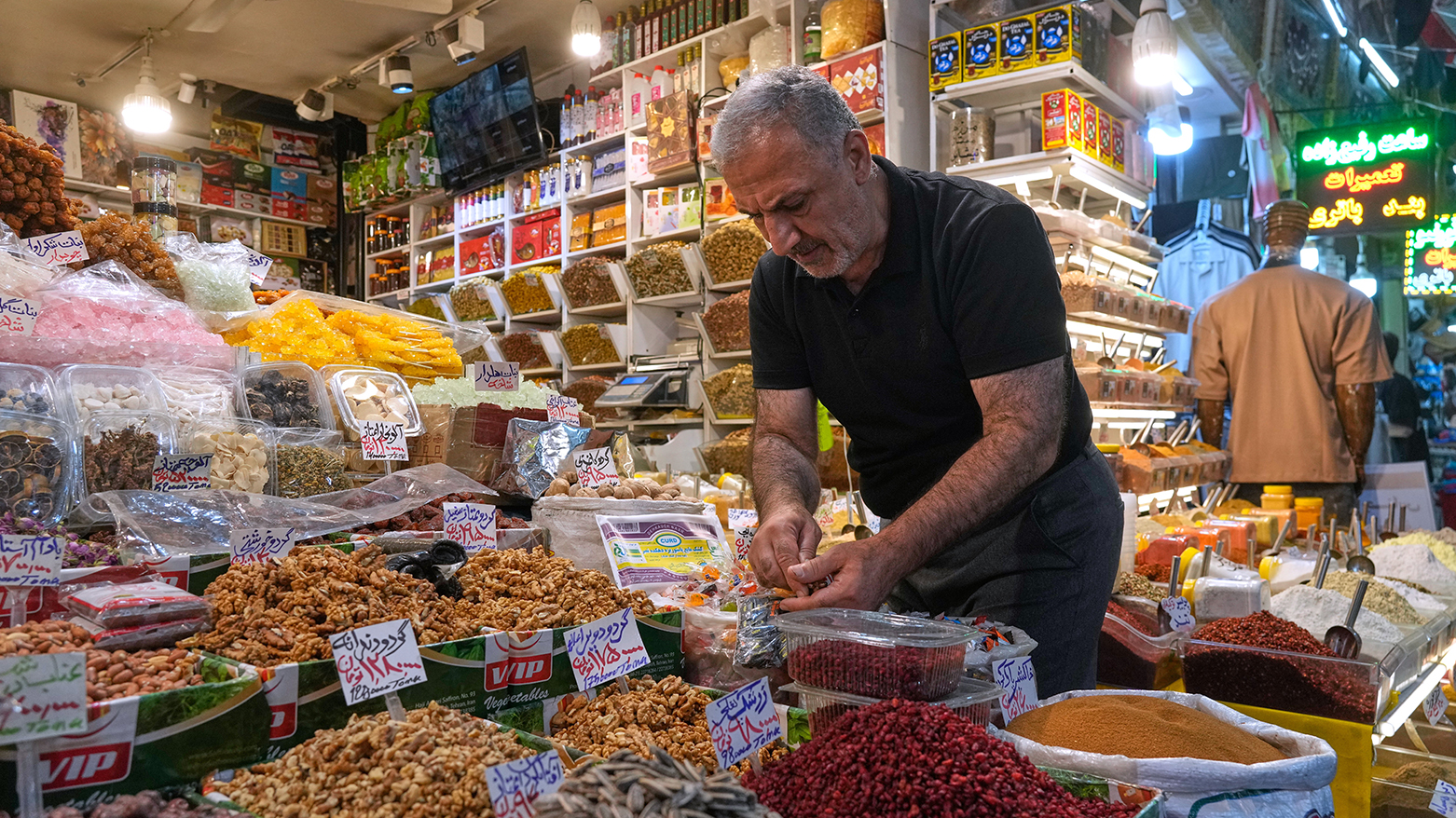
ERBIL (Kurdistan24) - Grocery stores across Tehran remain stocked, but for a growing number of Iranian families, the problem is no longer finding food and other essentials. It is being able to afford them.
Nearly six months into Iran's war with the United States and Israel, falling purchasing power, rising unemployment and sharp increases in food prices are forcing households to cut back on meat, fruit, leisure and other expenses as sanctions and restrictions on Iranian oil exports intensify pressure on an economy already weakened by years of isolation.
The Associated Press reported that Iranians who remain employed are working longer hours while earning money worth roughly half as much as it was a year ago. Rice prices have risen about 60% since the war began, while beef costs around 150% more.
For families, those figures are translating into increasingly narrow choices.
"We have virtually given up on many things," Ahmad Karimi, a 52-year-old Tehran taxi driver and father of two, told AP. Karimi said he now works about 15 hours a day and has cut fruit, protein, leisure activities and even weekends from his family's routine.
The deterioration in household finances illustrates a central question surrounding Washington's effort to intensify economic pressure on Tehran: how much hardship Iran can absorb before economic strain produces political or military concessions.

So far, there is little evidence that the pressure has forced such a shift. Iran has continued military operations against regional targets and US bases while disrupting shipping through the Strait of Hormuz, seeking to use its leverage over one of the world's most important energy corridors to improve its position in negotiations.
At the same time, the United States is preparing another escalation in economic measures designed to reduce Tehran's ability to trade, export oil and obtain foreign revenue.
The result is an increasingly severe contest of endurance in which Iranian households are bearing a substantial share of the immediate economic cost.
Household squeeze deepens
At Tehran's Grand Bazaar, where shoppers often seek lower prices than those available in supermarkets, the impact is visible in what families are leaving out of their baskets.
A 41-year-old mother of two from northern Iran told AP that milk, eggs, toilet paper and several other basic items, without meat, recently cost her 89 million rials, or roughly $65.
"Buying basic necessities has become our main priority, and our shopping basket has gotten smaller and more limited," she said, speaking anonymously because she feared repercussions.
She described the repeated decisions over what her children could no longer have as emotionally exhausting, from extracurricular classes to ordinary purchases.
Iran's broader economic indicators point to further pressure ahead.

The International Monetary Fund expects inflation to approach 70% by the end of the year, according to AP, while the economy is forecast to contract by more than 5%.
Official statistics put unemployment at 9.1%, although Iranian state-linked media have suggested the actual level may be substantially higher. A Labor Ministry official said last week that more than one million jobs had already disappeared by late May, only three months after the war began.
Iran entered the conflict with substantial economic vulnerabilities after years of Western sanctions. Since fighting began on Feb. 28, a US naval blockade and other restrictions have made the export of oil, Iran's most important source of foreign earnings, considerably more difficult.
Tehran has nevertheless developed mechanisms over years of sanctions to reduce the impact of international restrictions. It has expanded domestic manufacturing, relied on informal cross-border commerce, acquired restricted products through third countries and used networks of tankers to move oil.
That experience could limit Washington's ability to translate economic deterioration into immediate political concessions.
"Iran's resistance capacity not only avoids collapse, it also prevents the economic pain from translating into the political pressure and changes that the U.S. expects," Hadi Kahalzadeh, an Iran economy specialist at Brandeis University, told AP.
The economic strain is also interacting with political conditions inside Iran.
The country had already experienced widespread economic discontent before the war. Protests spread earlier this year before authorities violently suppressed them, according to AP, with thousands reported killed and tens of thousands believed to have been detained.
Iran's leadership has warned that participation in anti-government demonstrations can constitute treason, which may carry the death penalty.

Yet some analysts say public anger over deteriorating living standards is no longer directed solely at Iranian authorities.
Hassan Golmoradi, a Tehran-based economist, told AP that sanctions and attacks that damaged industrial facilities and infrastructure have led some Iranians to blame foreign governments for part of their economic hardship.
Mohammad Farzanegan, a professor of Middle Eastern economics at Germany's University of Marburg, said economic suffering does not automatically mean people believe joining protests will improve conditions for their families.
For the Iranian government, one of the most politically sensitive economic questions may eventually be gasoline.
Fuel remains heavily subsidized and comparatively inexpensive, making it one of the few major household costs insulated from broader inflation. But a presidential aide recently told Iranian state television that domestic gasoline consumption now exceeds production and that prices may eventually have to rise.
Previous fuel-price increases have triggered widespread unrest, making any change particularly sensitive for authorities already managing wartime economic pressures.
Washington seeks a harder economic chokehold
The pressure could intensify further.
US President Donald Trump said Wednesday that his administration was preparing what he called the "most crushing economic operation ever taken against any country," while threatening secondary sanctions against governments and companies that continue doing business with Iran.
The United Arab Emirates, which has historically served as an important commercial channel for Iranian trade, announced this week that it was suspending commerce with Tehran. Trump had spoken with UAE President Sheikh Mohammed bin Zayed Al Nahyan shortly before the announcement, AP reported.
Agence France-Presse reported separately that senior US officials are also pressing allies and China to reduce economic links with Iran.
Treasury Secretary Scott Bessent warned governments against maintaining commercial ties with Tehran and said further details of Washington's economic strategy would be announced Monday.
Vice President JD Vance described economic pressure as Washington's most effective tool in the current phase of the conflict, according to AFP, while acknowledging that Iran would seek to impose economic costs of its own.

China remains particularly important because it is the largest buyer of Iranian oil that continues to reach international markets despite sanctions and restrictions. Iran has relied on a so-called shadow fleet of tankers to sustain some exports.
Tehran has rejected the latest US threats, with Iranian Foreign Minister Abbas Araghchi portraying Washington's campaign as an attempt to distract from America's own economic problems. Iran's Foreign Ministry has described US sanctions as "economic terrorism."
The competing pressure campaigns come as negotiations to end the war remain stalled.
Iranian President Masoud Pezeshkian's elected government has publicly favored a negotiated settlement, citing the worsening effect of the conflict on ordinary people.
"What concerns us is people's livelihoods and their economic situation, and we are doing everything we can to deal with it," Pezeshkian told reporters last week.
But significant power remains concentrated in the Islamic Revolutionary Guard Corps, whose leadership has sought broader concessions from Washington, including greater Iranian authority over the Strait of Hormuz and compensation related to the war.
For families such as Karimi's, those strategic calculations are increasingly distant from the immediate struggle to pay for food and other necessities.
"The people won't be able to continue living like this," Karimi told AP. "We're simply breathing, surviving, and trying to make it from one day to the next."