Erbil Folk Arts Troupe Showcases Kurdish Heritage at Polish Folk Festival
Othman said the Erbil troupe gave the festival a distinctive Kurdish character through its traditional performances, clothing, and display of the Kurdistan flag.
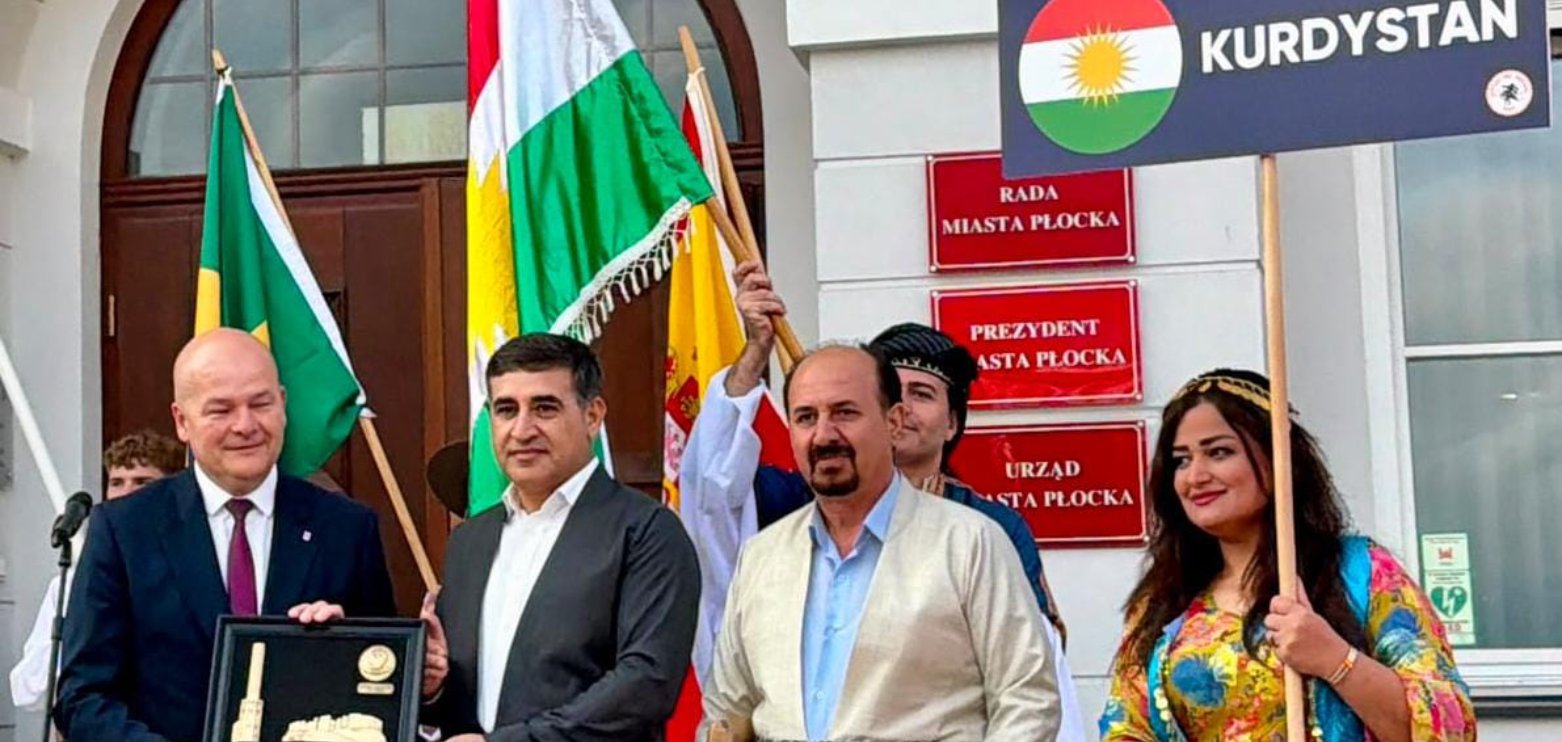
ERBIL (Kurdistan24) – The Erbil Folk Arts Troupe has represented the Kurdistan Region at the Vistula Folk Festival in Płock, Poland, showcasing traditional Kurdish dances, music, songs, and attire.
On Sunday, Sirwan Othman, Director General of Culture and Arts in Erbil and head of the Kurdistan Region delegation, told Kurdistan24 that this year’s festival brought together folk groups from Spain, Latvia, Ukraine, Brazil, Poland, and the Kurdistan Region.
Othman said the Erbil troupe gave the festival a distinctive Kurdish character through its traditional performances, clothing, and display of the Kurdistan flag.
“This performance was not simply a collection of dances and songs; rather, it was an attempt to convey a part of Kurdish social life and heritage to the global stage,” Othman said.
Kurdistan’s presentation, titled “Village Life,” featured four artistic tableaux: Harvest, Lady, Marivan, and Siran.
Othman explained that the theme reflected the importance of village life in Kurdish heritage, where villages have historically served as centers of community, cooperation, social life, and traditional arts.
The performance combined traditional dance, music, and clothing to portray aspects of Kurdish life, including joy, social interaction, and human relationships.
According to Othman, the troupe’s main objective was to introduce Kurdish culture, heritage, and traditional arts to audiences in Poland and to participating artistic groups from other countries.
He described the festival as more than a venue for performances, saying it provided an opportunity for different cultures to meet, exchange experiences, and establish artistic connections.
“The folklore festival is not only a venue for artistic performances; it is also a platform for different cultures to meet, exchange experiences, and establish new artistic ties among peoples,” he said.
Othman added that participating alongside groups from Spain, Brazil, Latvia, Ukraine, and Poland allowed the troupe to present Kurdish cultural identity through what he described as the universal language of art.
“This is particularly important when Kurdish dance, music, and clothing become a shared language among audiences whose languages are different,” he said.
He said the participation could help establish new artistic relationships and create further opportunities for Kurdish groups to take part in international festivals.
“Folklore festivals are not only stages for artistic performances; they are also platforms for cultural diplomacy and for introducing peoples to one another,” Othman concluded.
Established in 1979, the Erbil National Arts Troupe has worked to preserve Kurdistan’s traditional arts and pass them on to future generations through cultural and artistic activities.
The Vistula Folk Festival began on August 17 and ran for six days in Płock, Poland.