Axios: Syria, Israel Hold Secret Talks to Defuse Tensions
Syria's foreign minister met Israel's Mossad chief in Jordan as Tom Barrack warns a military mistake between Israel and Türkiye could spark wider war.
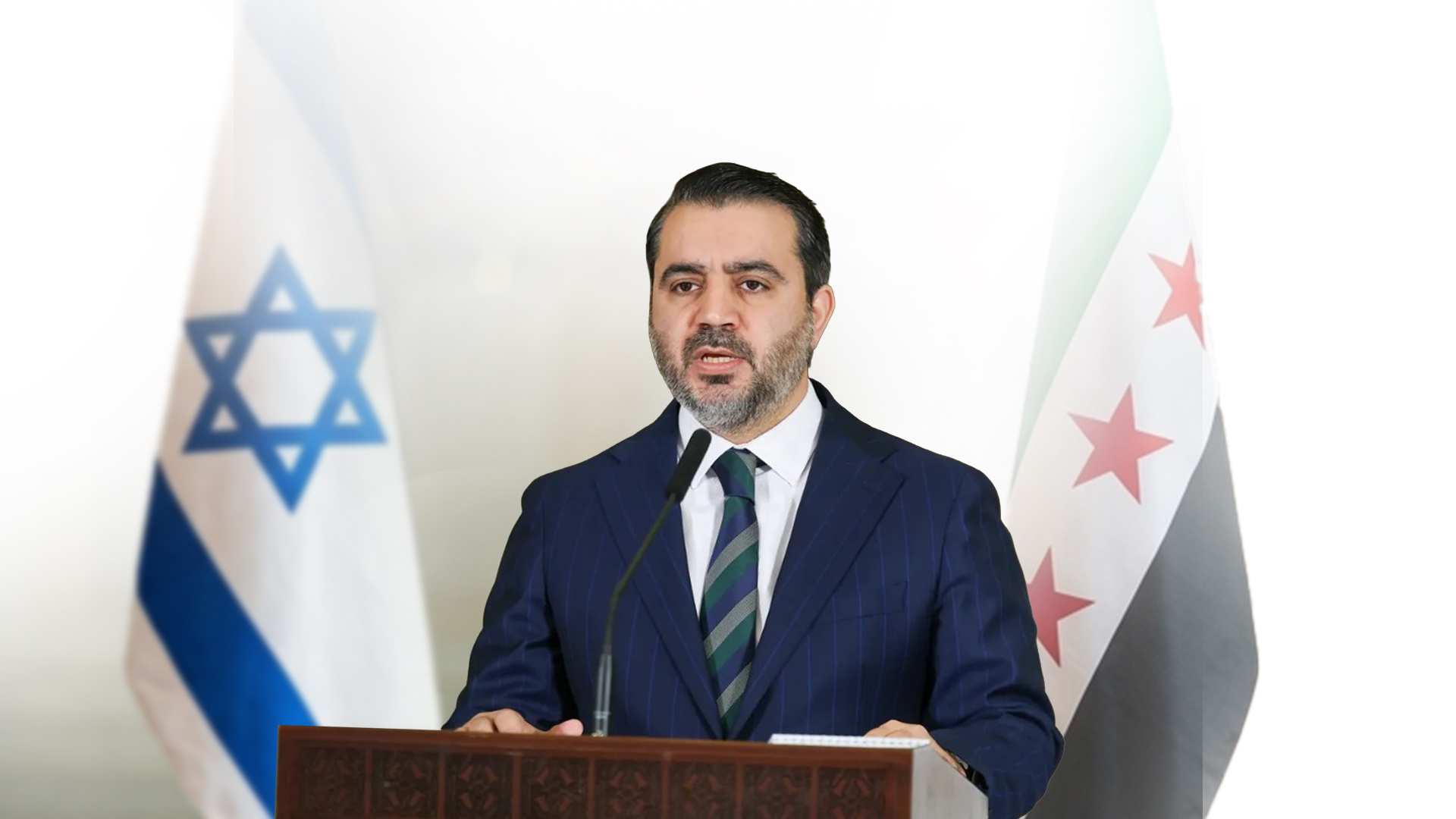
ERBIL (Kurdistan24) - Syrian Foreign Minister Asaad al-Shaibani met with Israeli Mossad Director Roman Gofman in Jordan on Sunday in a high-level effort to lower tensions between the two countries, according to two sources with knowledge of the matter, days after an Israeli strike on a Syrian airbase sharply escalated the standoff and pushed Israel and Türkiye to the edge of direct confrontation.
The Israeli prime minister's office declined to comment on the meeting, and a spokesperson for al-Shaibani did not immediately respond to a request for comment, according to the report.
The Sunday meeting followed an Israeli airstrike on Syria's Abu Zuhour airbase, which US Special Envoy Tom Barrack said brought Israel and Türkiye within one step of direct military confrontation. According to a report by Israel's Channel 15, Barrack said the two countries had come dangerously close to war after Israeli fighter jets struck the airbase in northern Syria, dropping at least eight bombs that damaged recently renovated runways and several aircraft hangars, though no casualties were reported.
Barrack later warned publicly that a small military miscalculation in the region could escalate into a conflict on the scale of World War III, underscoring the severity of the moment. He said Türkiye's military leadership had shown "maximum restraint and patience" when Israeli aircraft approached, preventing the incident from spiraling into direct conflict. He drew a comparison to November 2015, when Turkish F-16s shot down a Russian Su-24 bomber near the Syrian border, plunging Moscow-Ankara relations into crisis until President Erdogan sent a letter of apology to President Putin in June 2016.
"This is a very dangerous game, stationing a warplane on a border without warning and without any agreement," Barrack said.
A Turkish official told Axios that Türkiye rejected claims it had forces stationed at the Abu Zuhour airbase and accused Israel of manufacturing pretexts to strike neighboring countries and destabilize the region. The Turkish presidency said in a statement that comments made by Israeli Prime Minister Benjamin Netanyahu were intended only to justify what it described as illegal airstrikes. Ankara said it would continue working with the Syrian government to establish security and stability and would not allow Syria to descend into instability.
Axios reported, citing US and Israeli officials, that Israel had informed the White House ahead of the strike, telling Washington the operation was intended to prevent Türkiye from building up military forces and transferring advanced weapons systems into Syria. Several US officials told Reuters they believed the timing of the strike was also connected to Israel's October elections, arguing that the Syrian government had taken no hostile action against Israel. Reuters reported that the Trump administration had urged the Syrian government to exercise restraint.
Twelve foreign ministers, including those of Türkiye, Saudi Arabia, Pakistan, and Indonesia, issued a joint statement condemning Israel's strikes on Syria, AFP reported Saturday.
In a separate, wide-ranging interview delivered in part to PBS NewsHour, Barrack disclosed that the United States had supervised five formal rounds of negotiations, along with several informal sessions, between Israel and the Syrian government led by President Ahmad al-Sharaa. The talks resulted in a decision to establish a joint coordination room in Amman, Jordan, to monitor border lines and the buffer zone tied to the 1974 disengagement agreement.
Barrack said that after the fall of the Assad government on December 8, Israel adopted a strategy of eliminating perceived threats along its borders due to distrust of the new Damascus administration and concern over armed groups operating in Syria. He said that on December 9, Israel launched a broad campaign that destroyed nearly all of Syria's air force and military airfields in order to keep Syrian airspace open against potential Iranian threats.
Barrack also addressed Israel's continued presence in the Golan Heights, stating: "Israelis are still occupying the Syrian Golan Heights, and this is a violation of United Nations resolutions and the international system that says the Golan belongs to Syrian territory."
On the Abu Zuhour strike specifically, Barrack offered three possible explanations: faulty intelligence about the positioning of Turkish weapons that later proved incorrect; an Israeli decision to strike immediately after detecting suspicious movement; or a breakdown in communication through back channels, despite the fact that Gofman and al-Shaibani had held lengthy talks only days earlier.
Barrack said Türkiye had made clear it holds no aggressive intentions toward Israel and does not seek direct conflict. "What the Turks want is a sovereign and independent Syria, and that is what we, Israel, and all the countries of the region want," he said.
Barrack said the Trump administration's central goal is to reduce tensions across the Middle East, while signaling that Washington will no longer serve as an unconditional security guarantor for regional powers. "America can no longer remain an open-ended security blanket for everyone," Barrack said. "Countries in the region, such as Türkiye, Saudi Arabia, the UAE, Qatar, and Israel, must take responsibility for their own security and political conditions."
He also flagged roughly 9,400 ISIS detainees held in the region as a persistent security threat and pointed to continued Iranian influence over Hezbollah's disarmament in Lebanon as a complicating factor in broader regional stability efforts.
Sunday's meeting between al-Shaibani and Gofman represents the most direct sign yet that Israel and Syria are seeking to manage the fallout from the Abu Zuhour strike through diplomatic channels rather than further military escalation. With Barrack's warning of a potential slide toward a far larger conflict still fresh, the coordination mechanisms established in Amman are likely to face an early test in the days ahead.