Kurdistan Gasoline Output Set to Rise as Oil Companies Resume Work
International oil companies have resumed Kurdistan Region production, increasing crude supplies to local refineries and potentially easing gasoline shortages and prices.
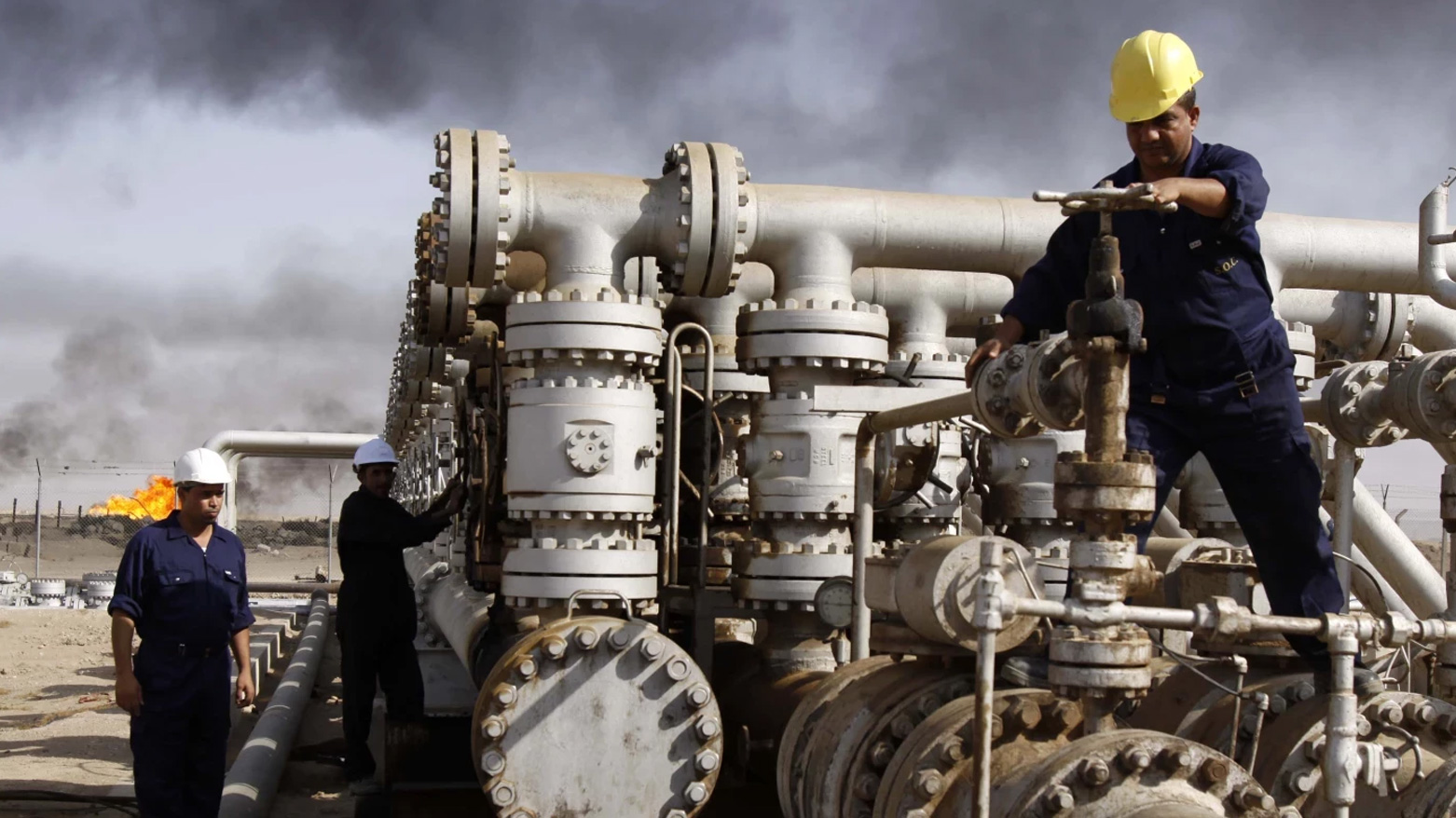
ERBIL (Kurdistan24) - International oil companies have resumed operations across the Kurdistan Region and are gradually restarting crude production, a Kurdistan Regional Government source told Kurdistan24 on Monday, a development expected to increase supplies to local refineries and ease pressure on a gasoline market strained by recent shortages.
The source said all international oil companies operating in the Region had officially returned to work at their respective fields and were moving through preparations toward renewed crude extraction.
The restart is significant because locally produced crude forms an important part of the supply chain feeding refineries and traders that ultimately provide gasoline to the Kurdistan Region's domestic market.
During the earlier production suspension, reduced availability of crude contributed to gasoline shortages and higher commercial prices. According to the KRG source, the disruption was tied partly to arrangements governing payments owed to international oil companies.
Under the current mechanism described by the source, companies receive crude oil in place of cash payments for their financial entitlements. They can then sell portions of that crude to refineries and local traders in the Kurdistan Region.
Those barrels are subsequently processed into gasoline and other petroleum products.
The return of field production is therefore expected to increase the volume of crude available to refiners, expand gasoline output and place downward pressure on prices.
The extent and speed of any price reduction will depend on how quickly crude production increases and how much additional supply reaches the domestic refining system.
Crude restart strengthens local supply
The resumption comes after weeks in which the KRG has intervened directly to stabilize fuel availability.
Acting Natural Resources Minister Kamal Mohammed Salih said earlier this month that the government was distributing approximately 3.5 million liters of subsidized standard gasoline per day at 750 Iraqi dinars a liter.
Read More: KRG Distributes 3.5 Million Liters of Subsidized Petrol Daily
The subsidy program was introduced as authorities sought to ease shortages that had pushed commercial fuel prices higher and created long queues and supply concerns in parts of the Kurdistan Region.
Around 100 stations were designated to distribute the subsidized grade, while the government abolished its electronic coupon system and allowed motorists to purchase the fuel directly.
Erbil receives the largest allocation, with around 1.8 million liters distributed daily through 50 stations. Duhok receives 720,000 liters, Sulaimani 468,000 liters and Soran 360,000 liters, with smaller allocations serving other administrations.
The KRG has said it supplies the subsidized fuel to participating stations below its actual cost and absorbs the difference to maintain the 750-dinar retail price.
Authorities have also introduced GPS tracking for fuel tankers and surveillance at stations in an effort to prevent diversion or withholding of subsidized supplies.
The latest crude-production restart could reduce some of the pressure behind those emergency measures by allowing local refineries to operate with greater feedstock availability.
Two major facilities, the Lanaz and KAR refineries, have been central to domestic gasoline production.
Previous Kurdistan24 reporting, citing the Ministry of Natural Resources, said the 50,000 barrels of crude allocated to those refineries could produce approximately 1.75 million liters of gasoline.
Officials have argued, however, that local refining capacity considerably exceeds the crude volumes currently available.
Dr. Ghazal Hostani, Director General of Contracts at the Ministry of Natural Resources, said earlier this month that the KAR refinery alone could process around 75,000 barrels a day but was operating below capacity because it lacked sufficient crude.
Read More: KRG: Equal Oil Costs Could Cut Petrol Price to 450 Dinars
The KRG has formally asked Baghdad to increase the Region's domestic crude allocation from 50,000 barrels to 130,000 barrels per day, according to Hostani.
Baghdad-Erbil fuel dispute remains
The production restart does not resolve the wider dispute between Erbil and Baghdad over how much crude and subsidized fuel the Kurdistan Region should receive.
KRG officials have repeatedly argued that the current federal allocation does not reflect the Region's population or domestic consumption requirements.
Salih said Baghdad was supplying approximately 1.75 million liters of gasoline per day to the Kurdistan Region, while regional demand is substantially higher.
Sipan Sherwani, a member of the Iraqi Parliament's Oil and Gas Committee, previously told Kurdistan24 that the Kurdistan Region needs around seven million liters a day.
A memorandum signed by 169 Iraqi lawmakers was submitted to Prime Minister Ali al-Zaidi calling for increased federal assistance with the Region's fuel needs, according to Sherwani.
The disagreement also extends to the price of subsidized fuel.
Gasoline is sold at 450 dinars per liter in federal Iraq under a government subsidy structure, while the KRG's subsidized standard grade is currently priced at 750 dinars.
Hostani has argued that the difference is partly tied to how oil production costs are calculated.
According to her, crude production in the Kurdistan Region is currently assigned a cost of about $16 per barrel compared with $4 in federal Iraq. She said equalizing the calculation could give the KRG enough financial room to offer gasoline at 450 dinars a liter.
Acting Natural Resources Minister Salih has separately said the KRG is prepared to negotiate with Baghdad if the federal government is willing to supply all fuel types to the Kurdistan Region at subsidized prices and in proportions reflecting its population.
Read More: KRG Minister Responds to Federal Fuel Supply Offer
The KRG Council of Ministers has described access to a fair share of domestically allocated crude as a constitutional and economic issue.
Market pressure could ease
The immediate focus, however, is whether renewed crude production can stabilize the market before longer-term negotiations with Baghdad are settled.
The KRG has already reported some easing in commercial gasoline prices as additional supplies entered the market.
Earlier this month, premium gasoline at some stations had fallen to around 2,000 dinars per liter and super gasoline to approximately 2,300 dinars, with fuel-sector officials saying additional supply could push prices lower.
The restart of international oil companies adds another source of supply to that equation.
Read More: KRG Approves Emergency Fuel Strategy, Reaffirms Budget Rights in 2027 Federal Spending Plan
More crude available to local refineries could allow the Kurdistan Region to increase domestically produced gasoline, reduce dependence on emergency interventions and provide consumers with greater choice between subsidized and commercially priced grades.
But the Region's fuel system remains dependent on several interconnected factors: production by international oil companies, crude allocations agreed with Baghdad, refinery capacity, imported petroleum products and government subsidies.
Recent disruptions have demonstrated how quickly problems in one part of that chain can translate into higher prices at filling stations.
For the KRG, restoring oil production is therefore not only an upstream energy-sector issue. It has direct implications for household costs, transportation and the broader domestic economy.
With international oil companies gradually returning their fields to production, officials now expect more crude to reach refineries and traders in the coming period.
If those volumes materialize as anticipated, the restart could mark a significant step toward ending the gasoline shortage and bringing greater stability, and potentially lower prices, back to the Kurdistan Region's fuel market.