UN, Red Cross Warn World ‘Dangerously Close’ to Era of Killer Robots
Guterres and Red Cross chief urge countries to establish urgent limits on autonomous weapons as AI-driven warfare rapidly advances
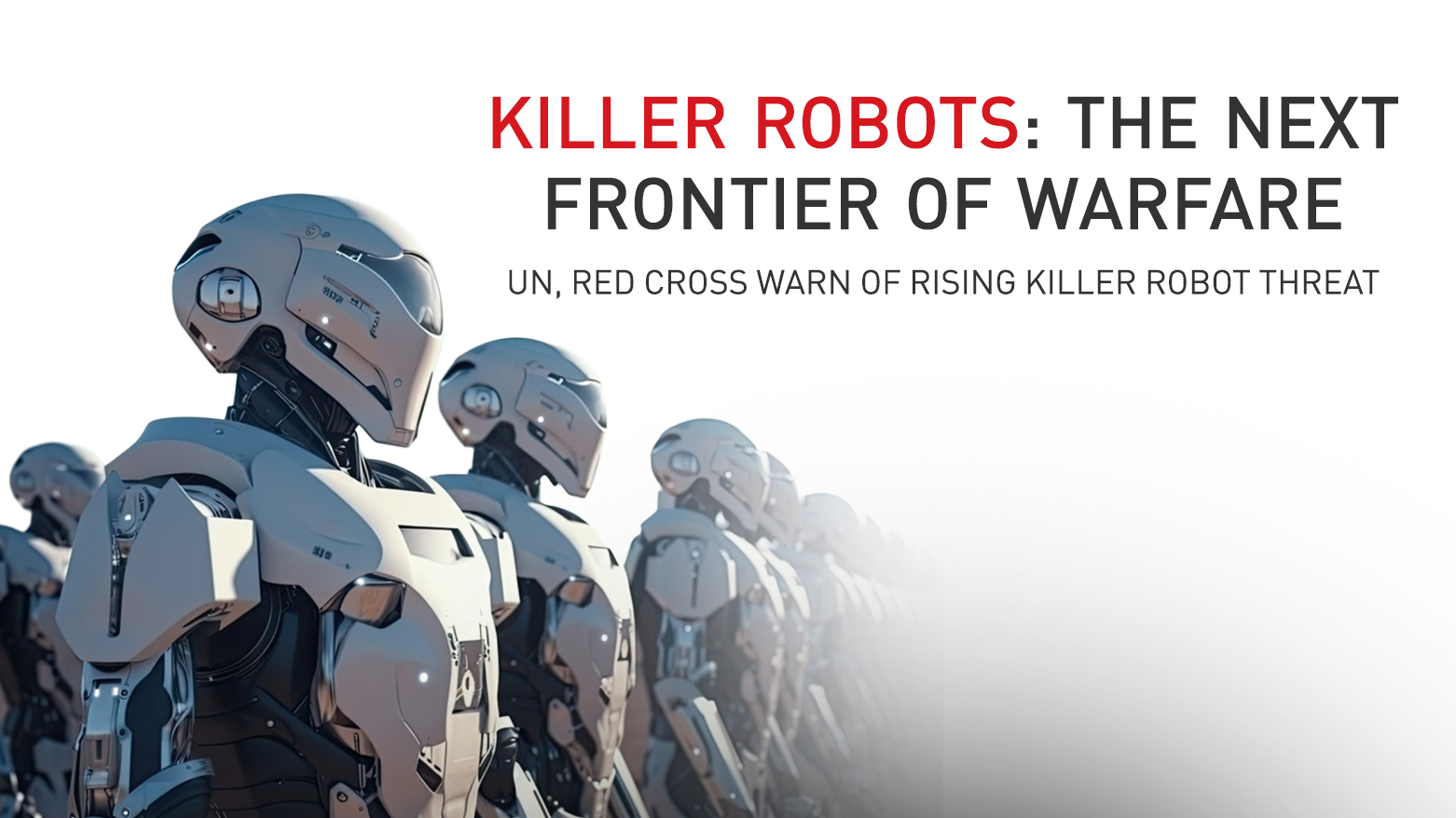
ERBIL (Kurdistan24) — The United Nations and the International Committee of the Red Cross (ICRC) warned Tuesday that the world is “dangerously close” to a future in which autonomous weapons could select and attack human targets without human intervention, renewing calls for urgent international rules to regulate the technology.
UN Secretary-General Antonio Guterres and ICRC President Mirjana Spoljaric said governments must act quickly to prevent autonomous weapons from crossing what they described as a “moral red line” — allowing machines to independently decide when and against whom lethal force should be used.
“Today, we renew this call with even greater urgency,” the two leaders said in a joint statement, warning that although their fundamental concerns remain unchanged, “the risks have intensified.”
“We are now dangerously close to crossing a moral red line: the autonomous targeting of humans by machines,” they said.
Lethal autonomous weapon systems are generally understood as weapons capable of selecting targets and applying force without direct human intervention.
Although fully autonomous weapons have not been confirmed to have been used in combat, rapid advances in artificial intelligence, robotics and unmanned systems have intensified concerns about how quickly such capabilities could emerge on the battlefield.
Those concerns have grown amid wars in the Middle East and Ukraine, where drones and increasingly sophisticated autonomous or semi-autonomous systems have become central to modern warfare.
The widespread use of drones has demonstrated how quickly relatively inexpensive unmanned technologies can transform military operations, raising questions about what could happen as artificial intelligence gives weapons greater ability to identify, track and engage targets independently.
The UN and Red Cross leaders stressed that autonomous weapons are not merely a distant possibility.
“Autonomous weapon systems are not part of a distant future: a race towards greater autonomy in weapons systems is already well underway,” they said.
At present, there is no specific international treaty governing autonomous and AI-enabled weapons. Governments have instead spent years discussing how existing international humanitarian law should apply to systems capable of operating with varying degrees of autonomy.
Guterres and Spoljaric first called in 2023 for countries to establish specific prohibitions and restrictions on autonomous weapons by 2026. They renewed that appeal Tuesday, warning that the window for preventing potentially destabilizing developments is narrowing.
“Future generations will ask whether leaders acted when there was still a chance to set limits before these weapons proliferated beyond control,” they said.
They also pointed to growing concern within the scientific and technology communities themselves, noting that scientists and engineers involved in developing autonomous systems have, in many cases, warned about the potential consequences of their work.
“When the architects of this technology are calling for limits, states cannot afford to remain passive,” the statement said.
International discussions on autonomous weapons have been underway for roughly a decade. After three years of further discussions, countries are expected to decide in November whether to begin formal negotiations on a treaty governing the development and use of such weapons.
The UN and Red Cross chiefs urged governments to demonstrate what they called “political courage,” arguing that establishing clear rules before the technology becomes widespread is essential to preserving human control over the use of lethal force.
“A failure to act quickly and decisively will cost lives,” they warned.
The debate comes as militaries around the world increasingly integrate artificial intelligence into surveillance, targeting, battlefield analysis and unmanned systems.
While proponents argue that greater autonomy could improve precision and reduce risks to soldiers, critics warn that delegating life-and-death decisions to machines could create serious legal, ethical and security risks.
The UN and ICRC leaders said the principle guiding technological development should remain clear: “Innovation must serve humanity — not endanger it.”