Kirkuk-born Kurdish candidate seeks seat on Stockholm regional council
Kirkuk-born Ranjdar Falih is running on the Social Democratic Party list for the Stockholm Region Council and is calling on Sweden’s Kurdish community to participate in the elections.
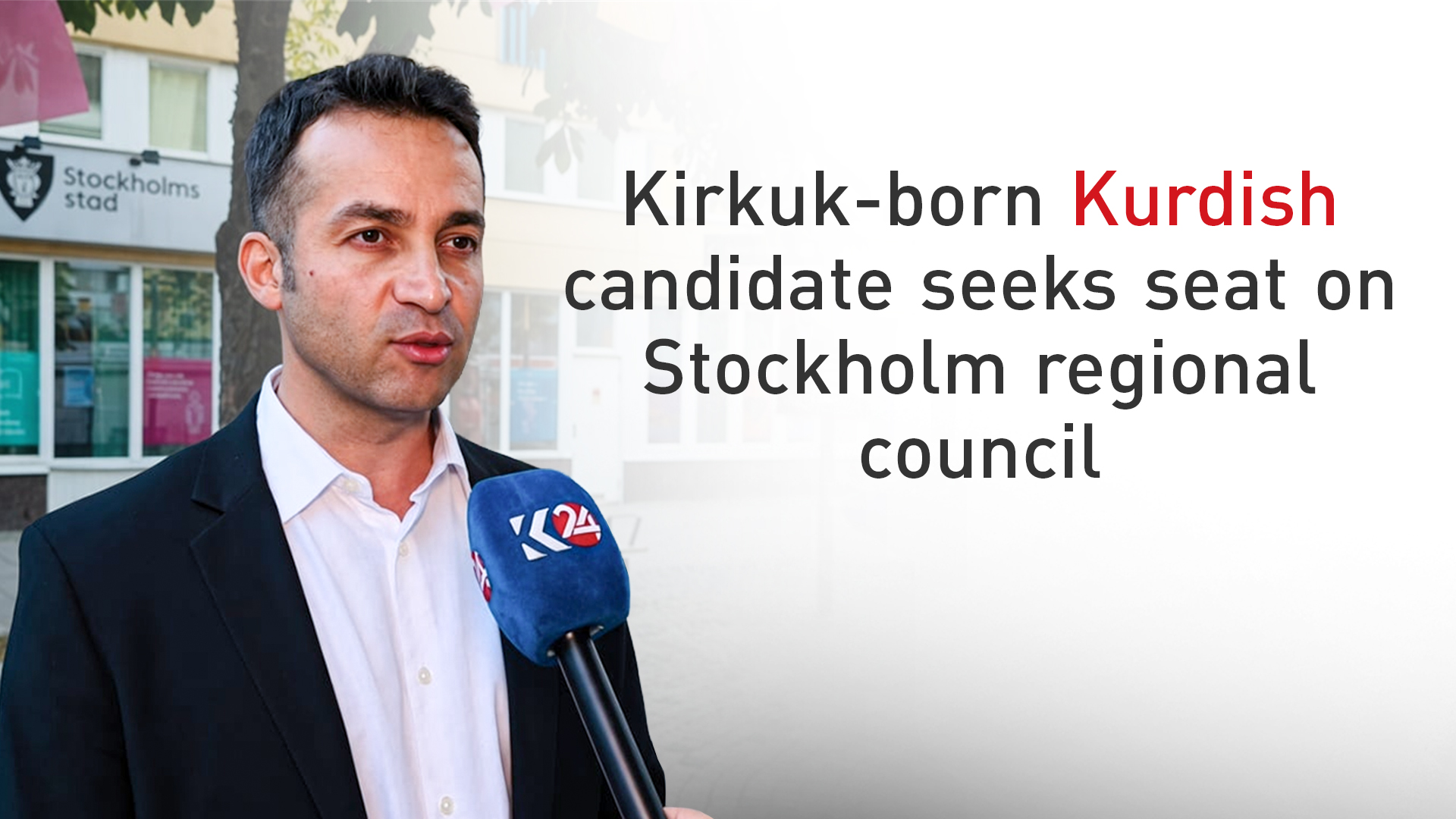
ERBIL (Kurdistan24) - As Sweden’s elections draw closer, a young Kurd from Kirkuk is seeking a seat in the Stockholm Region Council, bringing his background in information technology into the political arena while urging Kurdish voters to make their voices heard at the ballot box.
Ranjdar Falih is running on the Social Democratic Party list for the Stockholm Region Council. He studied information technology at universities in Stockholm and now works as an IT engineer at a major Swedish technology company.
Through politics, Falih says he wants to put his professional experience toward improving public services, particularly through digitalization and the integration of different systems.
“I want to use the experience I have in IT in my political work, particularly in digitalization and integrating different systems so that services can reach citizens more easily,” Falih told Kurdistan24 reporter Awar Hawrami.
Protecting Sweden’s welfare system is another priority for the Kurdish candidate. He pointed to healthcare, free education and unemployment assistance as services he believes should be protected and further developed.
“All the services that exist in Sweden, such as the healthcare system, free education and unemployment benefits, were created by the Social Democrats. We do not want these services to be reduced; rather, we want to protect and develop them,” he said.
Falih has also raised concerns about low voter turnout in some areas, particularly those where refugees live, and called on citizens to exercise their right to vote.
“In previous elections, voter turnout in some places was below 50 percent, and this is concerning. We encourage people to exercise their right and vote, because if they do not decide their own future, others will decide it for them,” he said.
Falih is number 21 on the Social Democratic Party list. He views the number as a symbolic connection to his Kurdish identity because it coincides with the date of Newroz.
“My number is 21, which coincides with the day of Newroz, and this has made me very happy. I hope Kurds living in the Stockholm Region will place their trust in me. I promise to serve Swedish society while never turning my back on my Kurdish identity or the cause of my people,” he said.
According to political observers, Kurdish participation in Sweden’s political arena has grown significantly. The increasing number of Kurdish candidates across different parties has strengthened Kurdish representation in Sweden’s decision-making institutions and created channels for Kurdish issues to reach the wider world.
Kurds living in Sweden have played a notable role in the country’s political arena and have a long history of entering parliament and local councils.
In the 2018 elections, six Kurdish candidates won seats in the Swedish parliament. Various parties, particularly the Social Democratic Party, the Left Party and the Liberal Party, have also included several Kurdish candidates.
The Kurdish community in Sweden numbers nearly 150,000 people, many of whom are eligible to vote. This has encouraged Kurdish candidates to campaign on domestic issues such as healthcare and education while also raising issues concerning their people in European decision-making institutions.
As the elections approach, Falih’s campaign combines his professional experience in technology with a call for stronger civic participation, while his candidacy adds to the growing presence of Kurds in Sweden’s political landscape.