Iraq Moves to Expand Regional Trade Links Through Landmark Land Transport Agreement
Baghdad prepares to join a major regional land-transport framework involving nearly 10 Arab countries, seeking to facilitate cross-border freight movement, strengthen guarantees for goods and attract investment
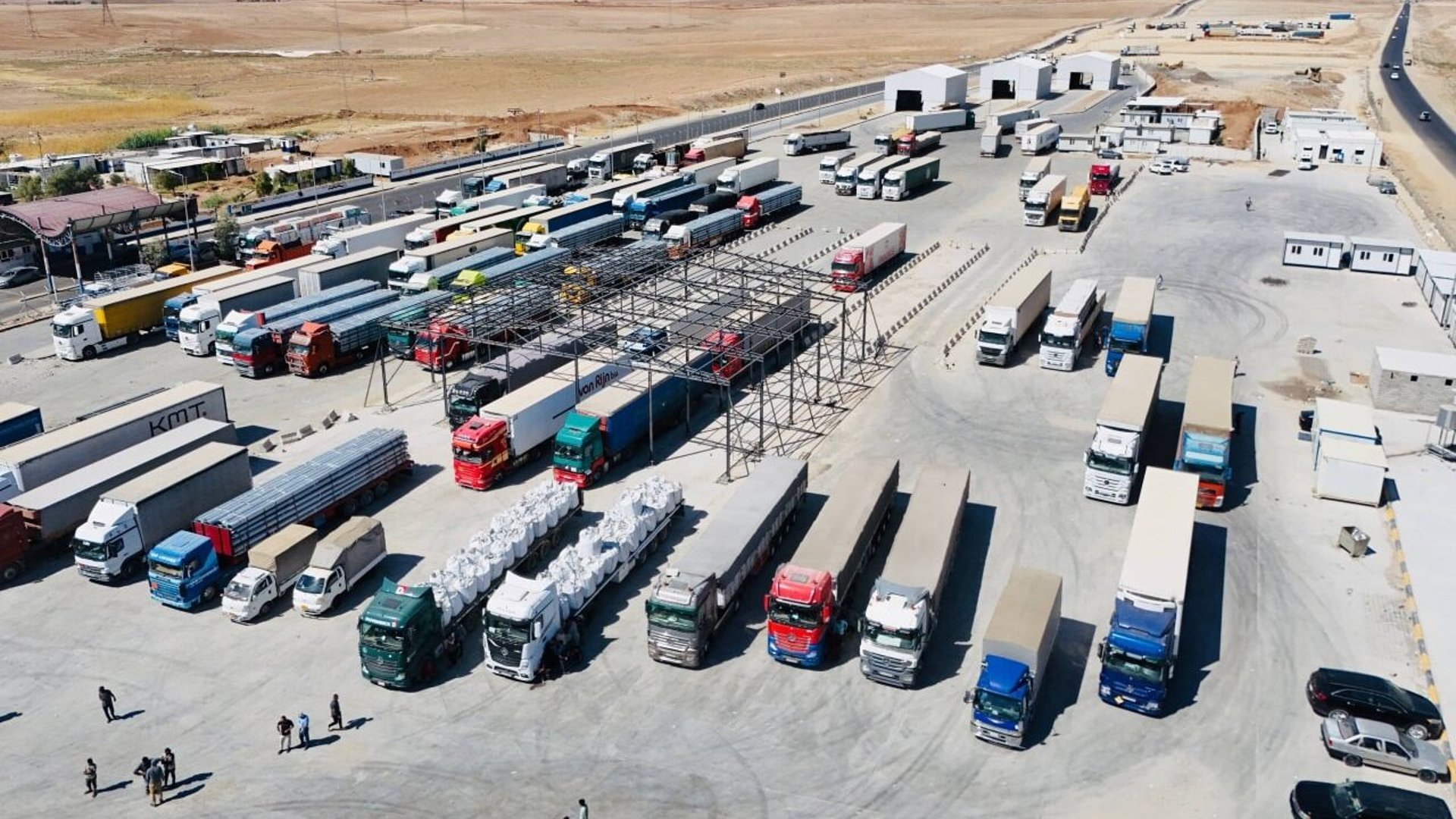
ERBIL (Kurdistan24) — Iraq is taking what officials describe as a strategic step toward deeper integration with regional markets, seeking to strengthen its position as a regional hub for investment and trade while protecting and promoting domestically produced goods.
Hussein Ahmed, director of media and public relations at Iraq’s Ministry of Transport, told Kurdistan24 that procedures to activate a memorandum of understanding on land transportation with a number of Arab countries have been completed.
Ahmed said the agreement is currently under review by the Iraqi Council of Ministers and will subsequently be referred to the Iraqi parliament for approval.
Nearly 10 countries expected to join
According to Ahmed, nearly 10 countries are expected to participate in the first phase of the agreement, including Gulf states, Egypt, Libya and Jordan, with Syria also highly likely to join.
The agreement is expected to be formally signed next month, marking a significant expansion of Iraq’s land transportation links with Arab and regional markets.
The framework is intended to facilitate the movement of freight trucks across participating countries while establishing mechanisms to safeguard the rights of transport companies and traders.
Full security guarantees for cargo
Ahmed said the agreement would provide comprehensive security guarantees for transported goods, with the Ministry of Transport emphasizing that cargo would receive a 100-percent security guarantee.
The measure is expected to provide greater confidence to traders and investors by reducing security concerns associated with cross-border transportation and creating a more predictable environment for regional commerce.
The memorandum is primarily focused on facilitating the movement of freight vehicles and is not expected to negatively affect Iraq’s existing transportation agreements with other countries.
Iraq seeks to revive cross-border trade
Iraq was largely excluded from major land-transport agreements for decades. Before 2003, international sanctions severely restricted its ability to participate in regional trade arrangements, while security conditions following the US-led freedom operations further complicated cross-border commercial transportation.
As a result, Iraq went for years without an effective major land-transport agreement, limiting its ability to capitalize on its strategic geographic position between the Gulf, the Levant, Türkiye and broader Asian markets.
In a significant move in 2022, Iraq joined the international TIR system, a customs transit system designed to facilitate the secure movement of goods across international borders.
Since joining the system, Iraq has reportedly facilitated around 5,000 cross-border transport operations, gradually expanding its participation in international road freight.
In the latest example, an Iraqi truck successfully transported goods from Saudi Arabia’s Arar border crossing deep into Central Asia on Monday, demonstrating the potential for Iraq to serve as a transit corridor linking Gulf markets with countries farther east.
The development could represent an important step in Baghdad’s efforts to revive the country’s domestic trade and transportation sectors and capitalize on Iraq’s geographic position as a bridge between the Arabian Gulf and Asian markets.
For Iraq, improving cross-border transportation infrastructure and securing reliable trade routes could also help reduce logistical costs, expand export opportunities for national products, and create new avenues for private-sector investment.
The planned agreement comes as Baghdad increasingly seeks to position Iraq not only as an energy exporter but also as a regional transportation and commercial hub, with improved land connectivity viewed as a key component of that strategy.