Kurdistan Region Honey Production Expected to Rise 20% This Year
Spokesperson for the KRG Ministry of Agriculture and Water Resources, told Kurdistan24 that honey production is expected to reach between 550 and 600 tons this year, compared with 450 to 500 tons last year, representing an estimated increase of 15 to 20 percent.
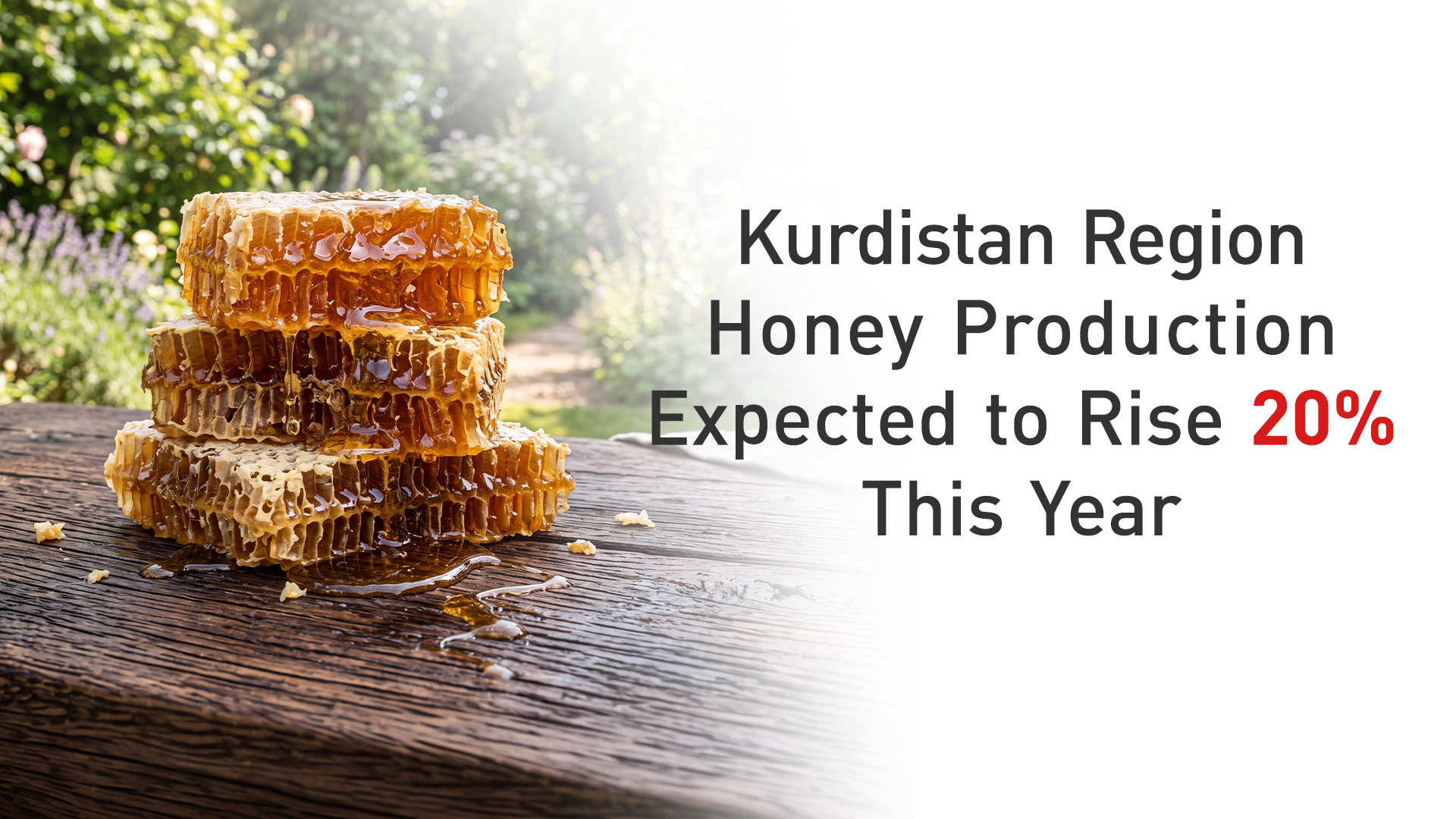
ERBIL (Kurdistan24) — Honey production in the Kurdistan Region is expected to increase by up to 20 percent this year, driven by favorable weather conditions and the revitalization of mountain pastures, the Kurdistan Region’s Ministry of Agriculture and Water Resources said Wednesday.
Qaraman Qadir, spokesperson for the ministry, told Kurdistan24 that honey production is expected to reach between 550 and 600 tons this year, compared with 450 to 500 tons last year, representing an estimated increase of 15 to 20 percent.
“The increase is attributed to the revitalization of mountain pastures and favorable weather conditions for beekeeping,” Qadir said.
The main honey-producing areas include Choman, Balakayati, Sidakan and Rawanduz in Erbil province and the Soran Independent Administration; Penjwen, Mawat, Qaradagh and Sharazur in Sulaimani province; and Amedi, Dinarta and Zakho in Duhok province.
“Kurdistan honey is of exceptional and international quality,” Qadir said, identifying wild, oak and multifloral honey among the region’s most renowned varieties.
More than 1,300 beekeepers are officially registered with the Ministry of Agriculture, collectively managing nearly 500,000 beehives, according to Qadir.
He said the ministry is working to facilitate export channels and help beekeepers market their products internationally. It is also providing medicines to prevent bee diseases, particularly treatments for Varroa mites, which pose a major threat to honeybee colonies.
Meanwhile, Belan Othman, a PhD researcher, previously told Kurdistan24 that her research found Kurdistan honey contains significant antioxidant and antibacterial compounds that can help strengthen the body's immune defenses.
Osman said the research provides scientific recognition for Kurdish honey in international research and markets. She added that some findings suggested Kurdistan honey could outperform New Zealand’s Manuka honey in certain respects.
The Kurdistan Region produced approximately 645 tons of honey in 2024, according to figures cited by the ministry.
The Kurdistan Regional Government has also sought to expand overseas markets for local honey. The first shipment of Kurdistan Region honey was exported to Qatar on Nov. 29, 2023, followed by shipments to other countries.