More Than 1,300 Missing After Deadly Nepal-Tibet Border Floods and Landslides
At least 165 people have been confirmed dead, while hundreds of foreign tourists and workers remain unaccounted for following severe flash floods and landslides along the Nepal-Tibet border
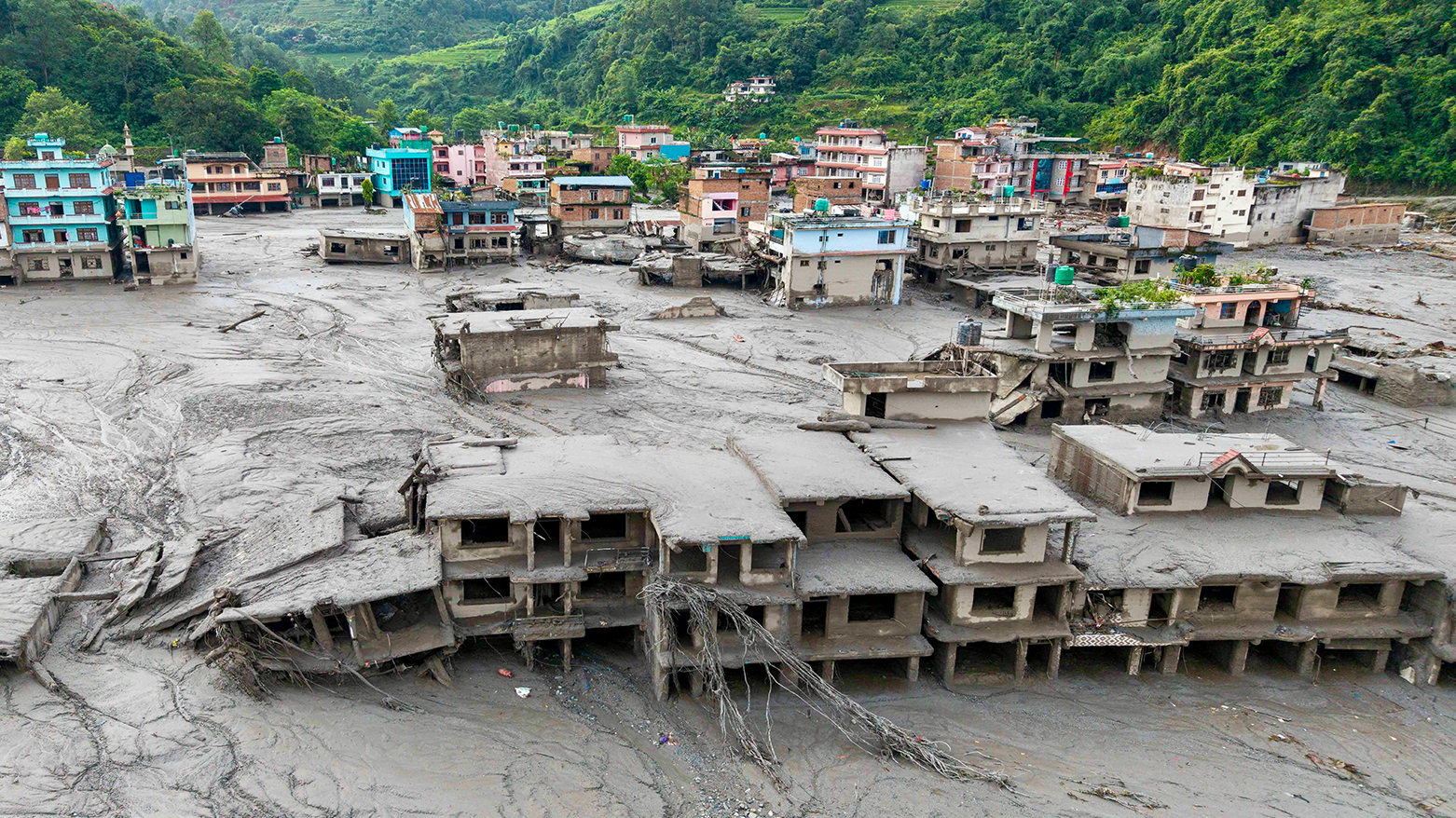
ERBIL (Kurdistan24) — More than 1,300 people have been reported missing and at least 165 confirmed dead after flash floods and landslides devastated areas along the Nepal-Tibet border, with hundreds of foreign tourists and workers among those still unaccounted for, authorities said Thursday.
Nepal’s disaster agency said 823 people remained missing, including at least 579 Nepali and foreign tourists. The agency did not provide a breakdown of the nationalities of the foreign nationals who could not be reached.
Across the border, Chinese authorities reported that 558 people were missing, nearly half of them foreigners.
The disaster struck a region that attracts hikers, climbers and tourists from around the world, many of whom travel to Nepal to explore the Himalayas and attempt some of the world’s highest peaks, including Mount Everest.
Authorities have warned that the number of missing people is likely to change as rescue and recovery operations continue.
It is not uncommon for missing-person figures to rise or fall in the aftermath of a major disaster. Double-counting, including cases involving dual nationals, identifying recovered bodies and matching them with missing-person reports, as well as the broader confusion caused by a major calamity, can all contribute to fluctuations.
China
Chinese authorities said Thursday that 298 Chinese nationals were missing following the disaster.
India
According to a Nepal Tourism Board list that had not been updated since Wednesday, 142 Indian nationals were reported missing.
They were traveling in Nepal with three agencies: Samrat Tours & Travels, Leaf Holiday and Himalayan Glacier.
Nepal’s latest figures for unaccounted-for tourists grouped foreign nationals and Nepalis together and did not provide a breakdown of the foreigners by nationality.
Ukraine
Ukraine’s Foreign Ministry said Nepal’s Tourist Police had informed it that 53 Ukrainian nationals were believed to be missing.
The ministry said the group included 46 Ukrainian tourists with whom authorities in Nepal had lost contact.
Australia
Australian Prime Minister Anthony Albanese said 34 Australians were missing following the floods.
“Our thoughts are with all those who will be concerned about their loved ones today,” Albanese said.
The missing include 15 people who were part of a pilgrimage group, including two teenagers, according to their tour company, which spoke to AFP on Thursday.
Malaysia
Malaysian Prime Minister Anwar Ibrahim said Thursday that more than 50 Malaysians in Nepal remained unreachable following the floods.
United Kingdom
The Nepal Tourism Board said Wednesday that 12 British citizens traveling with Alpine Eco Trek remained unaccounted for.
Himalayan Glacier also said two British nationals were among a group missing in the Rasuwagadhi area.
South Korea
South Korea’s Foreign Ministry said Wednesday that nine South Korean hydropower workers had lost contact with authorities in the Rasuwa district following the floods.
Japan
Japanese Prime Minister Sanae Takaichi said she was concerned by media reports that five Japanese nationals were missing.
“I am fervently praying that each and every irreplaceable life will be protected,” she said in a post on X.
The disaster has triggered a major search and rescue operation as authorities work to locate missing people, identify victims and establish the whereabouts of foreign nationals whose families remain without information.
With communications disrupted and some affected areas difficult to access, officials are continuing to verify reports as rescue teams reach isolated communities and tourist areas.