Sept. 30 Looms as Iraq Pushes Disarmament of Iran-Linked Factions
A Basra religious authority representative backed disarming Iran-linked factions as Iraq approaches the Sept. 30 Coalition exit and weapons-control launch.
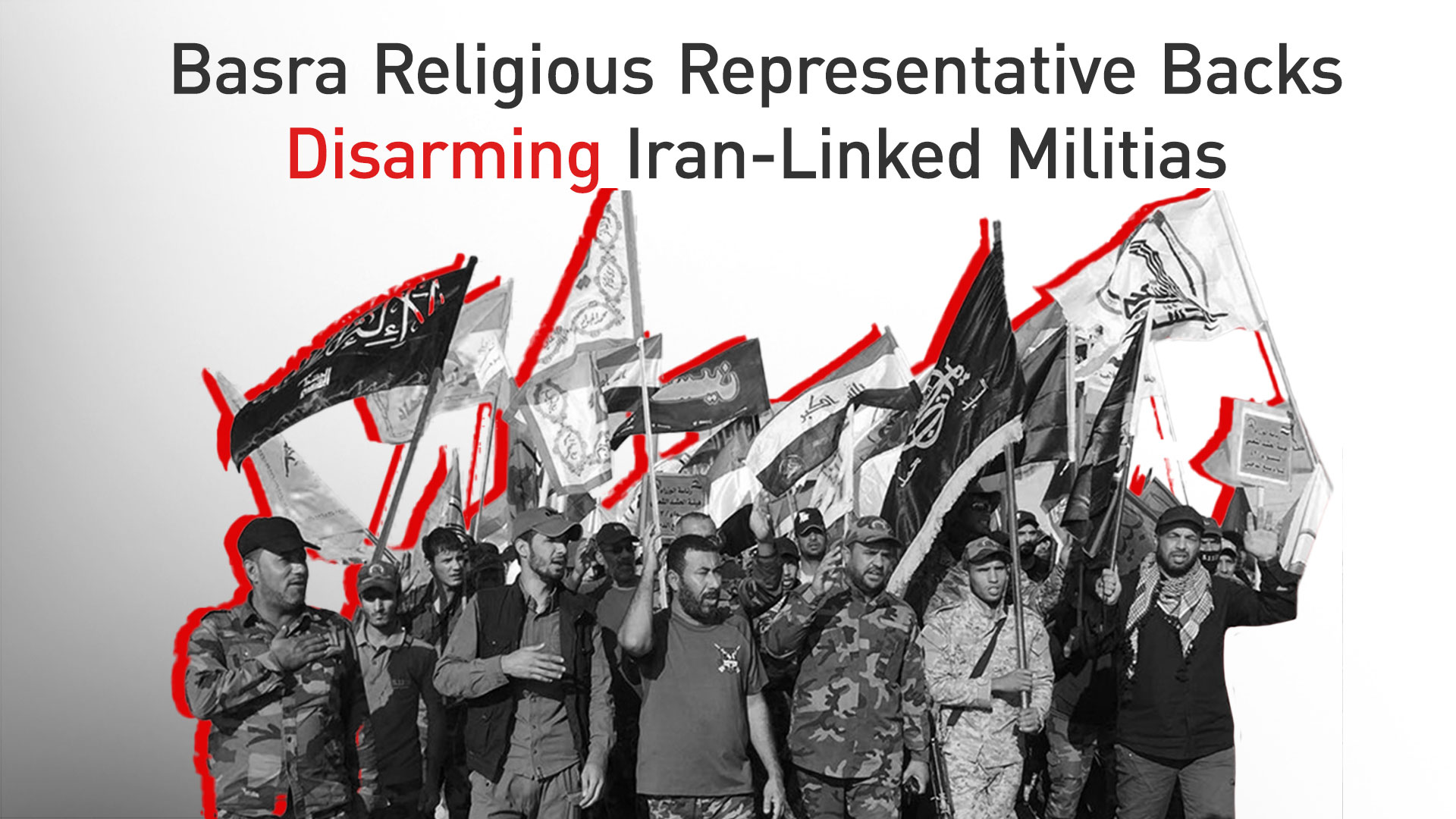
ERBIL (Kurdistan24) - A representative of Iraq's senior religious authority in Basra has publicly backed the disarmament of armed groups operating outside state control, saying they obey neither the Shiite religious establishment nor the Iraqi government, as Baghdad approaches a Sept. 30 turning point in its effort to dismantle parallel military power.
Mazhar Naji, speaking to reporters, said the factions lacked legitimacy to represent Iraq and rejected attempts to describe them as part of the Popular Mobilization Forces.
He argued that the legally recognized PMF differs in structure and status from armed groups operating beyond the state's command and said those factions should surrender their weapons.
His remarks add a significant religious dimension to an increasingly consequential political and security dispute over Iran-linked Iraqi armed groups, several of which have resisted Baghdad's demand that decisions over weapons, war and peace belong solely to official institutions.
The intervention comes as the Iraqi government prepares for Sept. 30, when the withdrawal of International Coalition forces is scheduled to be completed.
Government officials are also presenting that date as the decisive starting point for a phased process of bringing weapons under state authority.
Iraqi government spokesperson Haider al-Aboudi said the arms-control policy remained a central part of Prime Minister Ali al-Zaydi's government program and was intended to reinforce the rule of law.
The distinction is important: Sept. 30 is the deadline for the Coalition withdrawal, while Baghdad says the date will also mark the beginning of the phased implementation of its weapons-control program rather than necessarily requiring every faction to have surrendered all arms by that day.
Religious authority challenges militia legitimacy
Naji's remarks strike at one of the most sensitive claims made by armed groups that emerged or expanded during the fight against ISIS: that they possess religious, national or resistance-based legitimacy independent of ordinary state institutions.
According to Naji, the factions in question do not follow instructions from the Marja'iya, Iraq's senior Shiite religious authority, and do not comply with directives issued by the state.
He also rejected conflating the groups with the PMF as a whole.
The distinction mirrors a broader argument increasingly made by Iraqi officials: that the Popular Mobilization Forces, as a legally recognized component of Iraq's security apparatus, must be separated from factions that maintain their own political identities, external relationships or autonomous military decision-making.
That distinction has become particularly important as Baghdad seeks to avoid presenting its policy as an assault on the PMF itself.
National Security Advisor Qasim al-Araji said earlier this week that armed groups were "not enemies of the state" and that confrontation with them should remain a red line.
Read More: Al-Araji: Decision for War and Peace Belongs Solely to Iraqi State
At the same time, he insisted that all weapons must ultimately come under state authority and that "the decision for war and peace lies solely with the state."
Naji's comments reinforce the latter principle from a religious perspective: armed factions cannot claim independent authority if they answer neither to the state nor to the religious leadership they sometimes invoke.
Sept. 30 carries two meanings
The Sept. 30 date has become central to Iraq's security debate because two major transitions are converging around it.
The first is the withdrawal of International Coalition forces.
Sabah al-Numan, spokesperson for the commander-in-chief of the Iraqi Armed Forces, said Thursday that the coordinated withdrawal had already begun and would continue until Sept. 30.
Read More: Iraq Says Coalition Forces Have Begun Withdrawal Ahead of Sept. 30
Baghdad has designated the date "Sovereignty Day," presenting the end of the Coalition's military presence as the moment when Iraq assumes full responsibility for its territory and security.
The second transition concerns armed factions.
Al-Aboudi said Sept. 30 had been set as the decisive point for beginning the phased collection and consolidation of weapons under state authority.
Al-Araji has previously clarified that Sept. 30 is not itself a final weapons-handover deadline. Rather, the Coalition departure removes one of the principal justifications Iran-linked groups have used for retaining independent military capabilities and opens the next stage of negotiations and implementation.
For years, several factions have argued that their weapons are necessary because US and other foreign forces remain inside Iraq.
Once those forces leave, Baghdad will be able to argue that the central premise behind that justification no longer exists.
Prime Minister al-Zaydi has made the state monopoly on weapons a central part of his sovereignty agenda, including during his recent visit to Washington, according to the government spokesperson.
The question now is whether the government can translate that policy into effective control without provoking confrontation with factions possessing significant military and political power.
Five Iran-linked groups remain in negotiations
Baghdad is currently negotiating with five armed groups over the surrender or restructuring of their weapons: Harakat al-Nujaba, Kataib Sayyid al-Shuhada, Kataib Hezbollah, Saraya Awliya al-Dam and Ashab al-Kahf.
Several of those groups have maintained close political or ideological relationships with Iran.
Kurdistan24 previously reported that senior Iranian officials had privately urged Iraqi leaders not to disarm what Tehran calls the "resistance front."
IRGC Quds Force Commander Esmail Qaani reportedly told Iraqi officials during a visit that Iran opposed disarming those factions.
"We oppose disarming the resistance front," he was quoted as saying.
Iranian Parliament Speaker Mohammad Baqer Qalibaf later conveyed a similar message, according to information obtained by Kurdistan24, urging Baghdad to pursue dialogue rather than disarmament.
Read More: Iran Presses Iraq Against Disarming Armed Groups, Sources Say
Those interventions demonstrate that Iraq's weapons dispute is not purely domestic.
The future of the factions is tied to a broader regional network in which Tehran has maintained longstanding relationships with armed groups in Iraq, while Baghdad increasingly insists that Iraqi territory and military power must not be used independently in regional confrontations.
The tension between those two positions has made the disarmament file a test of sovereignty in practical rather than rhetorical terms.
Three groups said to have surrendered weapons
Iraqi officials say three major factions have already accepted the government's approach.
Saraya al-Salam, led by Muqtada al-Sadr; Asaib Ahl al-Haq; and Kataib Imam Ali, led by Shibl al-Zaydi, have previously surrendered their weapons to the state and announced transitions toward civilian activity, according to the supplied reporting.
Baghdad has also explored language that could make the process more acceptable to holdout factions.
Iraqi lawmaker Kazim al-Shammari previously said political discussions were shifting away from the term "disarmament" toward a formula under which fighters would end affiliation with independent armed groups and enter the formal PMF structure.
Such an arrangement could reduce political resistance, but it would not by itself answer the central question: whether the resulting forces would genuinely operate under one state chain of command.
That is the standard repeatedly articulated by the Iraqi government.
The issue is therefore not simply where individual fighters are registered, but who gives them orders, who controls their weapons and who possesses the authority to decide whether force is used.
The approaching Coalition withdrawal makes that question more urgent.
Baghdad can no longer argue for full sovereignty abroad while tolerating independent military decisions at home without confronting an obvious contradiction.
Naji's remarks from Basra bring that contradiction into sharper focus.
By arguing that armed groups outside the state neither follow the Marja'iya nor possess the characteristics of the formal PMF, he has challenged two potential sources of legitimacy at once.
As Sept. 30 approaches, Iraq will therefore face two closely connected tests: completing the withdrawal of foreign Coalition forces and beginning the harder domestic task of ensuring that the military power remaining inside the country answers to one authority.
For Baghdad, declaring sovereignty may come on a single date. Establishing it over every armed actor is likely to take considerably longer.